project stories: the danteum

ARCHITECTURE STUDENT PROJECT

  • Summer 1994
  • B.Arch. Year 1, Semester 2
  • Historical Architecture Documentation
  • Studio Critic: Prof. Craig Konyk

Since there was a group of 8 of us who had started architecture in the middle of the academic year (we had all transferred in from other places), the department created a bespoke summer design studio just for us so that we could catch up with the rest of the first year students. It was was pretty special to have such a small studio (usually sections were 15–18), although we didn’t realise it at the time, but we took full advantage of it.

First day of the class we were introduced to our first assignment — not design, but graphics and analysis. Drawing, decoding, and analysing an existing (unbuilt) building, which was the Danteum, designed by Giuseppe Terragni. I won’t get too much into the building here, but in 1938 Terragni was commissioned by the fascist Mussolini government to design a monument to Dante Alighieri, the author of The Divine Comedy. The building is essentially an architectural manifestation of the legendary poem itself. The site was right in the middle of the Forum of Rome, along with many other monuments from antiquity. Because of the onset of WW2, it never got built.

Prof. Konyk introduced us to the building and gave us a few photocopied pages which showed the architectural drawings, barely legible. The first task for the 8 of us was to sit together and make architectural sense of this building, going from the poorly reproduced plans we already had. We didn’t have the internet in those days, so a couple of trips to the library, and some serious puzzling out finally got us to a comfortable understanding of what was going on in this complicated building. The building is very complex, with no simple division of floors or rooms. It’s also highly symbolic and representational (e.g. 100 hypostyle columns to represent the 100 cantos of the poem.)

From a classwork perspective, each of us was expected to draw initial pencil drawings on tracing paper by the next morning. 2 plans, 2 sections, 4 elevations, site map, axonometric, perspective, and a ‘concept’ drawing. All in one day. And we actually did it. Prof. Konyk told us much later that he never expected we would all complete the work. But that wasn’t enough. After a groggy morning spent analysing and critiquing the drawings, we had to redo them formally on vellum. After another day, we re-drew them *again* using ink and mylar. These weren’t tiny sheets, either… each sheet was about 24×36. Each of us worked through most of those first 3 nights without much sleep.

I show these drawings to my students and tell them this story to let them them know that what we ask of them is no more than what was asked of us when we were studying. Architects, especially teachers, love to tell stories like this about how much they worked their asses off in the “old days” when their teachers were taskmasters. It’s probably fair to say that most students today wouldn’t do all that work without at least questioning it. But now as a teacher, I’m also not sure that’s reason enough to perpetuate such intense labour. Anyway, that’s a topic for another day.

Another thing I think about nowadays is how much easier it would have been to do this assignment today, not from a drawing perspective but from a decoding perspective. We had very little back then in terms of resources to help us understand the building — history, concept, process, spatial configuration. Now, you can read about it instantly and download the drawings and 3D models and walkthroughs in a second.

Image for post
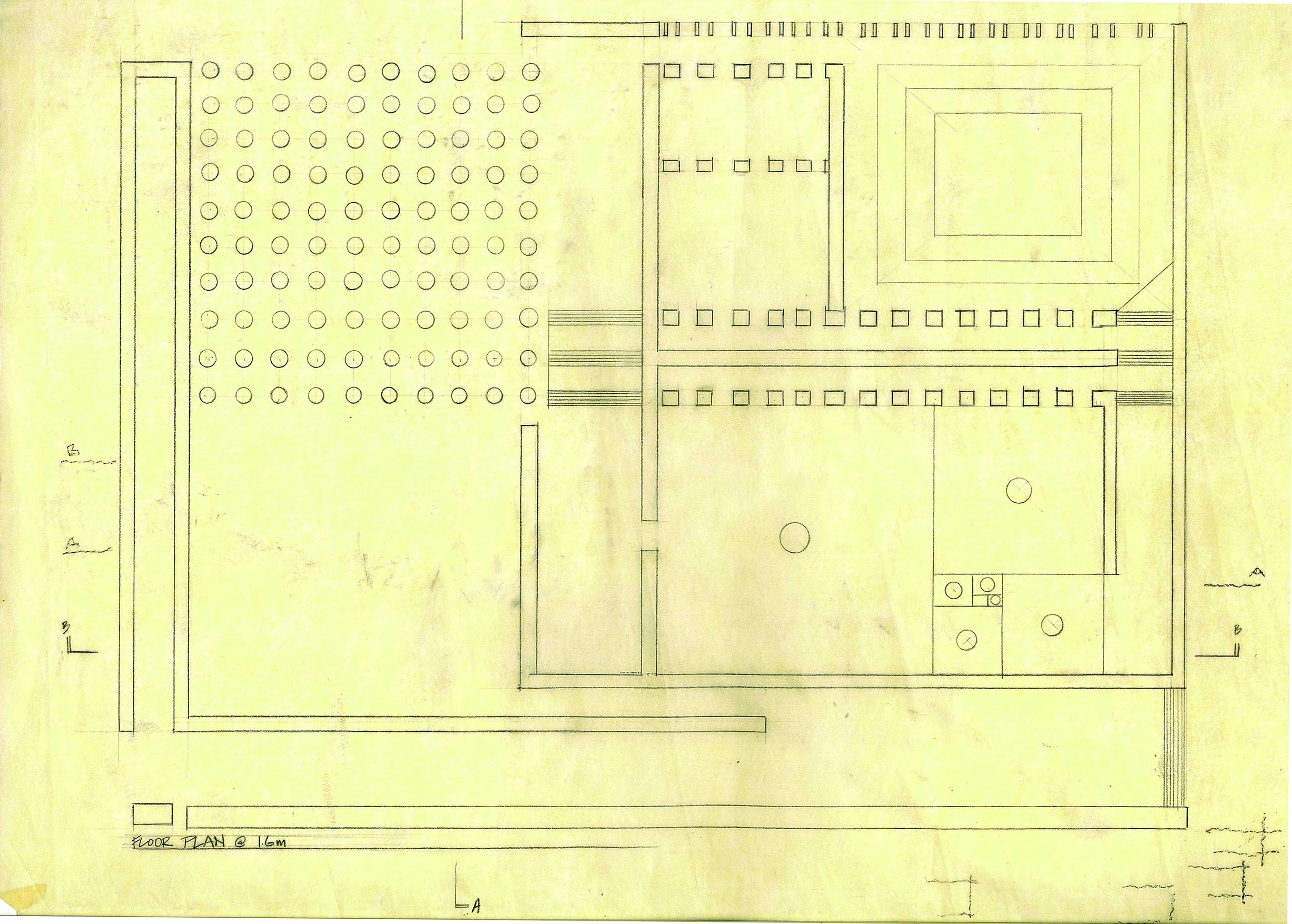
One of the initial pencil-on-trace drawings (first day’s work assignment). Note the teacher’s marks in the lower right corner, showing us how to draw the end of a wall, and have the lines overlap.
Image for post
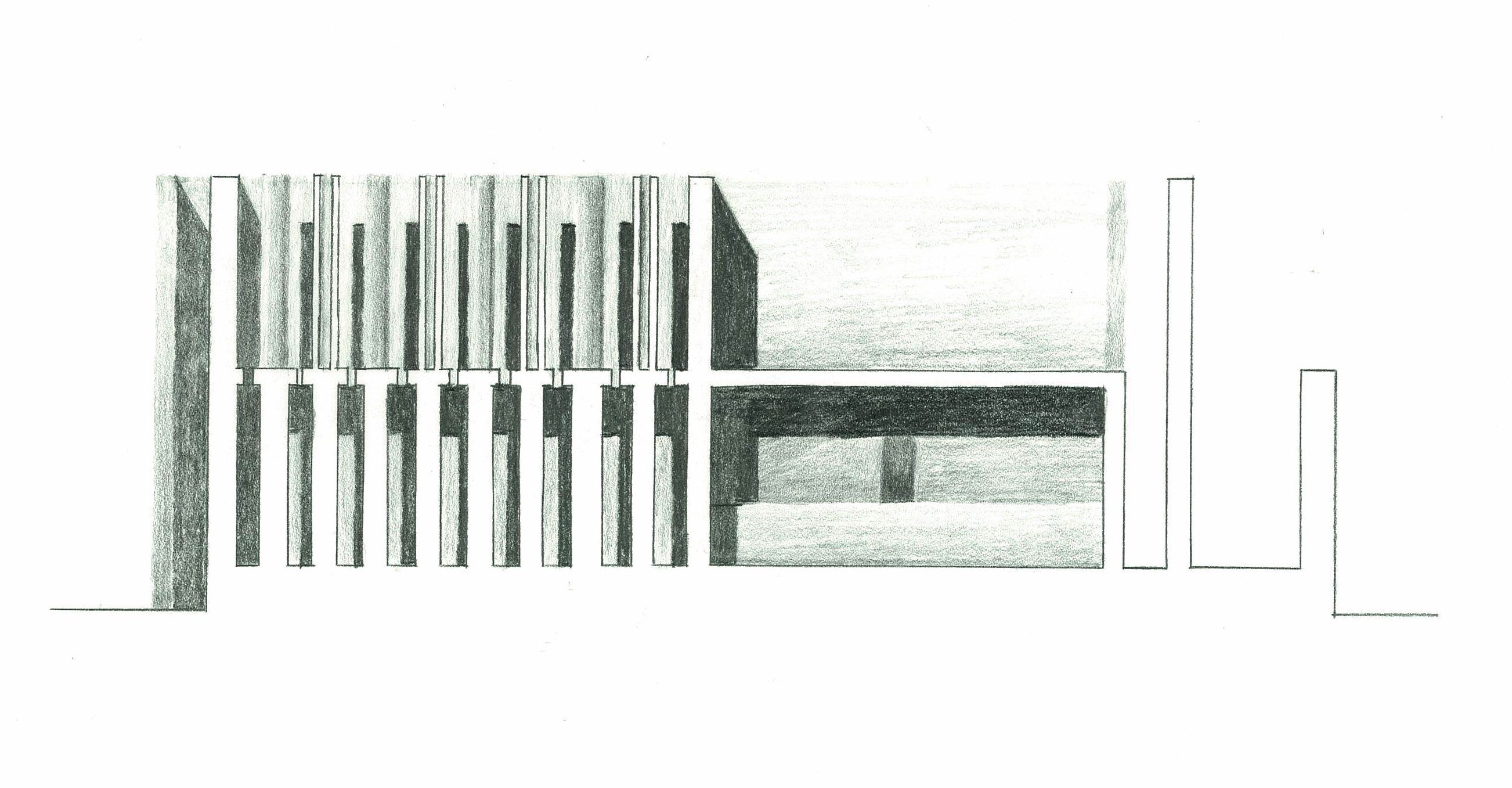
Rendered pencil cross-section. My rendering techniques have improved since then.
Image for post
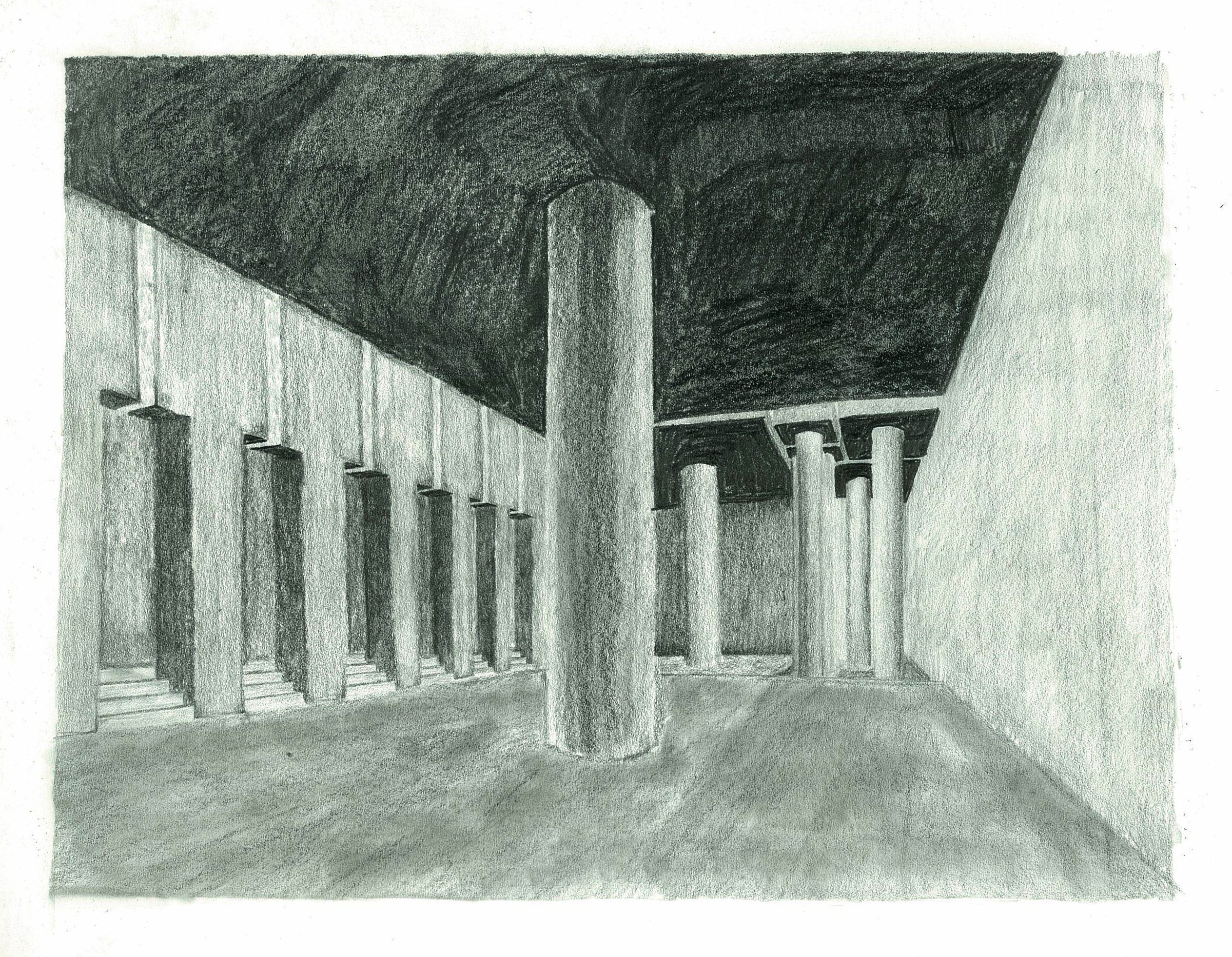
Rendered perspective of one of the ‘rooms’. In this case, I chose the room representing the Inferno portion Dante’s poem. This room has 7 columns and 7 floor slabs and 7 ceiling slabs (representing 7 levels of hell) descending in a spiral according to the golden ratio.
Image for post
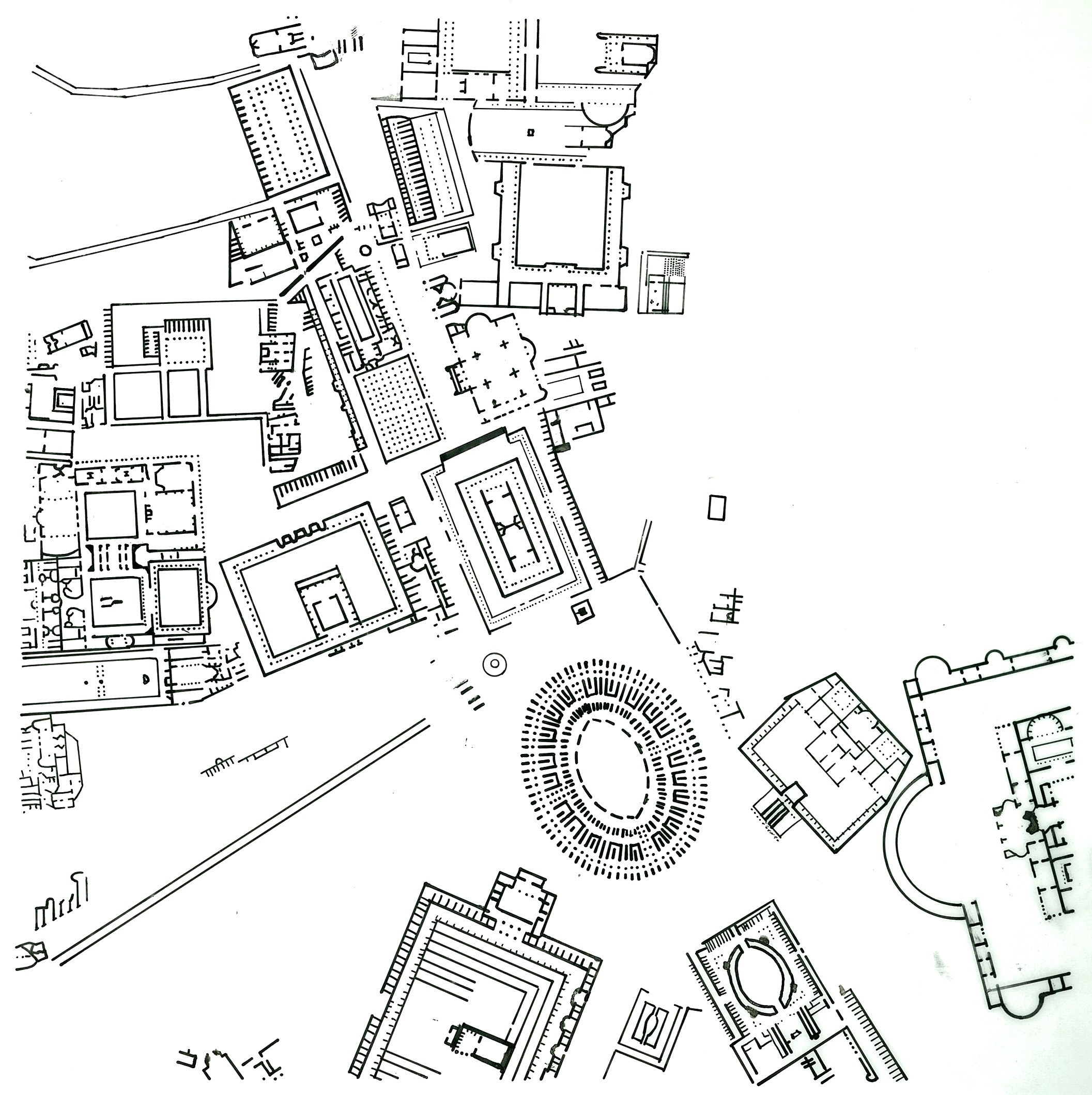
Site plan of the Forum in Rome, with the Colisseum figuring prominently. See if you can find the Danteum drawn in there somewhere.
Image for post
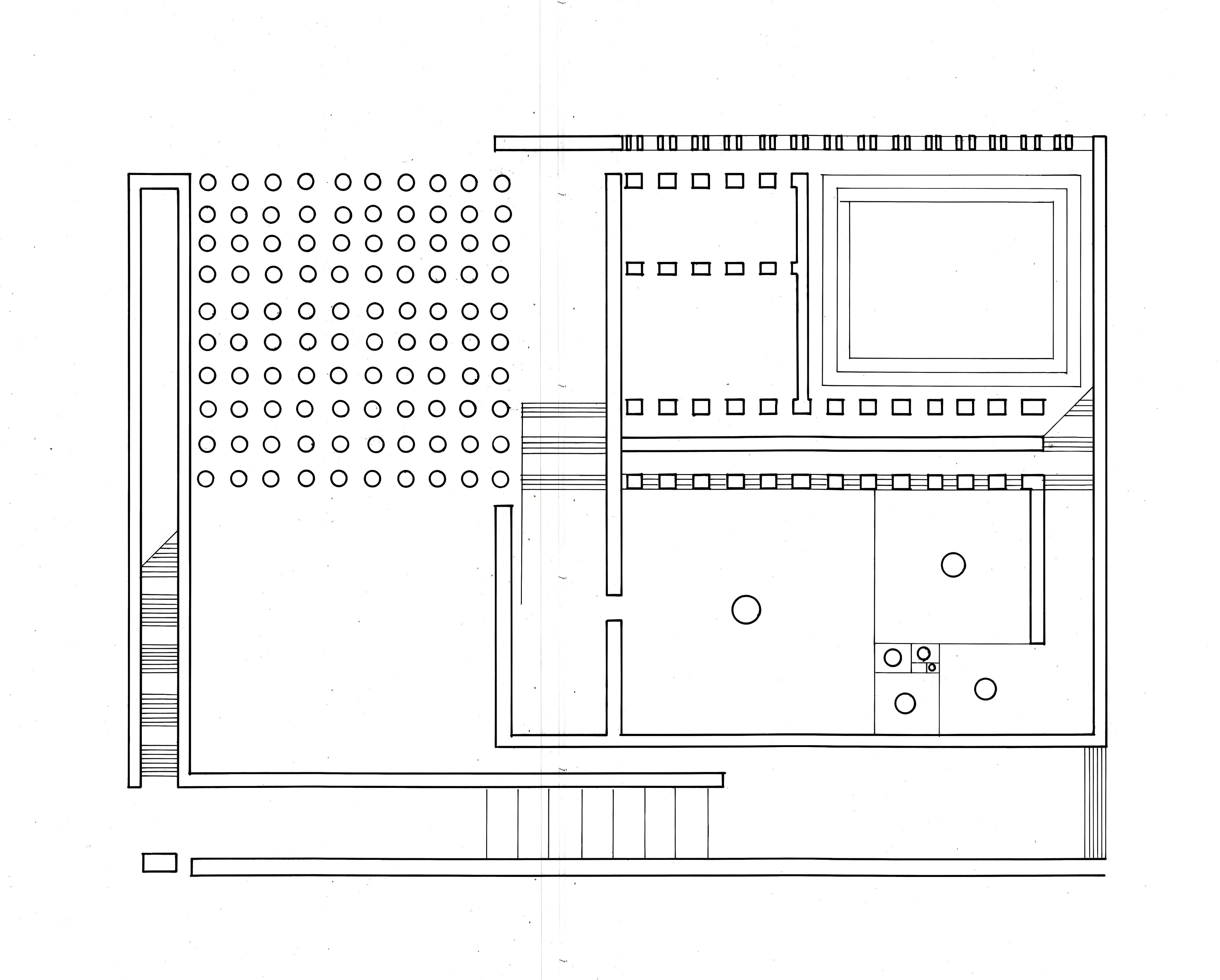
Lower level floor plan showing the entrance court, hypostyle hall with 100 columns (1 for each ‘canto’ of the poem), the Inferno room.
Image for post
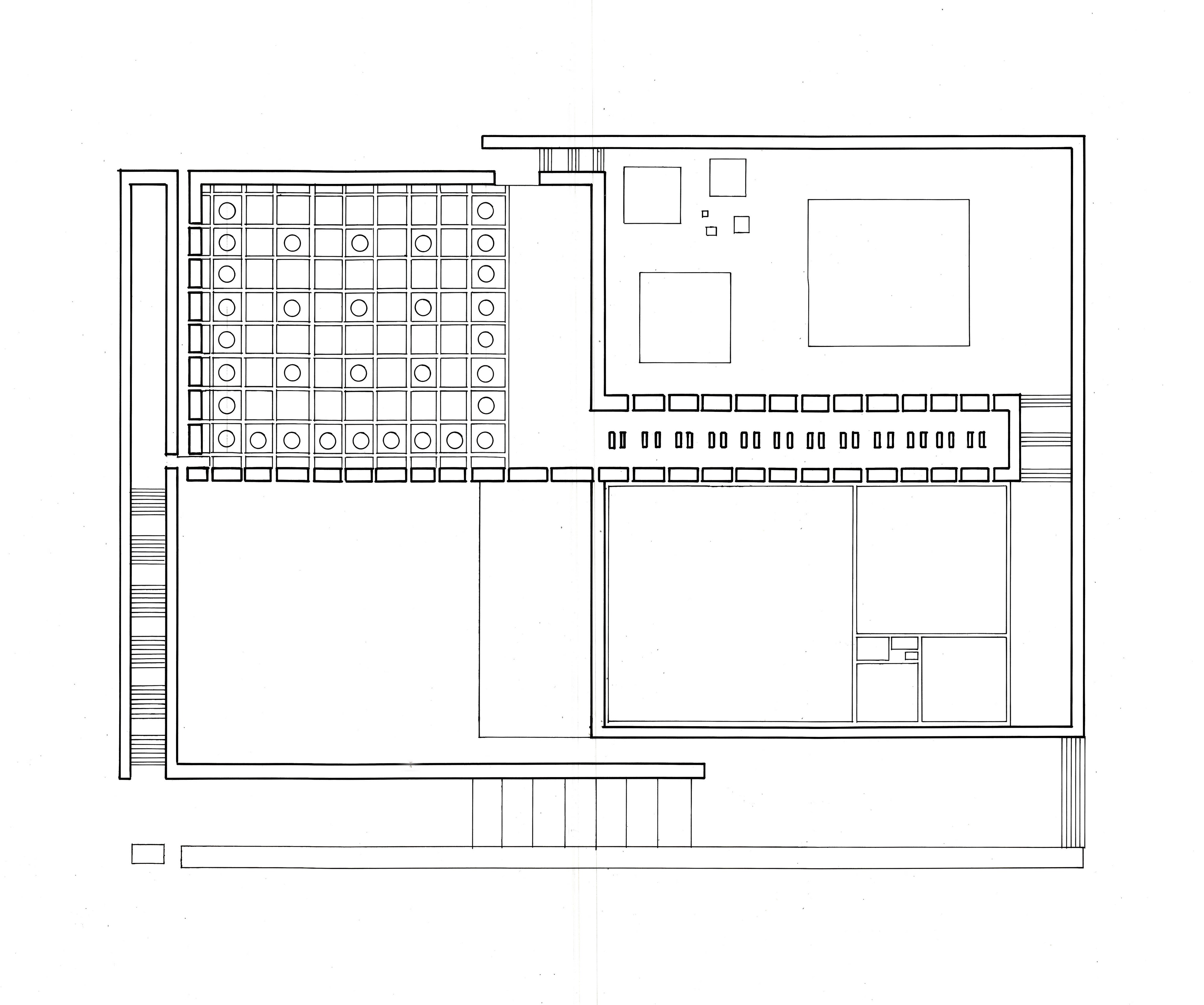
Upper level floor plan showing the Purgatorio room and the open-to-sky Paradisio room, with 33 glass columns (1 for each canto in that portion of the poem).
Image for post
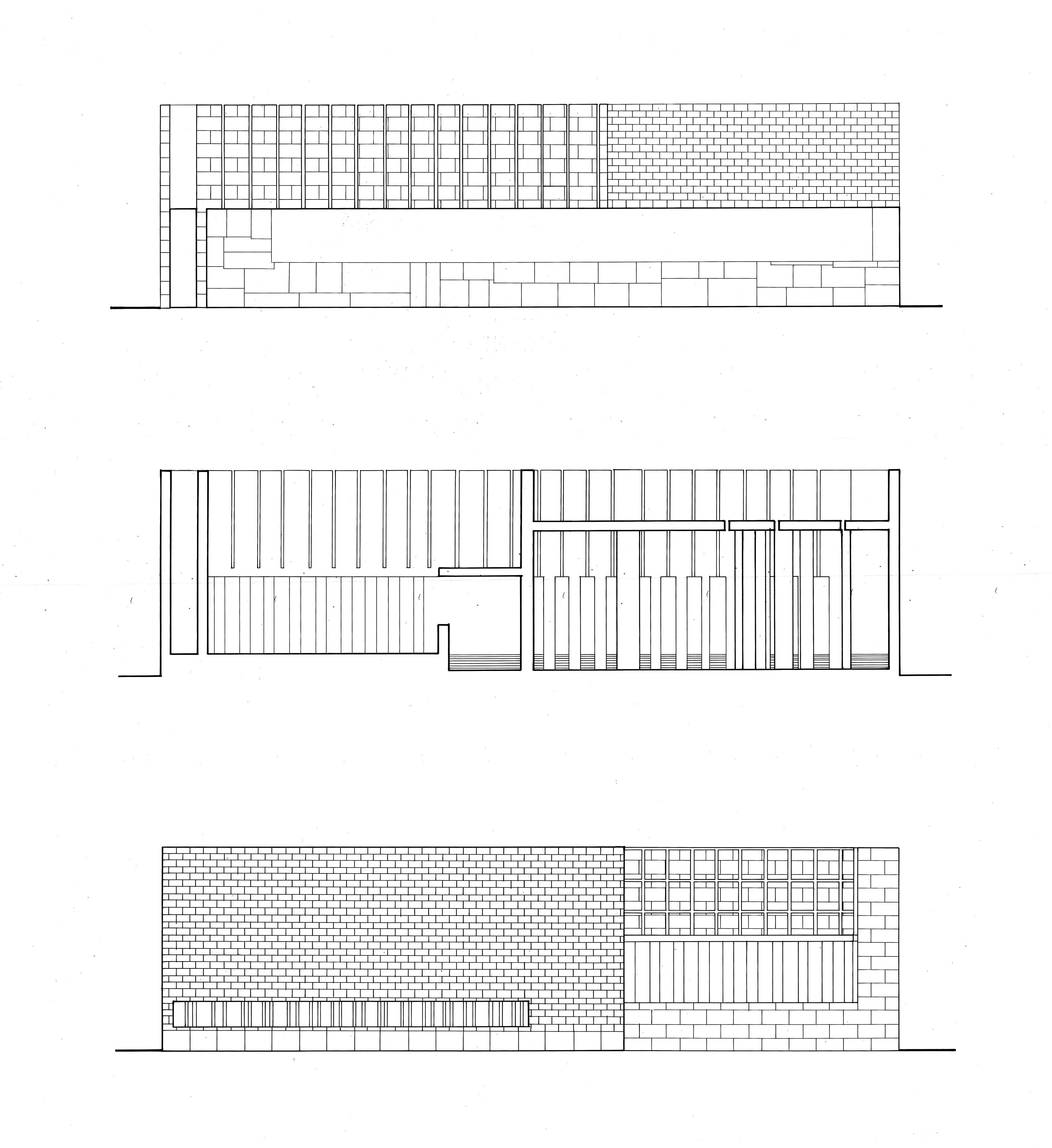
Two exterior elevations (long sides) and one long section between. This was a major exercise in line weights, the exacting detail of which is not entirely visible here. The masonry hatch pattern was drawn on the reverse side of the transparent mylar in order to make it seem even lighter.
Image for post
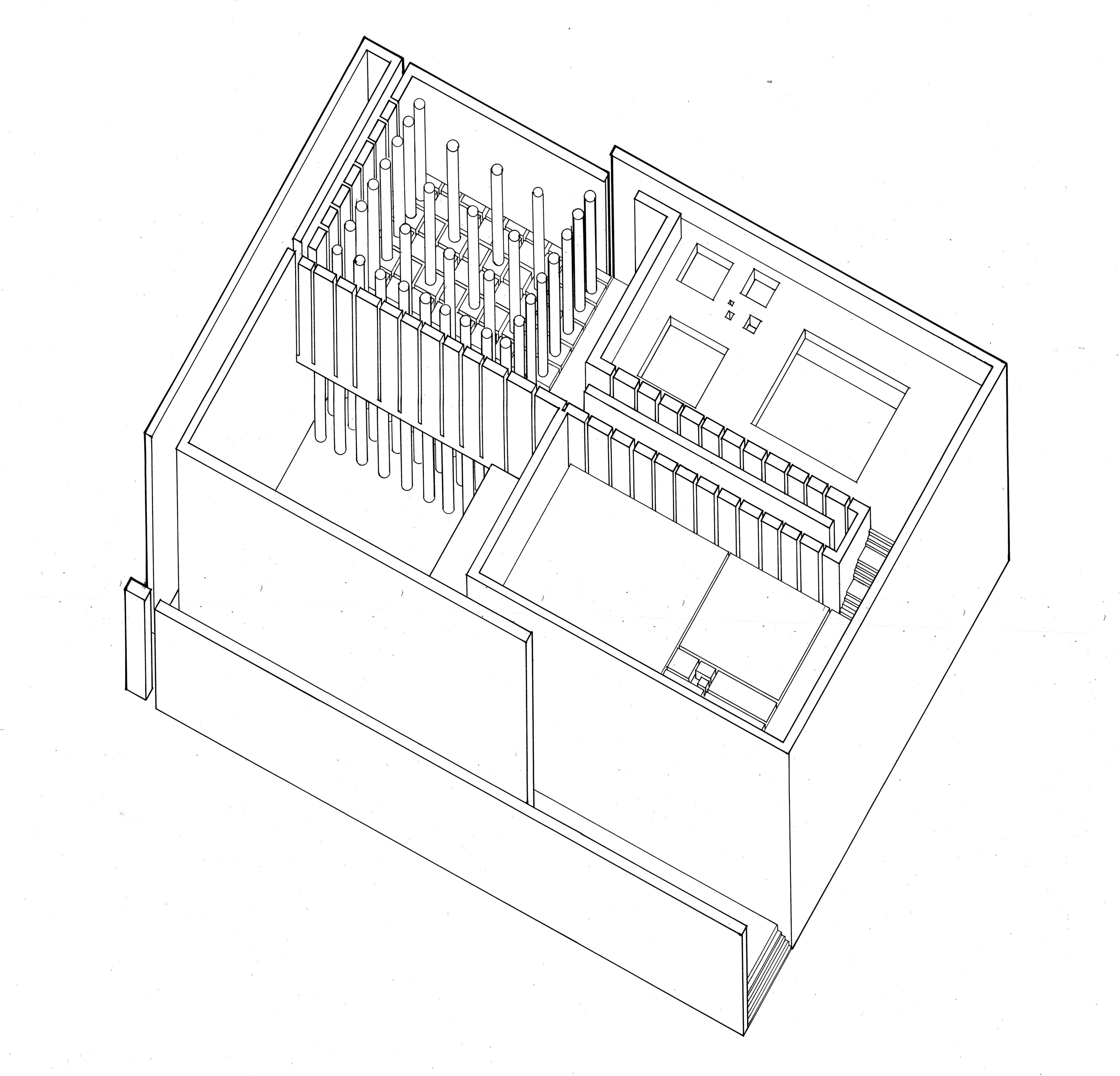
Axonometric view showing the roofs of the Inferno and Purgatorio, and the open Paradisio room.

project stories: a wall with two faces

Architecture Student Project

  • Spring 1994
  • B.Arch. Year 1 Semester 1
  • Design Project
  • Studio Critic: Prof. Joy Seigel

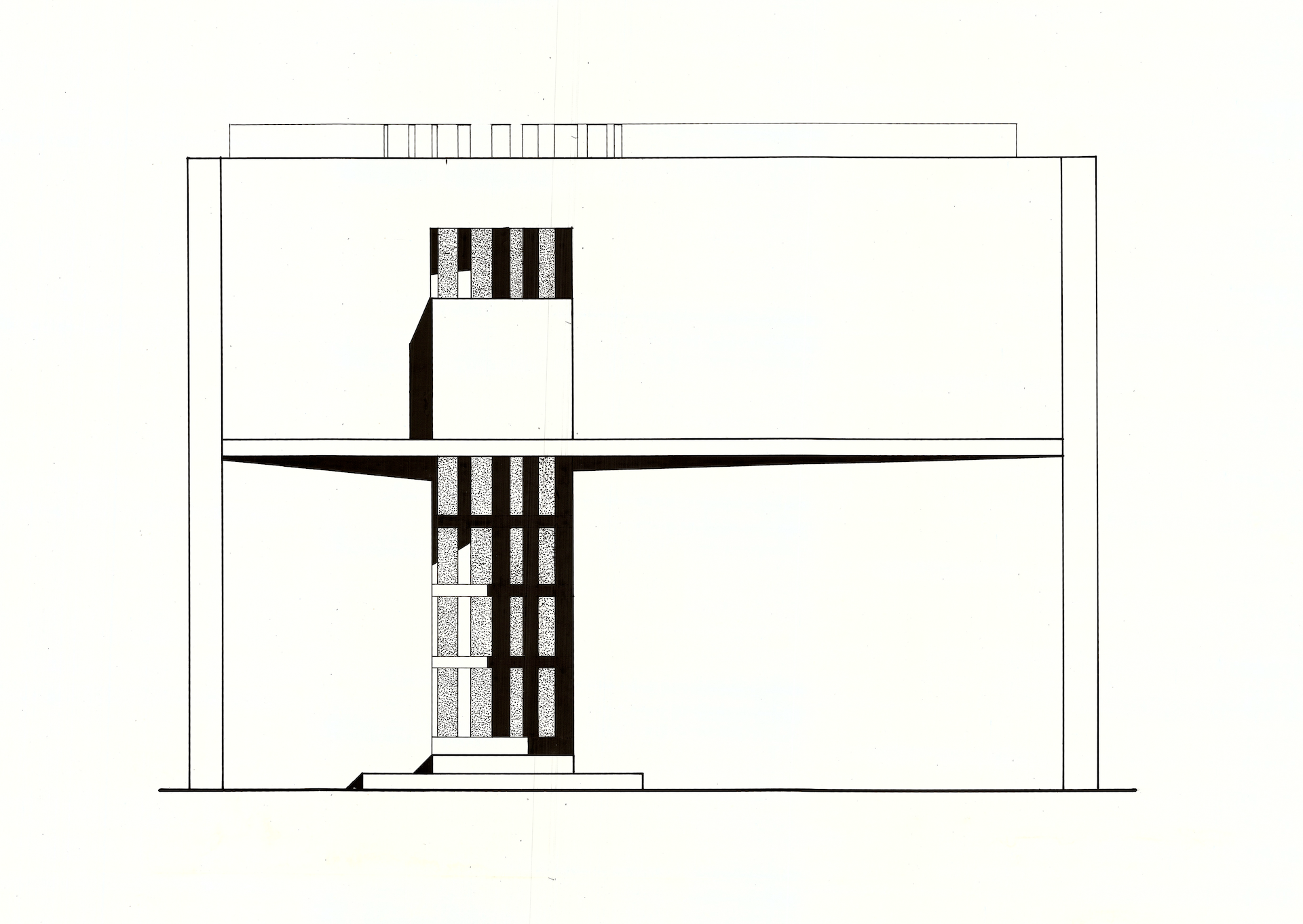
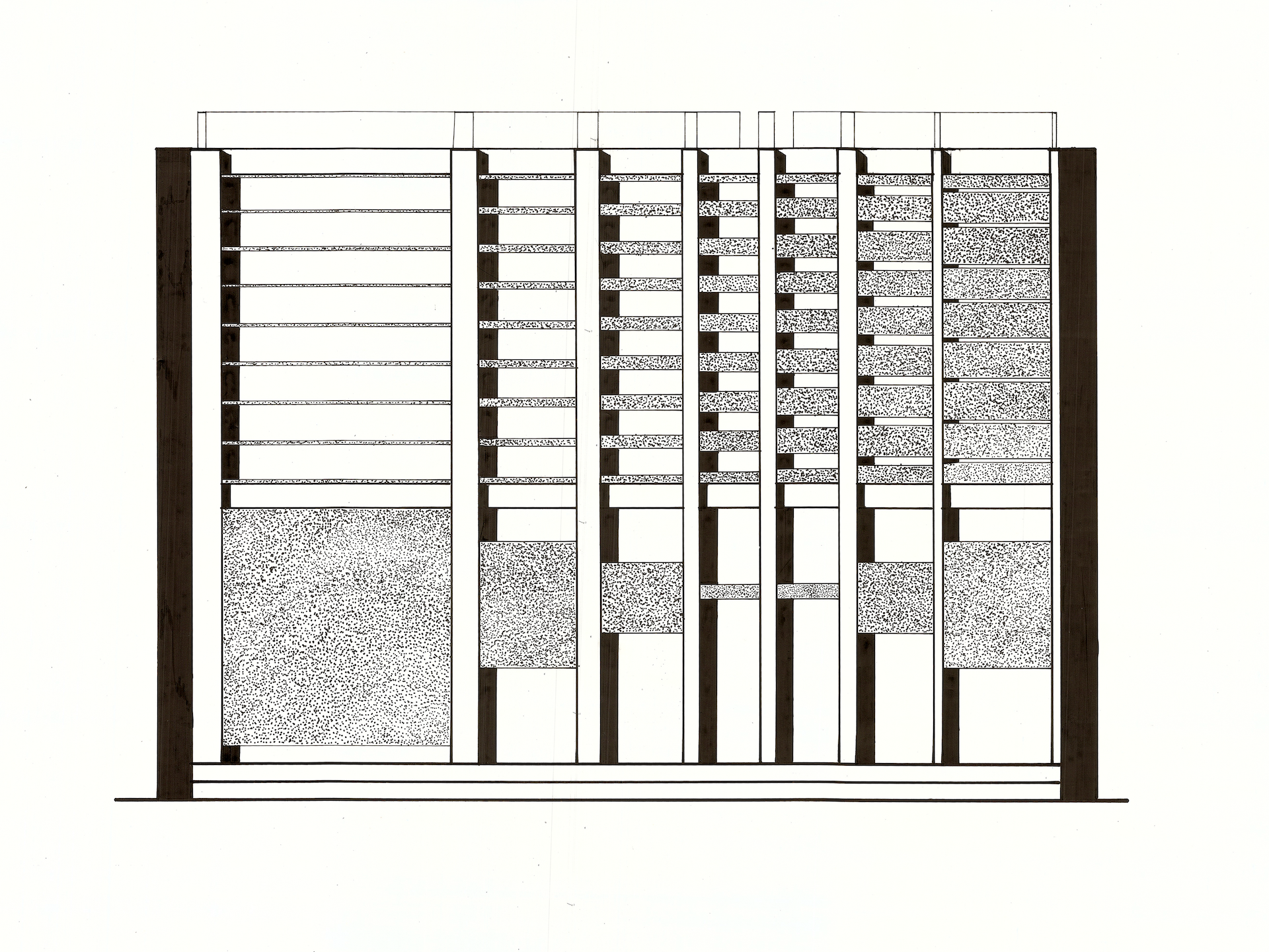
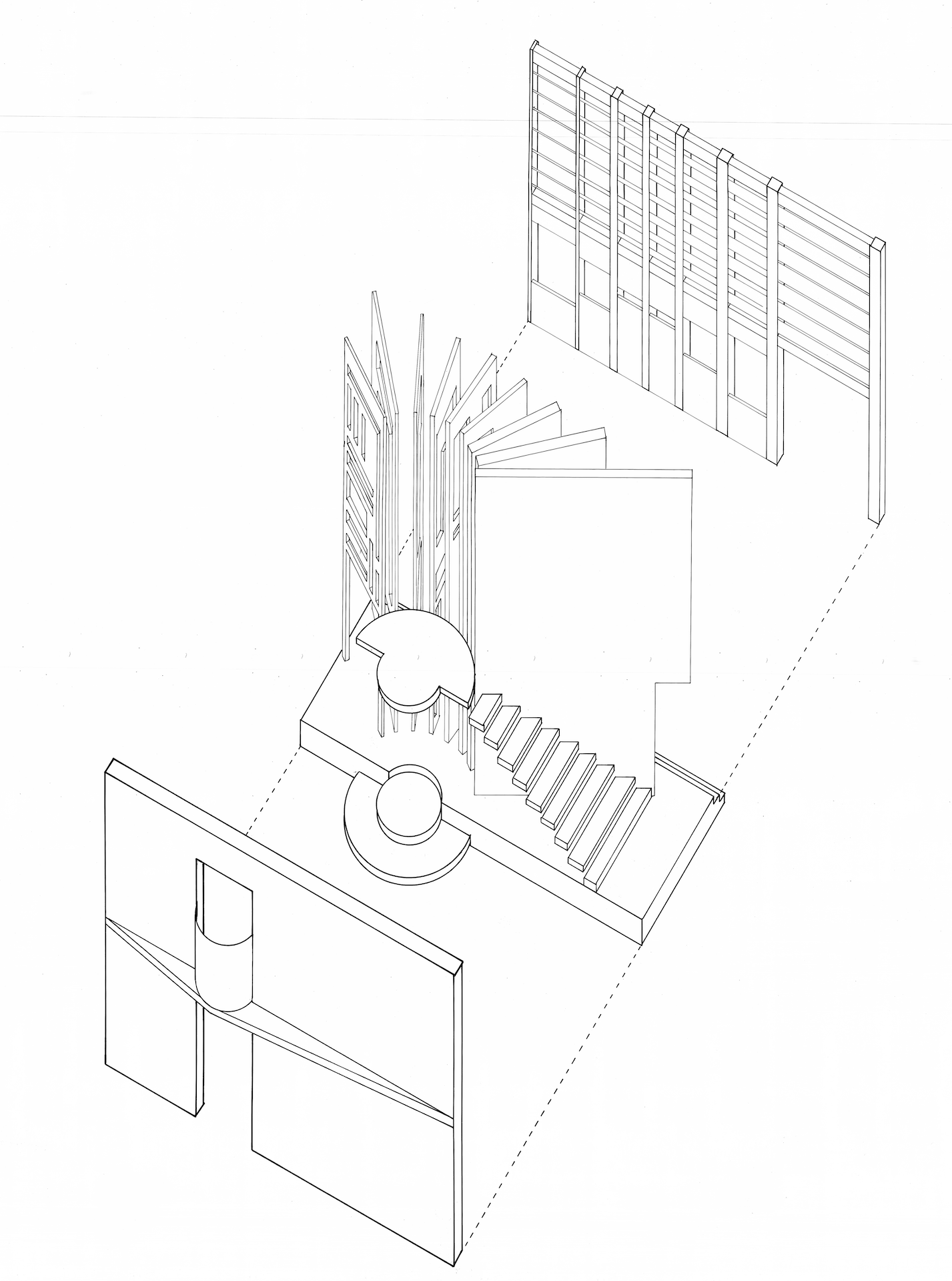
My very first semester in architecture school in 1994. This was the final project for B.Arch. Year 1, Semester 1 (Design Critic: Joy Seigel). The project was titled “A Wall with Two Faces” and the idea was to design a conceptual wall between the city and the garden, representing the link/divide between man/technology and nature/monumentality.

In order to inject transparency (i.e., give the observer a hint of what the “other side” represented), I flipped the two faces of the wall so that the facade representing technology faced the garden, and the facade representing monumentality faced the city street.

The wall’s dimensions were 25ft wide x 20ft tall, and the “wall” was actually a space 8ft deep. This was where the transition between the city and garden would happen.

I got an A for this class, and the jury appreciated my work. I do remember one of them saying that I had too many ideas in this project and I should save them up for the future. At the time, I resented the comment a bit, thinking “When the hell am I going to do another Wall with Two Faces project?” But he was right. Looking back, I think the project should have been simpler and not so burdened with complicated, sometimes overlapping concepts. But I’m still proud of the work I did for it.

The drawings are ink on mylar with Rapidograph technical pens, and these were the final presentation drawings. I had a basswood model, but that was lost/destroyed long ago.

Image for post
The city-facing side of the wall, representing the monumental aspect of nature. Simple, unarticulated, and a high vantage point.
Image for post
The garden-facing aspect of the wall, representing the mathematical rigour and regularity of technology and urbanity, with variable vantage points
Image for post
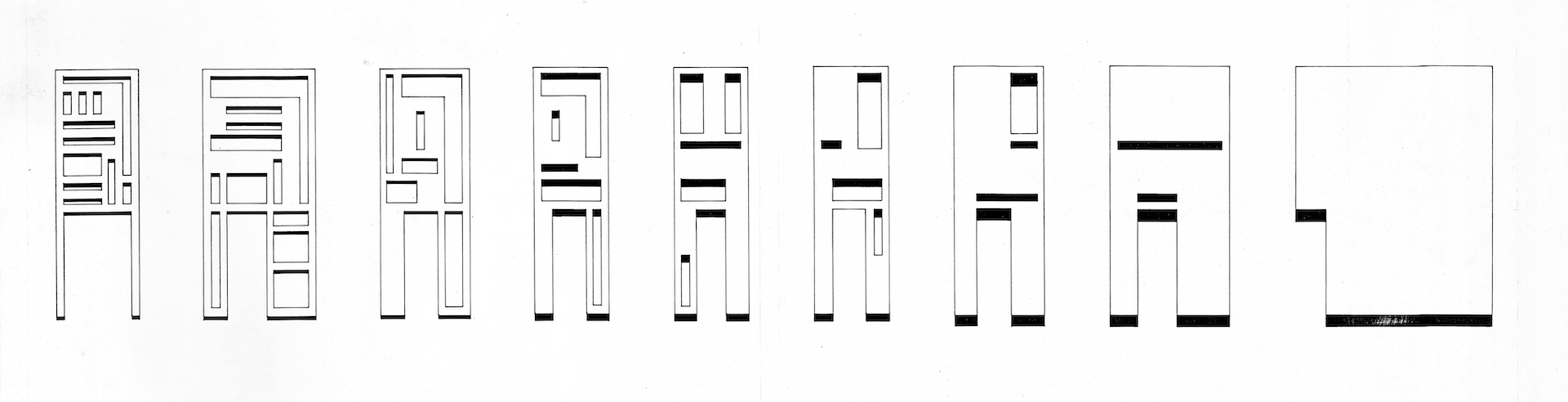
The interior panels between the facade, which the occupant must walk through, in decreasing levels of articulation.
Image for post
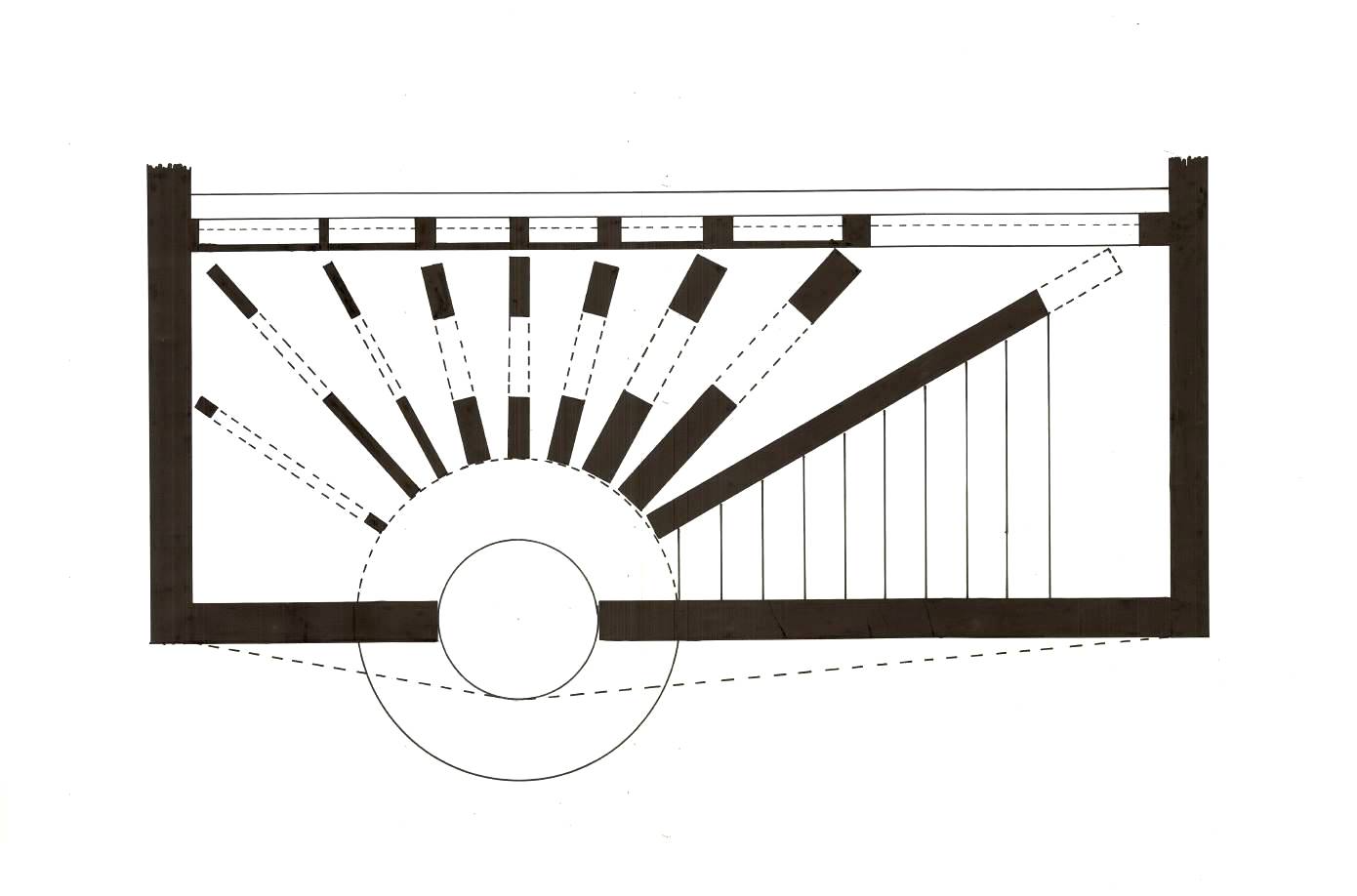
The plan. Lower part faces the city street. You enter from the circular steps, turn left, and then walk through the openings of the panels. Before the last panel, you choose to exit out into the garden or continue through the panel and go up the steps to the balcony.
Image for post
Exploded isometric view. City-facing side is below, garden-facing is above, with the transition space in between. One walks through the series of panels, and can either walk into the garden, or continue and walk upstairs to the vantage point (balcony).

inclusive habitation in indian cities

THE NEED FOR RETHINKING URBANISATION IN THE POST-BOOM ECONOMY

[A version of this article was recently published in “What’s Next: The Creative Spark”, a book of essays chronicling an event of the same name held in Mumbai in February 2019 organised by Pearl Academy. Click here for more info on Pearl’s well-received “What’s Next” series of confluences .]

Raising the Alarm: India’s Housing Crisis

“Cities that adopt a strategy of inclusive prosperity now still have the power to transform their communities and neighbourhoods into more open, equitable, and profitable places to live.” – Amitabh Kant, CEO Neeti Aayog

An internet search of “indian housing crisis” will uncover a disturbing array of cautionary tales and doomsday scenarios, and amongst all the data, one can find two grim statistics revealing a paradox in understanding the nature of the exploding urban population of India.

The first statistic is that, as of February 2016, there are almost 700,000 unsold homes in India (Mukherjee, 2019). This is apparent to anyone who drives past the unfinished hulks of luxury high-rises along the fringe highways of Indian metros. The second statistic is that, as of November 2017, there is an urban housing shortage of about 10 million units (Economic Times, 2017). The paradox: India has been unable to house millions of (mostly poor) people while simultaneously overbuilding housing for the wealthy.

This reveals an uncomfortable truth about how we’ve dealt with India’s rabid (and rapid) urbanisation and the imbalanced benefit for the entire population. This is a well-reported problem, and indeed there are already several public and private schemes that are attempting to correct this unnerving disparity. But where does the design community fit into this? Can creative professionals provide any solutions?

Grass Roots Action: Academics and Designers

Indeed, this problem is largely the responsibility of policymakers. Most designers, architects, and urbanists are only able to contribute to projects for which they’re hired, and usually don’t have extensive control over policy decisions at a metropolitan scale. But there can certainly be an effort to foster a sensitivity towards such socioeconomic imbalances, perhaps starting with professional academic institutions. The graduates that enter the workforce as young professionals may not have a strong voice in the way their projects are run, but they can surely plan their careers to find opportunities to deal with urban disparities. Many colleges are themselves located in urban areas where these disparities are highly visible to everyone. So, there’s a potential to sensitise new generations to first become aware of such problems, and then to encourage them to try and solve them.

A striking reflection of my academic experience in India thus far has been that even though my students have often come from privileged backgrounds with a lack of active exposure to ‘real’ urban issues, by the time they complete their academic programme, their sensitivity towards the needs of the underprivileged becomes more pronounced. Many of the graduate thesis projects I’ve encountered have been focused on improving the lives of children, the elderly, the poor, the disabled, and other underprivileged and marginalised populations. This implies that higher education, working together with industry, can be a strong support in developing the necessary sensitivities.

But with so many issues at hand, it’s difficult to prioritise the most urgent needs of urban India. In my experience as a teacher, I’ve been happy to see many socially sensitive projects including packaging for the blind, apps to increase sexuality awareness, devices to assist with manure collection… the list goes wonderfully on and on. However, as an architect and urbanist, my most urgent concern goes back to the persistent inequity in urban housing policy, planning, financing, and design. If we don’t create more affordable, equitable, and sustainable housing for all populations, then almost all other efforts are meaningless.

Organisations like URBZ are another good example of grass roots efforts to bring creative solutions to urban housing problems. They focus on community-oriented solutions for slum improvement and have a strong user-centric approach to problem solving, engaging all stakeholders with an emphasis on the contexts of how people really inhabit cities, whether they are native-born locals or migrants seeking new opportunities. Such organisations are able to fill some of the gaps left by policymakers. Matias Echanove, co-founder of URBZ, says, “India has an endless opportunity to look within. Accommodation and mass housing are the first point of requirement for the rural exodus to the cities, aided by a well-connected transport system which facilitates this movement. Resource support and planning is required to maintain the health of urbanisation” (Echanove, 2019).

The Broader Challenge: Inclusive Habitation

However, large scale solutions still require the attention that only major policymakers can give. Besides academics and grass-roots organisations, where else can such matters be taken up by designers? The answer is uncertain, as there will always tend to be a divide between policymakers and design consultants. But there are two areas in which I believe we should focus our attention with respect to better urban housing.

The first is to radically alter the process of private property development in India’s metros. There is almost no synchronicity between commercial interests and socio-communal needs. Private development, which is the largest producer of housing units in urban metros, is almost purely driven by speculation and market trends. Thus, one tends to see rapid construction of massive housing schemes long before any real infrastructure or public amenities are in place. Scores of residential towers are built and sold first, while shopping centres, hospitals, bus-stands, metro stations, and other public amenities come later, only when there is a proven ‘demand’. This traditional demand-driven approach to urban planning has already proven to be ineffective.

Urban designers and planners know this and are trained to design cities that, from inception, provide a variety of public amenities needed for sustainable residential growth. They are also trained to make design decisions based on principles of design thinking, contextual research, user-centricity, and collaborative ideation. If policymakers (and private developers) choose to listen to what urban designers have to say, it will result in well-designed communities that consider the full spectrum of urban life, not just the living quarters and the garages.

The second area involves integrating a more diverse set of people to live in new developments. The great disparity between unsold luxury homes and housing shortage mentioned earlier happens because affluent home buyers were seen as the only viable market for large-scale residential development. Entire tower blocks of only 3-bedroom apartments serve only a narrow user profile and income group. When the whims of politics and economy cause a change in the fortunes of this narrow group, the entire real estate industry is impacted, taking years to recover. We’re undergoing that downturn now, and there’s no magic solution on the horizon to make things better. Developers and financiers are simply crossing their fingers and hoping that economic growth resumes to earlier levels and that upwardly mobile professionals start buying homes again.

Certainly, some municipalities have enacted legislation that requires developers of luxury apartments to provide a quantity of ‘affordable’ homes, usually to house the displaced slum-dwellers previously living on the property. But it’s questionable whether the needs of the displaced residents are being adequately served, let alone whether their living situations have actually improved.

But it’s not just the economically lower strata that need to be housed. There is a rapidly growing sector of young, single, college-educated urbanites from lower-tier Indian cities who have trouble finding suitable housing in large metros because: a) they usually need to find flatmates to share; and b) landlords are less keen to rent to transient populations. Many of these young professionals come to cities like Mumbai and Bengaluru for their first jobs and will only stay as long as the company keeps them. Many will find other jobs within a year or two, and often in a different city altogether. Many have to leave simply because they can’t afford the cost of living. Are any developers building housing for such people? Rarely. Some overseas cities have designed and built co-housing options for young professionals, but this isn’t the focus of Indian private developers, which is a short-sighted attitude. It’s financially unsustainable to view the entire housing market as only buyers of luxury 3-bedroom apartments. Designers and architects can help with this and provide innovative co-housing solutions for diverse groups of residents, allowing them a better opportunity to stay in their preferred city and not be priced out. This permanence leads to greater community ownership and engagement as well as the sustained usage of public amenities.

There is no greater truism proven by history than the fact that diverse and inclusive cities make better cities, for all stakeholders. The Indian urban development industry — property developers, investors, bureaucrats, community activists, designers, and planners — need to integrate better and follow a more collaborative and systems approach to decision-making, and ultimately understand that no community will succeed very long as a segregated island of residents with near-identical backgrounds. If rapid urbanisation is our new reality, then quality housing for all should be our highest priority.

References

Bellman, E. 2020. “India’s ‘Ghost Towns’ Saddle Middle Class With Debt — and Broken Dreams”. Wall Street Journal. [online] 16 January 2020.

Echanove, M., 2019. Keynote speech at “What’s Next: The Creative Spark”, February, 2019. Mumbai, India.

Economic Times, 2017. Housing shortage in urban areas down at 10 million units: Government. Economic Times [online].

Kant, A., 2019. Keynote speech at “What’s Next: The Creative Spark”, February, 2019. Mumbai, India.

Mukherjee, A., 2019. 673,000 unsold homes hold the key to India’s next shadow-banking crisis. Business Standard [online].

best laid plans

I started this blog in 2013 as a way to document a six-week road trip across the United States. By the time I got to Pittsburgh (three days into it) I was already tired of blogging. There was too much pressure every day to write and post pictures about my travels. So I stopped blogging and used Facebook instead, which worked out much better. More people got to follow the trip and it was easier to upload photos and descriptions.

And then I ignored this site for seven years. And to quote everyone’s favourite hobbit Sam Gamgee: “Well, I’m back.”

Lots of things have changed both in my own life and the world around us. Even as I write this, we’re in the middle of one of the most significant (and bizarre) events in history – a worldwide global lockdown due the COVID-19 pandemic. So let’s see how blogging in the ‘new normal’ goes. This time I intend to write more generally – articles about topics of personal and professional interest, like architecture, design, cities, art, and education. I may also throw in my thoughts about media I like – books, movies, television, and so on.

The first thing you’ll see over the next few days is a migration of a bunch of stuff I’ve written in the past year or so from Medium.com, a site that I now find to be slightly better than useless in terms of getting people to discover and read what I write. After that, I hope to write more frequently, formal as well as informal stuff. So watch this space. And if what I say sparks any thoughts, do me a favour and post your comment. I like to think of writing as dialogue – thoughts and ideas improve when they’re discussed, debated, and revised. If I wanted “likes” I would just keep writing on Facebook. So if you have a response to what I say – a comment, a question, a critique – then let me know right here where I can see it.

Oh, one more thing. Back when I started this in 2013, the blog was called “long division”. Don’t ask why. I’m not even sure I remember exactly. I changed the name to palimpsest, which is one of my favourite concepts in design and abstract thinking. Technically the world palimpsest refers to a phenomenon that occurred before the printing press was invented, when scribes used to write manuscripts on parchment paper. Since the parchment was expensive (usually made from animal hides), when they wanted to write new pages, they would scrape off the original writing as best as they could and write new text over it. Over multiple instances of this, one could see several faint layers of the old text beneath the new, forming a sort of abstract pattern of lines that no longer looked like written language.

Palimpsest - Wikipedia
The Codex Ephraemi Rescriptus, a Greek manuscript of the Bible from the 5th century, is a palimpsest. (Source: Public domain, wikipedia.com)

This idea of layers of information added continually on top of each other fascinates me. The word is now used abstractly to describe any kind of layering of elements where the previous layers can still be discerned. One sees this in cities and settlements, in architecture and habitation, in objects and images. If you look deeply at anything, there is a palimpsest there that enriches and illuminates the entire history of the thing being observed. The term also refers to the idea of repurposing and reusing something, which, aside from being a generally good way to approach an otherwise wasteful world, is a fitting reason to use it as the name of this site – a digital space that was initially meant to do something else entirely. That’s why I’ve decided to keep my old posts from the original blog. There’s only four of them, and nothing’s wrong with them. You might even like reading them.

Hopefully as this space fills with new thoughts, new ideas, and new information, it will add to and enrich the palimpsest of thoughts we encounter every day.

have degree, will travel

Some explanation may be required.

If you’re reading this message, it’s probably because I asked you to. If I asked you to, then it’s probably because I know you well enough. If I know you well enough, it’s probably because you’re at least a little bit interested in what I’m doing and where I’m going. If you’re interested in what I’m doing and where I’m going, then you probably won’t mind a little bit of explanation about what this blog is all about. So let me tell you.

As most you of know, I’m a professional architect and non-professional urbanist. I teach for a living, but I also like to teach for free. I was born in India, grew up in the United States and began my career there, and then moved to India in 2009. I returned to the USA in 2012 in order to pursue a Master’s Degree in Architecture History and Theory. That’s what I’ve spent the last year doing and now that’s done. During this past year, I’ve been doing a bit of research in architecture and urbanism, specifically the relationship that Americans have with cities and suburbs. I won’t go into a long history lesson here, but the focus of my interest has been to discover why people choose to live in – or outside of – cities. As a professed city-lover who has also lived in the suburbs, I’ve been trying to reconcile my own personal faith in the dense urban life of the sort glamorized by Jane Jacobs in the 1960’s with the inarguable desire for people to live away from cities, in private enclaves, separated by lawns and driveways and swimming pools.

I’m not a fan of suburban sprawl. I feel the suburbs – with their parking lots, shopping centers, strip malls, and chain restaurants are monotonous, lifeless, and reflect the easy, least-common-denominator lifestyle of modern American society. But that’s my personal prejudice and I own up to it. Clearly not everyone feels this way, and I understand many of the reasons why they do. But I feel that deeper understanding is in order. I spent the last year reading books and writing papers about these issues, and dove into them like a true academic. But ask any of my former students and they’ll tell you that I encourage learning-by-doing, and I can’t absolve myself of the same responsibility to better understand that which I disagree with by experiencing it in person.

So, I decided to travel the USA. Starting on August 31, 2013, I will be traveling the American landscape and roadscape for six weeks, visiting friends and relatives, but more importantly (for my research, anyway), visiting cities and suburbs and vast stretches of empty land and trying to better understand why people choose to live the way they do, in the places where they do. I’ll be documenting my observations and revelations in this blog, sharing what I see and experience with anyone who’s interested. I’ll be driving the whole way, stopping at places both planned and unplanned, following an itinerary both fixed and flexible.

I’m not entirely sure what I’ll find; the trip may reaffirm or contradict the things I already know in the academic sense. I’ve taken many road trips in my life already, so traveling by car over long distances is no new thing. But this is the first time I’m doing it with some “academic” purpose in mind. Some of what I find will supplement the things I learned from previous road trips; some things will contradict them.

I should also warn you (and this may be redundant for many of you), that once I get started in explaining things, I have a hard time stopping. This first post is a great example; it probably should have ended five paragraphs ago. I apologize in advance if, at best, this blog bores you or, at worst, it becomes a flood of narcissistic navel-gazing ramblings from the mind of a pedant. If any of that happens, well… you can do what most democracies in the world still allow you to do: change the channel. If you stick around, though, I hope you’ll comment and share your opinions and, by all means, express your discontent and disagreement. I won’t mind at all.

I think that’s enough explaining for now. There’s plenty more to come.