
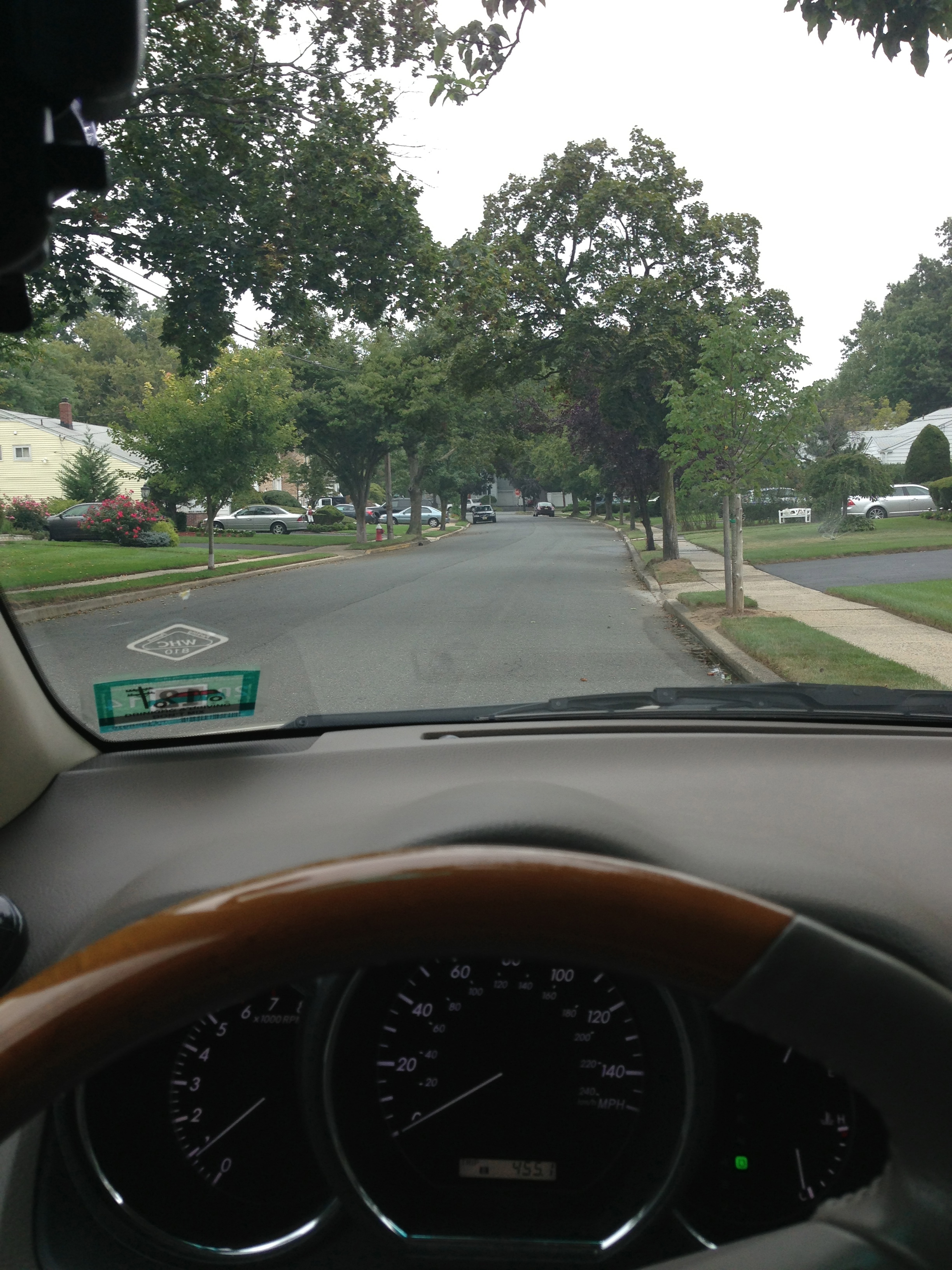
Aug 31 2013
The photo above is the view from Mile Zero. Sitting in the car, fingers tapping the steering wheel, partly in excitement, partly in trepidation. Everything is packed, whatever could be arranged is arranged, and now there are no more reasons to not lift the foot off the brake and put it gently on the accelerator and move away from the familiar into the non-quite-as familiar. So I go. It’s 10am on Saturday, and when I pull away from my parents’ suburban house on their suburban street, I turn on the radio and Car Talk is on. Tom and Ray Magliozzi’s Boston-accented automotive advice takes over my attention and now there’s no trepidation, only chuckling. At both their wacky car humor and the serendipity that has my road trip begin with broadcast automotive exuberance.
My first stop is Wayne, New Jersey, to pick up a box of audiobook CD’s that my friend Mike graciously dug out from his attic, a last-minute brainstorm that ensured that the long bleak miles on the road would not go by in boredom.
Carton full of audiobooks in hand, my next stop is a suburb of Allentown, PA where my high school friend Elysse lives. I stop to have lunch and we catch up on 25 years of jobs, marriages, kids, homes, and how much we’ve both changed since we were teenagers. Elysse’s story, inasmuch as it relates to geography, is interesting to me, particularly on this trip, because of the changing relationship between home and work. She’s lived and worked in urban areas, and also lived and worked in suburban areas, and now works from home. She relates a common American story: at first working and living in the city, then moving to the suburbs. As Vishaan Chakrabarti points out in his recent book, A Country of Cities, 68% of Americans now live in the suburbs, and more than 90% live in areas where residential density is less than 20 units per acre, below the threshold of being serviceable by mass transit. In addition, 46% of Americans now commute from suburb-to-suburb so that the arteries that once took suburban dwellers from their homes to the mall, or the doctor’s office – occasional trips, for the most part – are now clogged with rush-hour traffic not unlike that found in urban centers.
Elysse has started working from home, so that’s been a saving grace. She gets to spend more time with her family and less time on the road. With the massive increase in digital connectivity, working from home is being seen as the “savior of sustainability”. I think people assume that eventually, we will all be working from home and our roads will once again be clear and free of commuting traffic. It would be interesting to see how much of this turns out to be true. When I get a better idea of the statistical trends, I’ll discuss this more, but anecdotal experience certainly helps to put a face on what is otherwise numbers to me.
I didn’t think I’d start thinking about commuting and suburbs by lunchtime of the first day, but there it is… This where the trip is going to be of value. Combining the experiences of meeting friends old and new, learning about their lives, and somehow weaving their stories into the greater theme of urban design and planning.
I left Elysse around 2:30pm and drove about 4 hours toward Fallingwater, the home designed by Frank Lloyd Wright in Mill Run, PA. I had a 10am tour the next day, so the main order of business was to find a place to sleep. I purposely didn’t plan this out because I wanted to find a campsite or cheap motel close to Fallingwater. As I took the exit off of the Pennsylvania Turnpike, I stopped at a Dairy Queen for a Blizzard and asked the girl at the counter if there were any campgrounds nearby. She mentioned two, and I called them up, asking for rates. They both had sites available, at about $24-27 for the night. Not bad, I thought, but let me see if I can find anything closer. Fallingwater itself was still about 20 miles away.
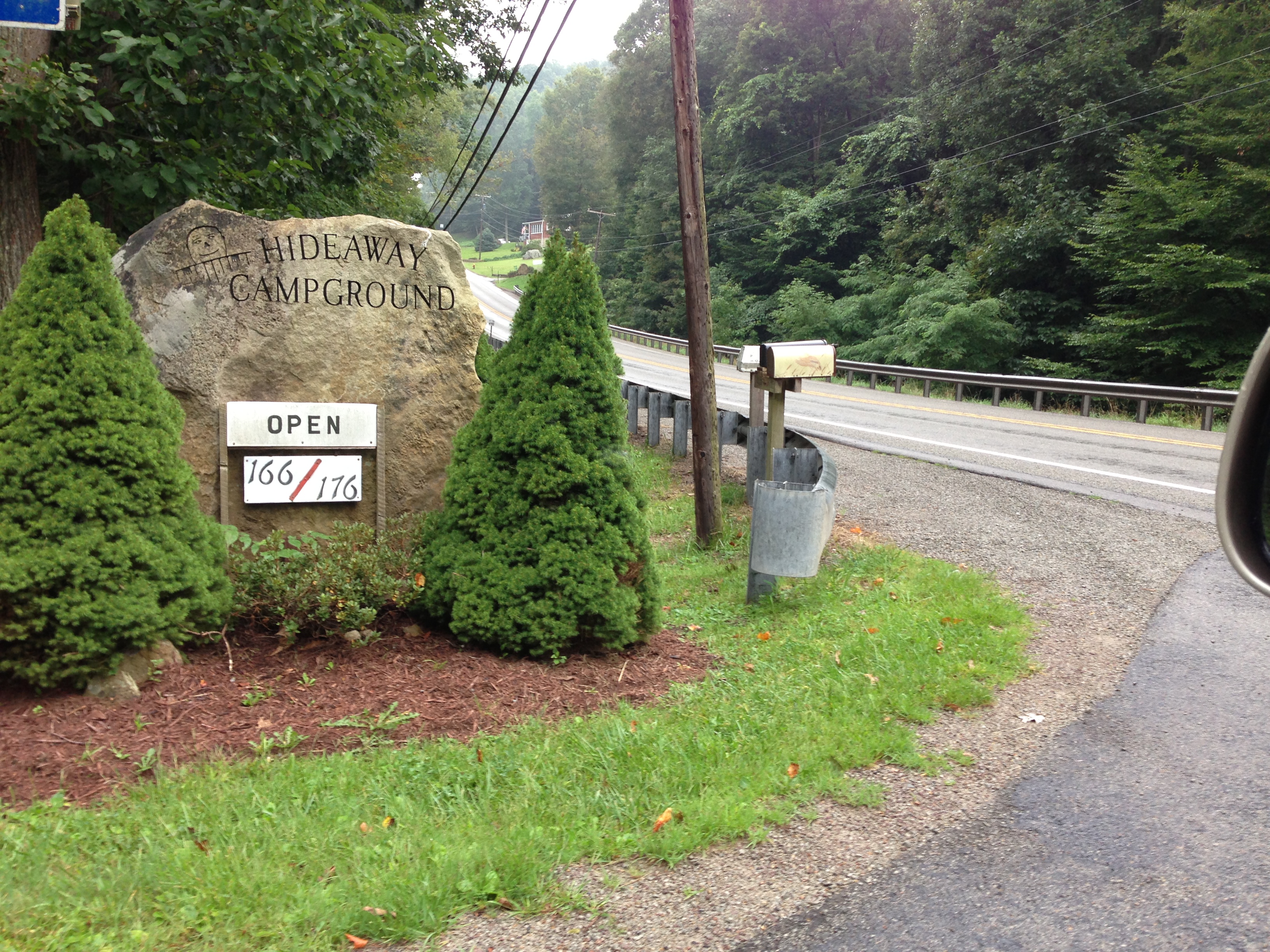
I drove through rural roads, with strange mix of traditionalism and commercialism on the roadside. This area, the Laurel Highlands, are popular for tourists in the summer – camping, rafting, hiking, etc. There were dozens of places that offered some form of entertainment or another, interspersed with open farmland and fields. I pulled into one campground and immediately regretted it. It looked like a carnival was going on. There no sites available anyway, so I moved on. I almost passed by a sign – “Hideway Campground” and immediately liked the sound of it. Pulling in, it was easy to see that this was everything the other place wasn’t – quiet, wooded, small. There were available sites and they only cost $16. A great bargain, and fantastic value. So, the first night of my road trip would be spent under the stars.
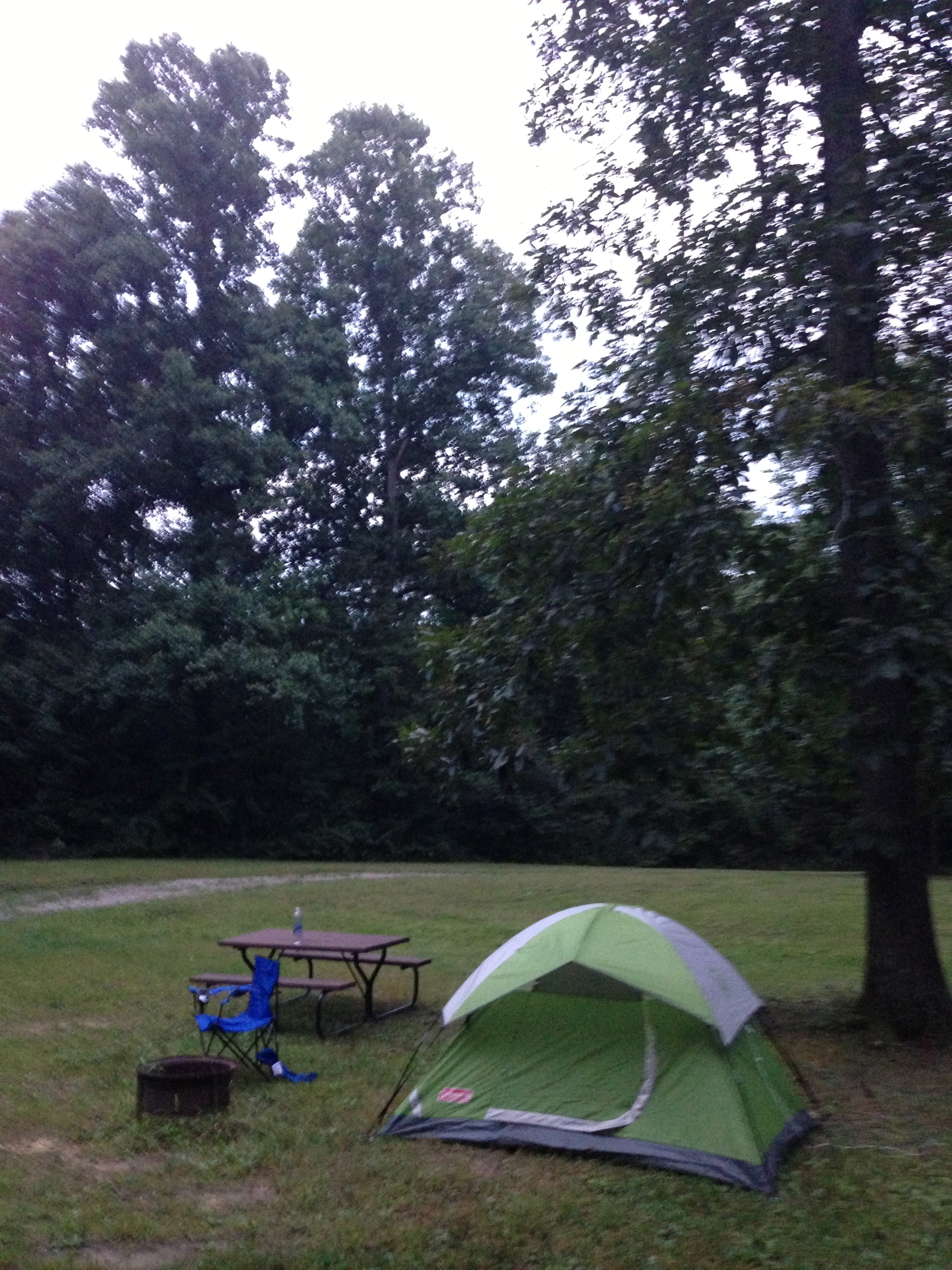
To round out the evening with more happiness and good cheer, I made acquaintances with the family camping next door – A.W. and Karen from Pittsburgh, with their 11 year old daughter. I asked for A.W.’s help to lend me a light to start a fire, and after a while, we got it going. They offered me all kinds of snacks and beverages, and told me about themselves; how they were from Louisiana originally and had been living in Pittsburgh for 13 years. They had 6 other grown children, all over the country. They were Mormons, so they when they heard about my road trip (and planned stop in Salt Lake City), they told me to check out the Temple and Tabernacle there. Since I had nothing to share with them, I drew a little sketch of them at their campsite, which they appreciated immensely. It was good to share their kindness and goodwill, and it made for a great first day.
Connecting us to old friends or new, experiences easy and difficult, the road we think is so familiar, always yields up surprises.
 PALIMPSEST