the broken pencil

HOW I LEARNED TO BE A MORE COMPASSIONATE TEACHER

Photo by: @shynlzbthnrcss

A year or so ago while teaching, I made a big mistake. But also a learned a big lesson in teaching. Yes, even after 14 years of teaching and being an academic administrator, I’m still learning how to be a better teacher.

It was during a session where I was teaching design students some fundamental drawing basics. My mistake was this: I broke a student’s pencil to make a point dramatically. I knew it was a mistake the second after I did it. In fact, I thought it might be wrong even before I did it, but I took a chance and did it anyway and I instantly realised my mistake, the moment I saw the student’s expression. Here I am – former design school Dean, well-respected teacher, trainer of teachers – suddenly faced with the embarrassment of doing the wrong thing in the classroom, with potentially devastating consequences.

But wait… let me go back a bit. You know… for context.

As a relatively experienced teacher who has had good results with students over the years, I’ve sometimes been asked to conduct teacher training at design schools. An important point I try to get across is the need to be a more compassionate teacher. This can sometimes be a hard sell because design teaching (especially the kind you find in architecture schools) has enjoyed a lot of notoriety for being hard on students’ mental well-being. Which is ironic. On the one hand, we teach design students to be empathetic designers – to deeply understand the user, the client, the public… whoever we’re designing for. Design thinking – which is basically empathetic decision making – has become something of a fad, and designers are quick to point out how we have always been empathetic thinkers because we keep the user at the heart of everything we do.

But do design teachers have empathy for design students? In my personal experience… well, let’s just say things could be better. Certainly those days are gone when teachers would tear apart sheets and destroy models, leaving students in shock and in tears. Those habits had already started to vanish by the time I was in architecture school in the mid 1990s. Although my generation of GenX students – the generation infamously known as slackers – would probably have just shrugged such things aside, I think we were starting to foreshadow the coming of the Millennials, who, as we all came to learn, would not stand for such nonsense in the classroom.

But we did get regularly told by some teachers and some jury members that we were lazy, stupid, decrepit, wasting our time, or that we should think twice about continuing in architecture. We regularly had teachers draw marks with permanent marker on our pristine presentation drawings, often to make the not so subtle point that our work was not precious. We were often subjected to sarcasm as a teaching tool, which – unlike current generations – we totally understood as being subtle ways to humiliate us without, you know, actually humiliating us.

When I became a teacher myself, I tried to avoid going down that route (although I do admit that sarcasm has been one of my favourite critiquing tools, now rendered useless by GenZ students who were never raised on steady diet of 1970s British comedy shows like I had been). I never once intentionally sought to humiliate a student or make them feel bad. Unintentionally, though, it’s happened. There are times when I was perhaps a bit overzealous in my disappointment, and to tell the truth, I was never really raised in a household where praise was in big supply. In my house, good work was simply expected, and required no significant lauding beyond the occasional gruff “Ok, good.” Bad work (or worse, bad behaviour) was roundly criticised and punished, and that trend continued through 1990s architecture school. The ability to critique what was wrong in a project or how to improve a project rubbed off on me quite well, but not the ability to impart significant positive reinforcement and make someone feel really happy and motivated about their accomplishments.

But as I mentioned, any shortcomings on my part in teaching were unintentional, and arose more from ignorance and inexperience than anything. I could also blame the mixed signals I used to get from other, more experienced, teachers. Some were always friendly with students, while others said that this was not a good idea. Some said that it’s okay to be “soft”, while others insisted on professional discipline. Often such messages had to do with the divide between academia and industry, and the supposed failure on the part of teachers to enforce rigour and discipline that would result in the inability of graduates to manage with the Real World – the mythical and mystical place where everything was much harder and harsher than the cozy confines of college.

But as I taught over the years, I also learned. For one thing, I learned to dispense with the theatrics I once would employ: slamming the door and leaving the classroom to express my disappointment; or emotionally blackmailing students to make them feel guilty about not doing enough work, while I – busy architect and teacher – was working so hard to teach them. (Ok, I admit I still sometimes do the second one.) And I’ve learned to find a balance between being a student’s friend and also ensuring a sense of rigour and discipline. At least, I’m trying to. Which leads back to the incident where I broke the pencil.

Let me explain the incident in more detail. I was teaching second year design students about manually drawing different orthographic views – top view, side view, etc. I was teaching them how to do this quickly and roughly, but also precisely. Not a super-precise drafted design drawing made with drafting instruments, but drawing a basic plan or elevation accurately by hand – balancing looseness with precision. This is a skill that most designers will need as a professional – the infamous “napkin sketch”, requiring both the roughness of a work in progress and the precision of a drawing that adhered to a correct scale and proportion.
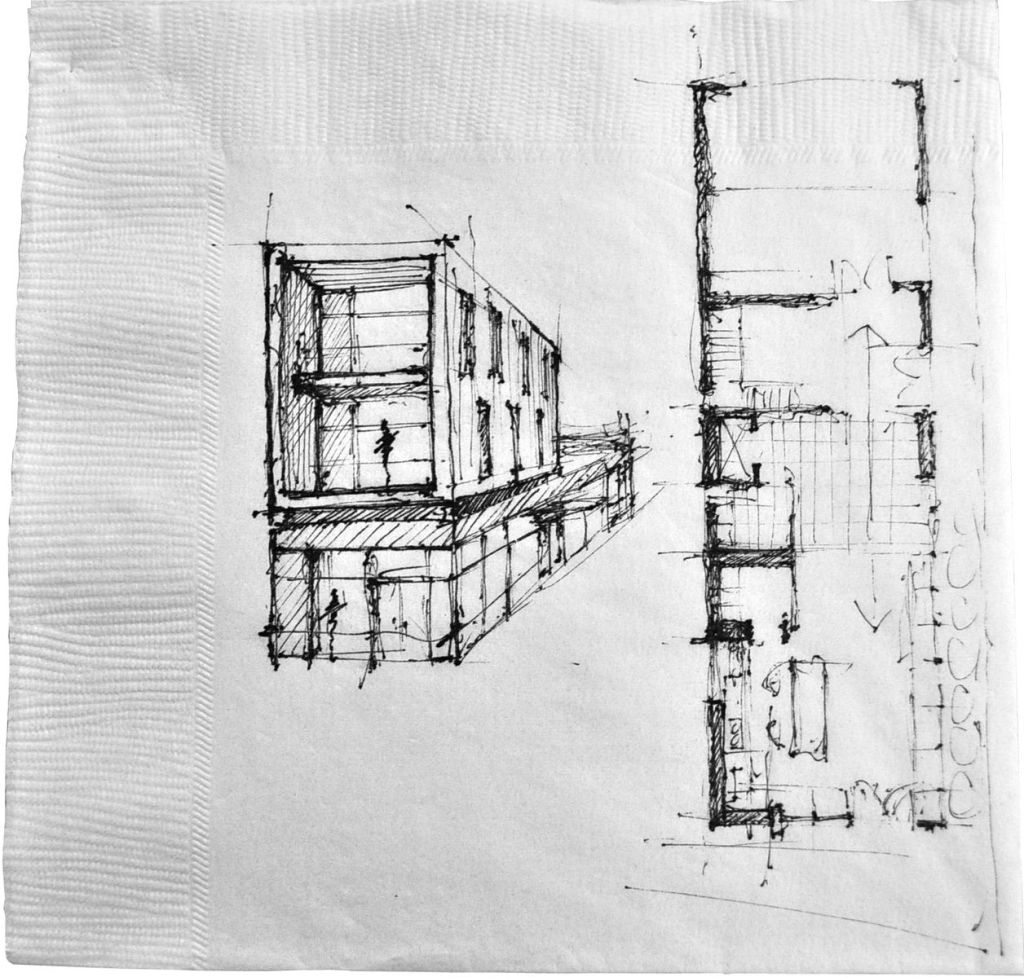
An example of the famous “napkin sketch” in architecture. (Source: wikimedia commons/unknown)

I’d seen some students using hard pencils (or even worse, mechanical pencils) and I was starting to get upset because I would have thought they’d learned how to use soft pencils for rough, loose drawing in their Foundation year. I’d earlier told them not to even bring any pencils harder than HB into the class; we were not going to do any of that kind of precision drawing. I told them to use only soft B-range pencils, meant for rough and loose manual sketching, not for drafting.

In the class I noticed one student – actually one of the more gentler and sweeter students in the class – using an H pencil. I wasn’t infuriated by this, but I did want to make a point right then and there. I don’t know what came over me, but I guess these were students I was teaching for the first time (I visit this university only once a month) and I dipped into my old toolkit of theatrics in order to make some kind of impression on them. I went to the student and – in what I felt was a more amusing than vindictive way – I took her pencil and broke it right in half and pretended to throw it out the open window. Point made. Or so I thought.
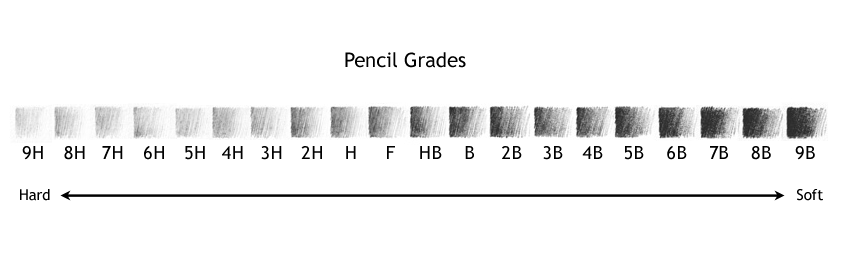
Pencil grades, modified from the original image byย Untitledmind72ย (source)

The look she then gave me was a mixture of shock, disappointment, and resignation. She took it much worse than I expected. She didn’t say so, but I could see it on her face. I knew instantly that I shouldn’t have done it. I even said something to the effect of “You’re not upset that I broke your pencil, are you? Are you really upset?” I may have even half-heartedly apologised a few minutes later. The student was quick to say how she wasn’t upset, but I could see that she was. For the rest of the class period, this bothered me. I’d miscalculated.

I thought about this for some time, and at the end of the day, I went over to the campus stationery and bought a new pack of soft drawing pencils for her, compelled mostly by guilt, but also because I wanted to make another point, both to myself and to the student. I purchased the pencils and started walking back to where I was staying on campus, and I saw the student outside the design building with a small group of friends. I went up to her and quietly handed her the pack of new pencils and told her that I was sorry, that I was just trying to make a point, and that I realised she was upset.

This was very awkward for her, I thought. In India, there’s still a fairly strong hierarchical divide between teacher and student (we’re still called “Sir” and “Ma’am”) no matter how friendly you try to be. I can’t say for sure, but it could very well have been the first time a teacher had ever genuinely apologised to her, let alone buy her a new pack of pencils. She was effusively trying to tell me how it was ok, and she didn’t feel bad, and how I didn’t have to do this, but I insisted. And despite the awkwardness, I could tell she was touched by the gesture.
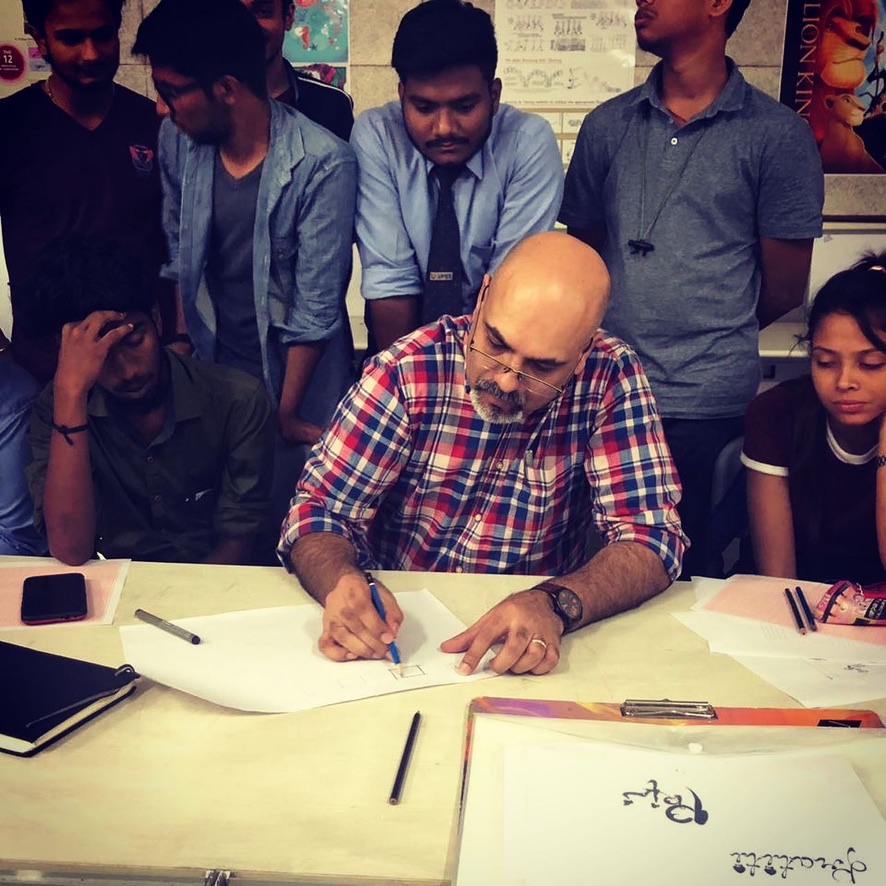
No, she’s not in this photograph.

And this is where I finally get to my point in all this. This act, this gesture, this episode of disappointment followed by camaraderie – this balance between being a bad guy and being a good guy – this is what I’ve learned is at the heart of teaching. This is the existential nature of what we as teachers do. We make mistakes and we sometimes make students feel bad, and this is forgivable most of the time, but we must – without exception, without delay – follow that up with compassion and goodwill. It’s what makes us human, and we need students to understand that we’re human, otherwise that divide between student and teacher will never be bridged.

That act of breaking her pencil and then immediately buying her a new set, this act helped to convey both the seriousness of what I was teaching and the empathy of understanding that mistakes can happen, that it’s ok, it’s not a bad thing. It also conveyed that I was a real person, not just a figurehead with a bank of knowledge to impart. I haven’t discussed this incident with the student since then, but I genuinely think that we reached an understanding that day, and we smoothed a pathway toward future learning, where she knows that, as a designer, I’m not only very serious about what I do but that I also don’t take it too seriously. And that has led to more effective learning. The student really put in a lot of effort in that workshop that semester, and was one of the most diligent and enthusiastic students in the class. It’s possible that she was this way well before the Broken Pencil Incident, but I like to think that whatever barriers may have stopped her from going the extra mile in that workshop were dismantled by our mutual encounter.

I later taught another workshop at the same university, with the same student in the class. This time we were doing an anthropometrics exercise – mapping the way the human body interacts with furniture. During the mapping process, I wanted the students to use a digital tool which most had never used, as a means to do the tedious mapping more quickly. The ‘pencil student’ at first hesitated to use the digital tool, and insisted on doing the mapping by hand, but I insisted that she try it and get out of her comfort zone. Reluctantly she did it, and soon realised how much easier it was to do it digitally, and mapped her anthropometric diagrams successfully. I like to think that her willingness to change her medium was partly based on the trust we had earlier established. That she tried something new because she knew that if I suggested it, then it was worth doing.

I may never know this for sure (or maybe I will when she reads this), but I do think that rigour and discipline can go hand in hand with compassionate, friendly teaching. I’m often tough with my students, and I often expect a lot from them – a lot of work or a lot of critical thinking. But before I ask them to do so much work for me, I try to build a foundation of trust and compassion, I let them know that I’m a friend, and that I’m here for them in a real and human way. As teachers, we often forget this, and we expect students to work hard simply because they should. Because they’ve engaged in some holy contract by enrolling in a design school for which they should feel pride and nobility. But this is not always enough of a buy-in. This value has to be proven, and the steps to prove it require teachers to engender trust with our students. The trust can’t come after the fact, like it did in our generation of academics. We trusted our teachers after they put us through the ringer, but that doesn’t work anymore. A teacher needs to earn that trust before, and then you can expect the magic to happen.
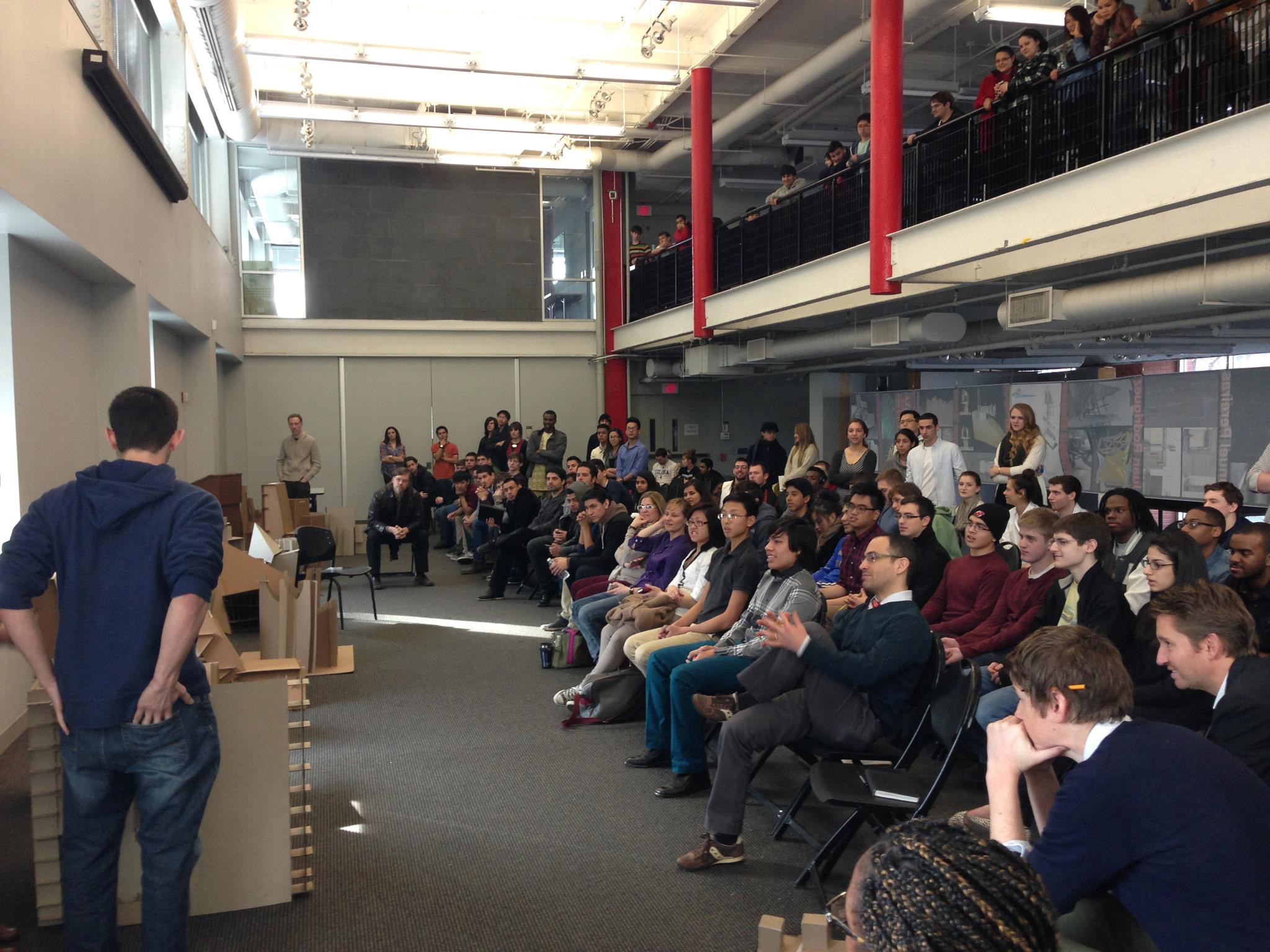
summertime for design students

TIPS FOR DESIGN STUDENTS TO STAY MENTALLY ENGAGED, ACTIVE, AND CREATIVE DURING SUMMER VACATION

[Note: This is an essay I wrote and have been sending to my students every year. Obviously this year, things are a bit different. The pandemic and subsequent lockdowns are going to limit some of the activities Iโ€™ve listed here. But on the other hand, they will give you ample time to do some of the other activities. So adjust accordingly.]

A lot of my students complain about being bored during the summer holidays. On the one hand, itโ€™s surprising how quickly you start being bored. On the other hand, I can understand how a full year of design school gets your neurons firing with intense frequency, and sitting at home or hanging out at the coffee shop is just not doing it for you anymore. Youโ€™ve gotten used to thinking at a high level and being creative. So Iโ€™ve put together a few suggestions to relax during the holidays and still exercise that brain muscle of yours. Like all muscles, if you donโ€™t exercise it, it will be that much harder to get back in shape.

I donโ€™t expect all of you to follow all of these suggestions, but give them a try. Without a doubt, have funโ€ฆ have loads of fun. Anyway, here are some ideas that help fight off boredom and will also make you a better designer.

  • Read! You can read books about design or architecture, but just read something! Fiction, non-fiction, comic books, newspapers, magazines, online articles, whatever. Try audio books if you have a hard time reading. At the end of this essay, Iโ€™ve listed some books that might be interesting for architecture and design student
  • Practice drawing. Go outside and observe the macro world โ€” go to malls, train stations, airports, and other public spaces and draw what you see. If youโ€™re at home, draw what you see at home or outside your window. Practice rendering techniques and drawing with unfamiliar media. Learn to get better at free-hand skills. Develop your ability to draw what you imagine โ€” visualise things in your mind and draw them.
  • Go to public places and simply observe human behaviour. Watch how people interact with spaces and the objects within them. Ask them questions and inquire why theyโ€™re doing what theyโ€™re doing and whether theyโ€™re even conscious of it. Take pictures! One of my favourite idle activities is to sit at an airport or station and invent background stories for people that I observe.
  • Learn a new software (or simply get better at what you already know) like Autocad, Sketchup, Revit, Rhino, Grasshopper, Maya, Vray, 3DS Max, Photoshop, Illustrator, InDesign, Final Cut Pro, AfterEffects, etc. YouTube has become a great resource for this. Learn to code, design a website, or Flash, HTML, CSS, and Javascript. Learn how to do better presentations beyond simple Powerpoint.
  • Learn a new form of creative expression, like filmmaking or cartooning. Explore different media, e.g. watercolour, clay sculpture, mosaic, photography, etc. Learn a musical instrument or explore a musical genre that youโ€™ve never listened to before. Act in a play, or write one.
  • Design a new game. It could be a board game, card game, mobile app, or even a new sport.
  • Practice writing and composition. Start a blog or write reflective essays. Write poems.
  • Design (or refine) your portfolio. Document your work and think of a way to present it, both as a hard-copy and digital. Figure out how to let it expand as your body of work grows. Make sure itโ€™s a good representation of โ€œyouโ€. But try to keep it simple and resist the temptation to include everything. Sometimes itโ€™s worth asking someone to help you edit.
  • Browse random Wikipedia articles or use websites like StumbleUpon or HowThingsWork to discover new things. There are many YouTube channels which explain how things work and how things are made.
  • Explore design workshops or seminars (or webinars) that are happening in your town (or nearby). Go to museums and galleries and be aware of new exhibitions.
  • Learn a language, or learn about a new culture, craft or art form. Travel to somewhere youโ€™ve never been, even itโ€™s a neighbourhood in your own city. Meet an artist, craftsman, artisan, performer, or designer and observe how they work.
  • Engage in some social work or volunteer activity. Join an NGO and find out ways that you can perhaps help them with their design objectives (e.g. designing posters, brochures, or newsletters for them).
  • Try to get a job at a design firm as an intern. Offer to help them in any way you can (but insist on getting paid in some way, even if only to cover your expenses).
  • Watch movies, preferably about art, design or architecture, but watch stuff thatโ€™s intellectually stimulating. Sure, thereโ€™s nothing wrong with the occasional mindless summer action blockbuster, but balance it out with some โ€˜otherโ€™ stuff. Again, Iโ€™m including a list of movies that have some relevance to design and architecture.
  • Watch TV and OTT shows. Life is not all about bad American sitcoms. Watch quality TV shows and limited series. Subscribe to a streaming service if you donโ€™t have it already and dig deep into their library for shows that you may have never heard of. Look for good documentaries.
  • Listent to Podcasts. There are hundreds if not thousands of podcasts on incredibly interesting topics โ€” some specific, some general. If you have difficulty reading, then podcasts is another way you can learn.
  • Above all, donโ€™t let boredom be an excuse for wasting time. Fill your time with interesting stuff. Catch up on sleep (because you know you wonโ€™t be getting much when school starts again) and break up your day into fragments of activities so you donโ€™t get bored of doing the same thing.

SUGGESTED READINGS

Books and articles that feature architecture and design

  • Architecture: Form, Space and Order by Francis DK Ching
  • A Tractate on Japanese Aesthetics by Donald Richie
  • The Death and Life of Great American Cities by Jane Jacobs
  • The Wright Space: Pattern and Meaning in Frank Lloyd Wrightโ€™s Houses by Grant Hildebrand
  • Invisible Cities by Italo Calvino
  • Ways of Seeing by John Berger
  • The Soul of a Tree by George Nakashima
  • Drawing on the Right Side of the Brain by Betty Edwards
  • Great Streets by Allan Jacobs
  • The Poetics of Space by Gaston Bachelard
  • Principles of Art History by Heinrich Wรถlfflin
  • Flatland: A Romance of Many Dimensions by Edwin A Abbott
  • Why Buildings Stand Up by Mario Salvadori
  • Why Buildings Fall Down by Mario Salvadori
  • Zen and the Art of Motorcycle Maintenance by Robert Pirsig
  • The Tibetan Book of the Dead by Sambhav Sambhav
  • Learning from Las Vegas by Robert Venturi and Denise Scott Brown
  • Brave New World by Aldous Huxley
  • 1984 by George Orwell
  • Red Mars by Kim Stanley Robinson
  • Freakonomics: The Hidden Side of Everything by Steven Levitt & Stephen Dubner
  • Mother Pious Lady: Making Sense of Everyday India by Santosh Desai
  • The Enlightened Cyclist by The Bike Snob
  • Rendezvous with Rama by Arthur C. Clarke
  • How to Read Towns and Cities: A Crash Course in Urban Architecture by Jonathan Glancey
  • The World Without Us by Alan Weisman
  • How to Live in a Flat by W. Heath Robinson and KR Browne

SUGGESTED MOVIES

Films that feature architecture and design

  • Metropolis (1927, dir. Fritz Lang)
  • Gattaca (1997, dir. Andrew Niccol)
  • North by Northwest (1959, dir. Alfred Hitchcock)
  • Rear Window (1954, dir. Alfred Hitchcock)
  • 12 Monkeys (1995, dir. Terry Gilliam)
  • Ran (1985, dir. Akira Kurosawa)
  • Rashomon (1950, dir. Akira Kurosawa)
  • Seven Samurai (1954, dir. Akira Kurosawa)
  • Moon (2009, dir. Duncan Jones)
  • The Fifth Element (1997, dir. Luc Besson)
  • Dark City (1998, dir. Alex Proyas)
  • My Architect (2003, dir. Nathaniel Kahn)
  • Parasite (2019)
  • Blade Runner (1982, dir. Ridley Scott)
  • Blade Runner 2049 (2017, dir. Denis Villeneuve)
  • The Grand Budapest Hotel (2014, dir. Wes Anderson)
  • 2001: A Space Odyssey (1968, dir. Stanley Kubrick)
  • Brazil (1985, dir. Terry Gilliam)
  • The Hudsucker Proxy (1994, dir. Joel/Ethan Coen)
  • Koyaanisqaatsi (1982, dir. Godfrey Reggio)
  • Powaqqatsi (1988, dir. Godfrey Reggio)
  • Life as a House (2001, dir. Irwin Winkler)
  • Helvetica (2007, dir. Gary Hustwit)
  • The Five Obstructions (2003, Jorgen Leth & Lars von Trier)
  • Art and Copy (2009, dir. Doug Pray)
  • Handmade Nation (2009, dir. Faythe Levine)
  • Rivers and Tides: Andy Goldsworthy Working with Time (2001, dir. Thomas Riedelsheimer)
  • Wal-Mart: The High Cost of Low Price (2005, dir. Robert Greenwald)
  • Wall-E (2008, dir. Andrew Stanton)
  • 9 (2009, dir. Shane Acker)
  • Loganโ€™s Run (1976, dir. Michael Anderson)
  • City of Ember (2008, dir. Gil Kenan)
  • The Matrix (1999, dir. The Wachowskis)
  • Total Recall (1990, dir. Paul Verhoeven)

dear design students: here are ten tips for your upcoming jury

Youโ€™re welcome. Sincerely, Your Design Faculty

Image for post

For design students, juries are often a source of anxiety and stress, but ideally they shouldnโ€™t be. Juries are primarily about design critique and they work best when theyโ€™re open, honest, impersonal, and transparent. However, this openness can also mean that jury feedback can be subjective, contradictory, and confusing. Add this to the anxiety of presenting your work to โ€˜expertsโ€™ and โ€˜professionalsโ€™ after many months of hard work and naturally students find juries a cause for distress. And I admit that we as design teachers often give mixed messages about how seriously you should approach juries:

Message A: โ€œJuries are important; take them seriously. Donโ€™t embarrass us in front of industry professionals!โ€

Message B: โ€œJuries are not that important; donโ€™t worry, relax. Donโ€™t take it personally.โ€

These messages arenโ€™t necessarily contradictory, they simply need to be balanced. So take the jury seriously if you want to get feedback, but donโ€™t take it so seriously that you get nervous and canโ€™t represent your work in a good light. But do remember: Itโ€™s only a jury, after allโ€ฆ. itโ€™s not a trial, or a judgement, or a punishment. Itโ€™s simply a critique on your work by professionals and academics who are not intimately familiar with your project, or with you. I think many students have the wrong impression about juries and put a lot of pressure on themselves which itself causes the distress that one is fearing and in turn causes the jury to go โ€˜badโ€™.

Yes, you should take juries seriously. Yes, you should speak maturely, dress appropriately, and be well groomed and bathed. You should make a good impression not just for yourself but your institution. To help with this, Iโ€™d like to share ten general tips for a healthy, productive, and stress-free jury.

1. BE PREPARED

Double check your sheets, slides, videos, renders, animations, prototypes, models. Make sure you have everything. This doesnโ€™t mean that youโ€™ll present everything, but be prepared to show any work that jurors may want to see. Keep in handy, and ready to find in an instant, either physically or digitally. Give yourself enough time to check. Enlist your family to help you. Be ready when itโ€™s your turn, and donโ€™t make the jury wait for you. Arrive on time and set up on time. If youโ€™re presenting digitally, check all A/V connections and make sure all your tech gadgets work properly. If youโ€™re posting physical sheets on a wall panel, bring plenty of pins! Rehearse your presentation beforehand. Keep notes if you need them, and present your work in the form of a story or narrative. Many of you go through your project like this: โ€œFirst you enter from here, then you go here, then thereโ€™s a desk, then thereโ€™s a tableโ€ฆโ€. Instead, talk about your design process. Start with your design problem, your case studies, and your analysis. Describe what you learned from them, and what you chose to bring into your design brief and concept. Then explain how that concept manifested in your design development and detailing. Use the right design vocabulary which was taught to you. Avoid the words โ€œbasicallyโ€ and โ€œjustโ€ and โ€œlikeโ€ and โ€œkind ofโ€ and โ€œsort ofโ€ and โ€œummmโ€.

2. BE RESTED

Donโ€™t make the mistake of staying up all night before your jury. Get a good nightโ€™s sleep. Eat a healthy breakfast. Be clean and fresh and alert. Dress appropriately; be cognisant of your appearance โ€” whether itโ€™s about clothes, makeup, headgear, or accessories. Be aware about appearing too formal or too casual or too revealing. You have the freedom to wear what you like, but if the focus is on your look rather than your work, then it will distract the jurors.

3. BE THICK-SKINNED

Yes, the jurors may say some things that sound humiliating or condescending. Design faculty usually try to find jurors who are not aggressive or mean-spirited, and to be honest even the ones who may say nasty things about your work (or lack thereof) or who may laugh at certain elements of your design are not doing it to be intentionally mean. They have certain standards for where you as a student should be, skill-wise or knowledge-wise, and theyโ€™re expressing their frustration at your inability to meet your potential. And jurors are human, too; theyโ€™re not perfect. Sometimes they are harsh, but more often than not theyโ€™re making a valid point. In the professional arena you will get burned much worse, believe me. So itโ€™s good to develop a thick skin; if a juror is being harsher than you think you deserve, then keep cool and move on. Which leads to the next pointโ€ฆ

4. BE COOL

Stay calm always and donโ€™t lose your cool. Donโ€™t be defensive. Donโ€™t argue with the juror. Try not to get angry or sad or sarcastic. Not everything they say is going to be valid; thatโ€™s why we usually have more than one juror. But this is not the time to defend yourself; youโ€™re there to receive feedback. You can ignore it or use it, thatโ€™s your decision. But it doesnโ€™t help to be combative because then the juror will most likely get combative right back at you and you donโ€™t want that. Students often ask me whether they should defend their work when the juror doesnโ€™t โ€œget itโ€. It depends; often I find that it doesnโ€™t really help because thereโ€™s limited time to really change peopleโ€™s minds. You stand to lose more than you gain by trying to defend yourself. Unless you think youโ€™re really being treated unfairly, or the juror is completely off-base, then I would avoid getting entangled in an argument. But take a call.

5. BE AN OWNER

Take ownership of your work and your design decisions. Too often I have seen a response to a juror feedback as โ€œMaโ€™am/Sir/Professor said to do that.โ€ Sorryโ€ฆ as a design student, once you choose to accept your tutorโ€™s critique and incorporate it into your design, it is now yours. Donโ€™t blame your tutor for design decisions that may not have worked out. Sometimes it could be because you misinterpreted your tutorโ€™s critique. Sometimes the critique may have been given with too little background. Sometimes the tutor may simply be wrong, but thatโ€™s part of the subjectivity of design education. Youโ€™re being trained to absorb critique, reflect on it, and decide how to incorporate it, if at all. Once itโ€™s part of your design, itโ€™s yours.

6. BE HONEST

Donโ€™t try to bullshit your way through a jury. If you donโ€™t know the answer to a question, say โ€œI donโ€™t know.โ€ A juror can tell when youโ€™re making stuff up. Itโ€™s better to be honest and say that you donโ€™t know, or didnโ€™t get a chance to resolve it, or ran out of time, or simply that you were unable to solve the problem. Capitalise on such a moment as an opportunity for learning, and ask the juror if they can assist you with the answer. Which leads toโ€ฆ

7. BE INQUISITIVE

Very few designs are fully resolved at the time of the jury. This is expected. There is always room for change, improvement, or further development. Use the jury as an opportunity to gain insight into how you could have done better, or to find out how to get past an obstacle that you just couldnโ€™t manage by yourself. The jury is there to help you, not judge you (despite the name). And if thereโ€™s something you just couldnโ€™t figure out, itโ€™s ok to ask the jury to suggest a solution or direction. Learning does not end with a jury. At the end of a project, there should be a reflection on what you could do to make a better design resolution (or even a better presentation). Which leads toโ€ฆ

8. BE CONSCIENTIOUS

What does this mean? It means you should be an active presenter, not a passive one. Donโ€™t just stand there and present your project. Take notes on the critique, record the comments, document the feedback, so that you can reflect on it and apply the learning. When youโ€™re nervous anyway, you may not be n a position to remember all the feedback. So recording helps, and your friends and classmates can help you with this. Also, when youโ€™re not presenting, be considerate of other presenters. Give them the respect and attention you would want if it was your turn. Donโ€™t whisper, chat, giggle, laugh, or carry on while others are doing their best to concentrate on the presentation. If you need to talk, go outside. And silence your phone!

9. BE PRESENT

Donโ€™t just be there for your own jury. Be there for the entire proceedings. You will learn far more from listening to the presentations and critiques of 10, 20, or more of your classmates than you will ever learn in the scant 15 minutes of your own feedback. Many students waste the jury day by wandering around or chatting/texting/surfing, or trying to desperately finish their projects, or simply not even being on campus. Why? You are missing out a super intense learning experience. Not to mention, why wouldnโ€™t you want to support your friends for their presentations? It means so much to someone who is nervous to have a group of friends in the audience lending moral support, a group of reassuring and familiar faces to cheer them on. Itโ€™s about compassion and camaraderie.

10. BE BRAVE

This is the most important. Many jurors comment that student often have difficulty applying the learning from one year to the next. I think this is because of the Ostrich Syndrome. Like ostriches, when you sense danger, you bury your head in the sand and believe that if you canโ€™t see the problem, it will go away. Which is why so many of you skip your classes and mentor sessions, and even worse, your own juries. In the design world, missing your jury is an unforgivable sin. You have robbed yourself of the chance to get what you claim you crave most โ€” feedback. And why? Because youโ€™re embarrassed about not having enough work to show, or the work is perhaps poor quality? So what? How do you think youโ€™re going to get better next time? You learn from your mistakes and rebound! This means that, yes, you do have to listen to the jury tell you that you didnโ€™t do a great job, and thatโ€™s never fun. But then you should admit your lack of progress, then turn it around and explain what the problem was and why you got stuck, and ask for advice on how to get unstuck. The most noble thing in academics and professional life is to fail and then get back on your feet and succeed. When you fail, you must acknowledge it and try to find out why, and then move on. This is life, not just design. It will define your whole existence for years to come. But if you retreat and avoid in the face of failure, youโ€™ll almost certainly fail again. When college is long over and finished, youโ€™ll still regret that retreat.


One last request. Please donโ€™t ignore this advice. Design students have so much potential and so much talent; just managing to get through design school is itself a big achievement which many people canโ€™t do. Donโ€™t let your inner fears restrict you and get in the way of your success. Creativity requires action, boldness, honesty, and dignity. The worst punishment that design students get is from themselves, not from jurors or tutors. Weโ€™re not here to beat you down or boost our egos. Weโ€™re here to discuss new ideas and learn new things (yesโ€ฆ in teaching, we are learning just as much as you, if not more). Weโ€™re here to help you and we do the tough and tiring job of teaching and sitting in juries because weโ€™re hungry to talk about design with you. If youโ€™re not as hungry as we are, then youโ€™ll see us become sad and frustrated, because no one wants to spend an exhausting day talking if the other person is not listening. So please continue to work hard, be imaginative and brave and confident, and we look forward to sharing ideas with you very soon.

Best of luck to all of you, in your juries and beyond!

the digital campus

PREPARING TODAY’S STUDENT DESIGNER FOR THE TECHNOLOGY OF TOMORROW – AN EDUCATOR’S DILEMMA

When I was studying architecture in the mid-1990s, the design profession (and design education, by extension) was in the middle of a massive paradigm shift. CAD (Computer Aided Design) was becoming the norm in architecture firms everywhere, and colleges were struggling to figure out how to strike the right balance between ensuring that students learned vital manual drawing skills โ€” passed down through centuries of architectural teaching โ€” and preparing them for the digital skills needed by the professional marketplace upon graduation. Before joining architecture school, I had worked as a CAD draftsman in an architecture firm for a year, and in those days many offices had specific employees (sometimes students) who were responsible for preparing all computer-drafted drawings based on hand-drawn sketches and notes given to them by older architects who werenโ€™t proficient in the software. Firms would manage the skill disparity by striking their own balance between older and younger designers, who had varying levels of competency in the software used at the time. The typical office space had just as many drafting tables in the studio as bulky computer workstations.

Fast forward two decades, and the profession is still trying to negotiate the balance between digital tools and manual skills. The actual physical tools may have changed, but if you ask any designer practicing today whether they value digital skills or manual skills, they will undoubtedly say that both are required, in different degrees. Where does that put people like me โ€” design educators who are also trying to straddle the right line between these teaching these seemingly opposing skills? Given the limited time we have to prepare students for an increasingly competitive industry, where should we focus our energies in teaching? Students in Indian design schools today express a strong desire to learn digital skills, whereas the employment market is looking not only for people who are conversant with software, hardware, digital fabrication tools, prototyping, and so on, but who can also sketch and model by hand. Thatโ€™s not to mention the ongoing important need for critical thinkers and problem solvers.

One of the common discussions I have with design students is managing their expectation of learning software. Savvy students know quite well that the industry will require them to be fluent in various software suites upon graduation, and they often demand that we teach them how to use the important software in the classroom. But this presents a two-pronged problem: (a) Are design schools simply software training institutes? And (b), what happens when the software (and other technologies) become obsolete by the time they graduate? Which is increasingly common these days, with the rapid, almost monthly, upgrades and innovations in technology.

The answer to the first problem is that, no, design teachers should not be software trainers. There is already a huge (and low-cost) market for that. Students paying high fees for quality design education would be better served learning software from technical training centres (or even learning it themselves online), while design colleges should focus on the aforementioned need to develop conceptual skills and critical thinking. Colleges should instead be concerned with teaching software approach rather than instruction. In other words, design teachers should avoid spending valuable class time teaching how to navigate menus of specific (perhaps soon-to-be outdated) software suites, and instead focus on general approaches to digital visualisation and prototyping. This should be independent of the brand or version of a particular software or technology.

The answer to the second problem is that, along with genericising the teaching of technological tools, design curricula should be flexible enough to allow for rapidly changing technologies. Embedding a specific software brand or suite by name in the curriculum is a mistake. In fact, assuming that the design process is dependent on that specific type of digital tool, which may not even be relevant in a few years, is misguided. An example is 3D printing, which is all the rage these days โ€” not just in design, but in other walks of life; 3D printers were one of the first high-tech tools we purchased for our campus. But this technology undergoes new innovations almost every few months, and the applications for 3D printing increase rapidly across many disciplines and domains. So embedding a design class in the curriculum writeup thatโ€™s strictly about 3D printing, using only the technology we have at hand, is short-sighted.

Design curricula must not only be adaptive in its language, but a good design school should constantly be revisiting and revising the curricula to update against new innovations and trends in the profession. And they must manage resources, too, which is in many ways more difficult because the cost of quality equipment and infrastructure is very high. Realising that the expensive tech that was purchased last year is going to be outdated next year causes anxiety for many college administrators who are setting up and upgrading workshops and labs. The approach is to follow a more data- and research-driven process to understanding and forecasting trends in tech innovation rather than taking a knee-jerk reaction to buying the latest fashionable tools.

In the design school where I teach, we revised our curriculum and purposely removed any mention of software suites, brands, or specific technologies. The learning outcomes refer instead to generic and innovative ways to use the software and tech tools, with exploration taking priority over proficiency. Our assessment system rewards students who show initiative and ingenuity in finding the most suitable software for their particular needs and using it in innovative ways, often exceeding their own teachersโ€™ expertise and expectations. Weโ€™ve also taken a more progressive approach to technology, and attempted โ€” as best as possible โ€” to train students for future technologies as well as existing. We have also worked with digital partners to provide software subscriptions to students at low cost to avoid the ethical (and pervasive) conundrum of digital piracy.

Managing these expectations โ€” the studentsโ€™ demand to be technologically dexterous and up-to-date against the constant flux of changing technology โ€” against the desire to keep the focus of design education on critical thinking, theory, process, and problem-solving is the task of the 21st century design educator, and itโ€™s not an easy one. But a way forward is to understand โ€” and help students understand โ€” that technology in any form is a tool, and is not the solution itself. No amount of cutting edge technology on its own is going to solve design problemsโ€ฆ that has been, and always will be the domain of the intellect and talent of the designerโ€™s mind and spirit. Just as a pencil is only useful in the hands of someone who knows how to use it skilfully, through long practice, with failures followed by success, so is any high end technological tool. It has to be used โ€” and taught โ€” wisely.

[A version of this article was previously published in the March 2018 issue of Silicon India magazine.]

the academics/industry gap in india

A while ago, I was invited to speak at a conference session in Delhi conducted by CII (Confederation of Indian Industry) whose theme was Bridging the Gap Between Academics and Industry. Along with me on the panel were some important people in education from prestigious institutions, although I was the sole panelist from a design college. Their stimulating words gave me a lot to think about and my own talk reflected on their valuable insights. It was clear from the comments during and after the panel that many people from academics and industry believe that there is a wide gap between what students in higher education are taught and what the industry expects of them when they graduate, and that thereโ€™s an urgent need to narrow that gap significantly, considering India is cascading into a turbulent period of economic and social uncertainty. Admittedly, I truly donโ€™t believe that anyone is 100% sure how exactly to prepare our students for the future when the future itself is so ambiguous.

The panel at the CII conference on”Bridging the Gap Between Academics and Industry.

What did became clear to me were two things: First, that our traditional educational systems are designed for the present situation (and arguably even the past), and that we need to significantly overhaul the entire structure and prepare students for uncertainty by making them more adaptable to new paradigms. Second, I felt that the Academics/Industry Gap is actually more a perception than reality.

To address the first issue, we need to reevaluate existing educational models from top to bottom โ€” in the private, non-profit, and governmental sectors, and in both schooling and higher education. Society seems to demand that traditional paradigms โ€” degrees, fixed curricula, and numerous rules and regulations โ€” lead to academic quality, but that is clearly not the case. Requiring all new higher-ed teachers to have PhDโ€™s, for example, is not necessarily going to improve teaching in the classroom nor produce better graduates. Such teachers may have more domain knowledge, but does that necessarily mean they are better at teaching? I donโ€™t believe so. Look to sports and you can find numerous examples of average players becoming excellent coaches, and vice versa. Society should start to accept that many of our recognized educational models are often outmoded and are designed for a fixed set of outcomes based on known scenarios, whereas the current need is to embrace non-traditional approaches plus different ways to produce and measure quality.

And I donโ€™t automatically think we need to look only to the West for this, by the way. Indiaโ€™s own rich and ancient history has numerous examples of adaptive teaching methods, so as a start we can certainly look within in our own culture for the answers.

As for the second issue, I believe that Industry (although there is hardly such a monolithic thing anymore called โ€˜capital-Iโ€™ Industry) has to reassess their expectations of a graduate and abandon the idea that a fresh graduate must already have a full checklist of skills and knowledge, ready to become a professional the moment they take off their graduation cap and gown. Particularly in the design disciplines education has, for centuries, been followed by years of apprenticeship where the learning continues, and where professionals have taken on the onus of continuing the education of young aspirants. In addition, there is no longer a fixed graduate profile; every employer has different expectations and requirements, so a single fixed curriculum is not going to fulfill all workplace demands. So, if the working environment is rightly considered a natural extension of learning, the โ€˜gapโ€™ between academics and industry is seen as more perception than reality.

Even so, there are ways to reduce this perceived gap, and Iโ€™d like to highlight four strategies that we have been practicing in my own institution:

Industry Accountability

As Iโ€™ve said, professional firms and companies of all shapes and sizes need to consider themselves as equal partners in education rather than just โ€˜recipientsโ€™ of skilled and trained professionals. Employers needs to be willing to spend the time and effort to continue the training that begins in college and provide a seamless transition to workplace learning by acting as true mentors to young graduates.

Adaptive Curricula

Academic institutions should move towards designing curricula that produces graduates of diverse profiles rather than assume that all graduates in a discipline fit a fixed outline. Allowing flexibility and student choice in the curriculum via electives and open learning, and not worrying about how much there is to โ€˜coverโ€™ in a given semester is important. No teacher is able to actually โ€˜coverโ€™ whatever is needed anyway, so we should give students the freedom to chart their own learning pathways. Institutions should also allow more students and teachers the flexibility to adapt to wider varieties of industry collaborations which donโ€™t necessarily coincide with academic timelines and structures.

Embedding Industry Early and Often

Institutions should rethink the traditional internship model and think of ways to include industry from Day One of a studentโ€™s college experience. The involvement of working professionals can start small and get progressively higher so that a studentโ€™s skills also grow professionally. Moving from basic industry masterclasses to intensive workshops to live industry projects and consultancies is one way to make this natural progression happen. This mitigates the culture shock of moving directly from classroom to workplace and the ensuing distress that often gets in the way of learning performance.

Value-based Education

Finally, both teachers and employers need to strive towards creating not just better professionals, but better citizens and better human beings. Curriculum and pedagogy on one side and industry practice on the other must both be infused with sensitivity towards ethics, compassion, cooperation, integrity, and honesty. Technical skills will always be important but human skills are absolutely essential towards preparing students for uncertain futures.

Going Forward

The academics/industry gap, whether perceived or real, can be bridged with just a little bit of effort and a whole lot of mindset change. The notion that educationโ€™s purpose is solely to serve up a steady supply of workers to fill standardized positions in industry is long gone, but current practices and systems in India donโ€™t seem to reflect this. Acknowledging that our students and graduates are diverse young talents with differing abilities and different learning preferences is an important first step towards creating a more seamless integration between two worlds which actually serve the same purpose.

(This article was previously published on Medium on 22 Aug 2019)