Be An Activist For Your Own Education

A Manifesto for Students of Any Age

Exactly two years ago today, I felt compelled to write the following piece as a Facebook post, written for my students. It was during a time when I felt that academia was being assailed by ‘greater’ powers and that intellectualism was under attack by populist demagoguery. I feel the same today, even while the gap of the last two years has been filled by one of the most challenging disruptions to education in recent history. I still feel that students need to reassess the value of their education, take ownership of it, and fight for it without taking it for granted. So I’m reposting the message here on my blog, with a few minor revisions. Hopefully some of you may find something of value in it.


The Urgency and Power of a Good Education

This is a message to my students – past, present, and future – wherever I may have taught you, in whatever capacity. Some of you may remember my saying to you (quite often) that as teachers, we’re not really training you for a career – we’re training you for a life – teaching you how to be a responsible, compassionate, contributive, and free-thinking member of your community.

Now, more than ever, it’s important to realize the importance of that last quality… the ability to think freely. And it’s important to realize how much that quality is now in jeopardy. And not just now… this has always been so. The indisputable truth is that through the vast timeline of human history and within almost all cultures of the world, the structures of power have feared the individual, independent, educated person. To put it bluntly, it’s not in the interest of those in power to equip you with the education that will question them or their policies. So while they give lip service to the importance of education, look behind the curtain and realize that most of them are working to limit the influence and scope of your educational ambitions if it doesn’t align with their own agenda.

That’s not to say that all governments or government agencies are out to suppress you. There are indeed some power structures and individuals in the world that are truly seeking to empower more people by giving them the freedom to be educated and to educate others.

The Agenda of Power Structures

One need only look at the budgets of most governments of any scale to see what they prioritize over education – usually it’s War or Political Aggression, disguised as ‘Defense’. Next in priority is usually commerce, but that too is largely designed to profit only the bigger financial players. Despite all the speeches you hear claiming otherwise, the common man is rarely the prime beneficiary of governmental economic policy, and even so it’s most often in the form of welfare, which is only helpful after the fact. It’s what you’re offered when all other systems have failed you.

This brings me to corporations, who are often the second tier of power structures that academics seek out for help and opportunity (and in some cases, the hidden first tier). Indeed, a huge amount of money and influence is poured into academia by corporations, as well as by individually affluent corporate tycoons. Indeed, a lot of this comes in the form of individual scholarships, which is nothing to scoff at. But it’s never enough to fulfill the actual demand. And by the way, don’t be fooled by the apparent generosity of such grant-awarding corporations. Very few of them are willing to give full autonomy to the academy or student to pursue educational aims that will further the recipient’s own personal agenda. Corporations are more likely to cultivate the seeds of their own agendas. They seek either to sow the small crop of a new elite governing class to propagate their own narrow financial goals, or to make potential worker drones just educated enough to be trained to work within the company’s own proprietary limits – automatons who are programmed to primarily fuel the company’s own unchecked growth and influence. They’re investing in you so that you become good, loyal, unquestioning employees.

The fact is (and this has been proven time and again) that if you go through the motions of your education as narrowly defined only by the curriculum structure or whatever technical skills you’re taught, then you will forever be an unwary tool of some power structure or another that defined those skills in the first place. Which is why we as teachers implore you to take your education seriously and openly. To learn how to think independently and critically. To avoid becoming clones of us. To find ways to supplement what we teach you with your own learning, so that you foster your own individual growth as well as that of your family, community, society, nation, or world. This is why it hurts us when you miss our classes, harmless as it may seem. This is why it hurts us when you don’t live up to your own academic potential and become a victim of distraction, laziness, mediocrity, or ambivalence.

Education for a Life

I admit that I’m not the best example of a person who followed this advice. I struggled deeply as a student in my early years, and it was only when I saw education not as something to get me the career that I wanted, but to get me the life that I wanted, in which my work could actively and physically contribute towards the well-being of the world around me. That was when I started to take my education seriously and to enjoy it and succeed in it.

I’m lucky to have taught students who are now literally spread out all over the world, and wherever you all are, I’m sure you’re not so sheltered that you can’t bear witness to what is happening around you. Academics and scholars are being ridiculed as being elitist and out-of-touch. Intellectualism and critical thinking are being devalued in favor of operational and technical skills. Students are being demonized as brainless cattle when they speak their own minds. The academy, meant to be the institution in which we invest our highest trust, is in turn becoming mistrusted and its freedoms are being curtailed.

I don’t particularly care where in the political spectrum your beliefs lie. I simply implore you to treat your education as a very precious gift – and not one to be passively served to you on silver platter, but an empowering tool with which you work actively and tirelessly. And you must realize that what we teach you as part of a formal education is only the beginning of the process that crystallizes your identity and personality; the process continues informally long after you leave our classrooms and studios.

Therefore, I say again that you must treat your education as a precious gift, because there will always be someone who wants to devalue it, to demonize it, to take it away, or even to use it against you. Don’t take your education for granted either, because I guarantee that for every one of you happily being taught, there are a hundred others in the world who would literally give up everything to be in your place. This isn’t just about making you a productive professional, but a responsible and independent academic activist for your own personal agenda. And in such academic activism, you will always encounter resistance. Hopefully, we teachers have some part in teaching you how to RESIST BACK.

industry expectations

FIXING THE INDUSTRY-ACADEMIA MISMATCH

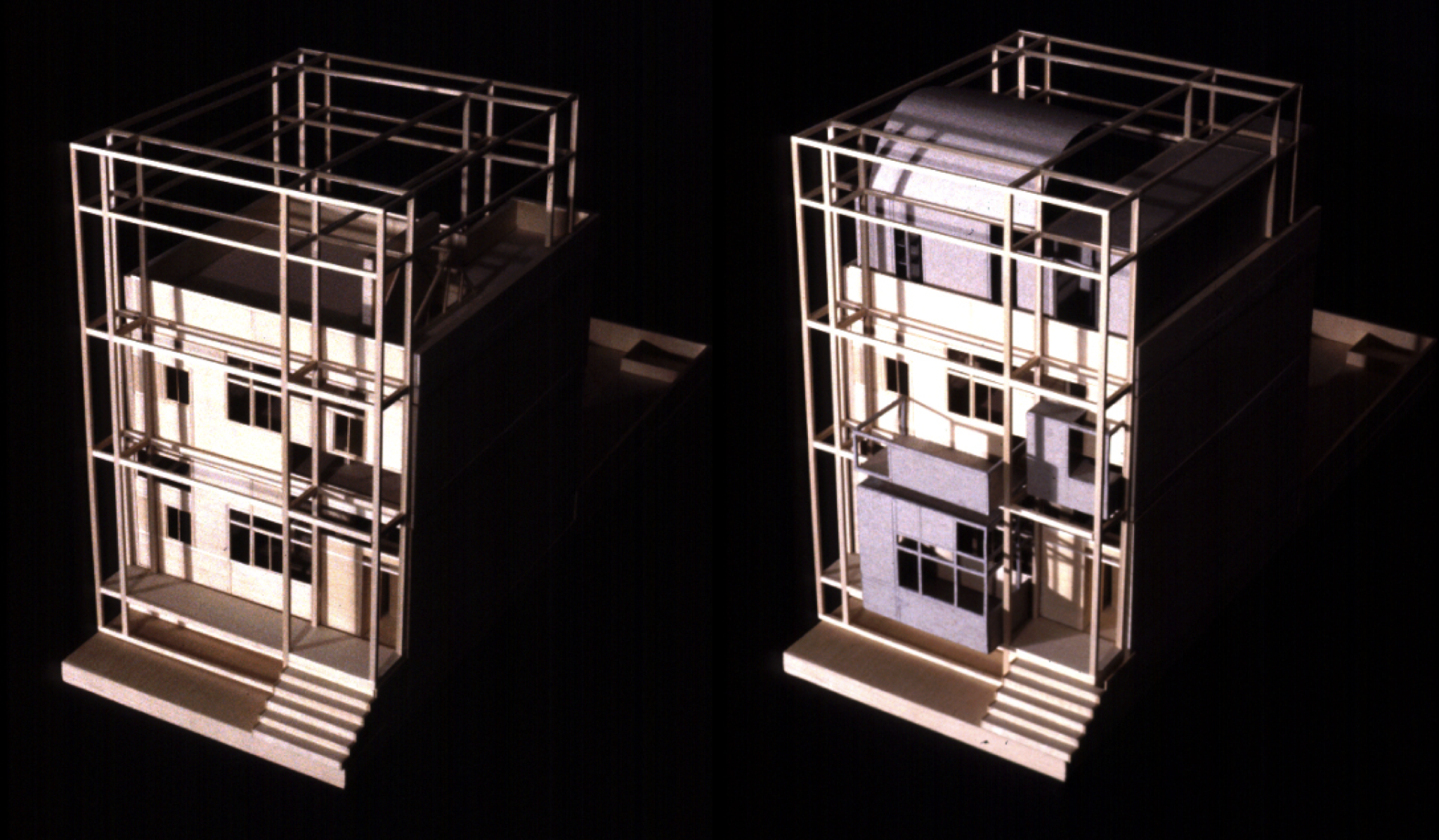
A competition entry I worked on as a student working with konykarchitecture for a new prototype for Atlantic City Housing (New York City, 1995). Working with “industry” in my second year of architecture school.

A few years ago, at a design event in Delhi, I met a talented and well-known architect who had hired a few of my interior design graduates in the past. In fact, a former student was working with him at the time, so I naturally asked him how she was getting on. He acknowledged that she didnโ€™t come in with a huge bank of knowledge (especially being an interior designer working for an architect), but he was fine with that; he liked that she was thoughtful, hardworking, eager to learn, and never turned down an opportunity to work on tasks that were beyond her initial skillset. It was her attitude that impressed him, more so than her skills or knowledge.

I was really happy to hear this. It was a validation of everything I try to do as an educator. I know full well that thereโ€™s a lot of pressure on academics to prepare students to meet industry expectations even though no one can really agree on what that actually means. Instead, I try to focus on making my students adaptable, confident, courageous, and willing to learn. That will help them far more than grooming them for any particular industry. I left that meeting thinking that itโ€™s better to groom my students for such employers rather than what some vague and nameless industry is actually looking for. 

Above everything, itโ€™s not even really fair to use the word industry when weโ€™re talking about design and architecture. My friend and long-time colleague Tapan Chakravarty prefers to use the word profession instead and I agree with him. Designers are professionals after all, and while thereโ€™s nothing wrong with industrial labour, weโ€™re not grooming designers to be factory workers. On the other hand, most of what I want to write today is not just about the design profession, but all the related disciplines associated with it โ€“ builders, contractors, labourers, vendors, artisans, engineers, brokers, and so on โ€“ all of whom collaborate with designers in some way. The only easy way to classify them all is the word industry so with apologies to Tapan, Iโ€™ll keep using that word for now.

Academia and Industry – An Unbalanced Relationship

As a full-time academic, when I have conversations about the relationship between industry and higher education, I admit I tend to get somewhat defensive. Thatโ€™s because it always seems to boil down to a one-way relationship, focusing on what industry expects of us and how weโ€™re meant to churn out employable graduates to be gobbled up by the work force. It always seems to be about what we can do to serve industry, and not enough conversation about what industry can likewise do for academia, except to act as jury members and examiners, and occasionally as advisory board members. Even these functions tend to place academics in a bit of subordinate role to industry, as if weโ€™re desperate for their acceptance and approval. This shouldnโ€™t be the case. The relationship between academia and industry should be more balanced and equitable, and it should be mutually beneficial with neither as subordinate to the other.

I sometimes get the impression that industryโ€™s expectation of graduate readiness assumes that colleges are simply vendors who provide a necessary product or service for the industry to use or consume. I jokingly worry that if my graduates donโ€™t meet a certain standard, employers will ask me for a refund. Of course, no one ever does, but I have read many articles and listened to many employers complain about colleges not providing them with graduates who have the necessary skills and competencies to do the work expected of them. I find this dynamic interesting because in academia, thereโ€™s an ongoing debate about having to treat students as โ€œcustomersโ€ to whom weโ€™re beholden to provide a certain standard of service. Are we similarly beholden to industry? Is industry just another customer who is always right?

And why is there such a strong focus on industry readiness? Colleges themselves fall into this mindset, literally promoting their educational brand as making students industry ready. But what is industry readiness? Is that even possible? Thereโ€™s no monolithic and singular industry which has a standard set of requirements. The design industry itself is famously varied in terms of employment scenarios. A design graduate is as likely to work for a two-person boutique firm as a giant multinational corporation. How can higher education make students ready for industry that has such a wide and diverse playing field? Not to mention that many design and architecture graduates end up working in different disciplines altogether, and thereโ€™s nothing wrong with that. So preparing students to meet a wide variety of industry expectations with just one standard curriculum is exceedingly difficult.

Another problem we face is funding related. Universities used to be hotbeds for innovation (and still are, in some few cases). Most of the ground-breaking research and innovation in a given field used to happen on a university campus because it was the place where one was free to experiment without ordinary constraints of time and profitability. Industry (and other stakeholders like government) used to fund innovation on university campuses extensively. Nowadays, with a strong focus on start-ups and in-house innovation cells, most of the real innovation is happening in the corporate or VC sector. And in any case, such financial support rarely ever reached design schools in any real way. Universities and design schools have become employment factories instead, because this is what both students and industry seem to want. A four-year design programme has become a venue for learning a set of basic technical and software skills, along with grooming for corporate recruitment and training. 

On the one hand, academics are urged to be funding-agnostic, because education shouldnโ€™t be transactional, even though it often appears that way. We have pressures to be egalitarian and provide equal opportunities to underprivileged students via scholarships and fee waivers. But with no other sources of revenue in the traditional private education model, how can we simultaneously reduce fees and also spend money to cultivate cutting-edge innovation? I remember my time as a Dean, having to balance a budget between paying high salaries to attract good teachers and providing adequate workshop infrastructure (adequate, mind you, not even cutting edge) while simultaneously ensuring that all students were treated fairly and given equal opportunities to learn by keeping fees reasonably low.  Industry doesnโ€™t have such a burden to be egalitarian; they hire whomever they want and pay whatever the market can bear. Of course, industry does have to face the ups and downs of economic cycles, but then again so do private colleges. There are lean years in educational enrolments as well, yet weโ€™re still required to provide the same quality education regardless. So whereโ€™s the room for innovation in this tight financial model, without other sources of funding? Whereโ€™s the angel investor for academia, especially in a country like India that has no culture of alumni fundraising?

Finally, thereโ€™s a proprietary problem. Even if colleges manage to secure investment or participation from a certain industry player, weโ€™re bound to align with only that company because of competition clauses. If we collaborate with Pepsi, there will surely be a no-competition clause that prevents us from taking up a similar project with Coca-Cola, should the opportunity arise. If we get HP to set up a computer lab and promote it, we wouldnโ€™t be allowed to do a similar promotion with Dell or Apple. This kind of exclusivity could potentially become more constraining than having no support at all.

What Industry Should Do

In general, I think industry could do more. I think industry needs to look at academic collaboration as an investment. If they can integrate more into academics across the board, they can reap a richer benefit than simple industry readiness which is actually a meaningless term. In particular, design has historically been an apprenticeship discipline. But now, employers expect graduates to be readymade designers or architects from the get-go. Design education will always be incomplete in that regard, and employers need to stop holding graduates up to an impossible standard. I once had an architect recruiter complain that my student didnโ€™t know how to select proper door hardware, and I couldnโ€™t help but wonder what kind of employee was this person actually looking to hire? When I graduated, I barely knew anything about doors, let alone door hardware. Thatโ€™s what job experience is for. If, as a teacher, I have to spend my precious class time focusing on information thatโ€™s anyway likely to be obsolete by the time my students graduate, then when will I teach them what I actually think they should learn โ€“ conceptual thinking, observation, research skills, ability to reflect, eagerness to learn?

I think lately too many employers in design and architecture have absolved themselves of the responsibility to supplement a graduateโ€™s academic knowledge with professional knowledge. They are expecting readymade, industry-ready graduates when such a thing is actually impossible to create, because thereโ€™s no single industry profile for which they can be made ready. Employers instead should fill in those gaps, and they should accept that graduates should be taught more for eagerness to learn than for knowing all the skills necessary to sit at a desk in a design studio and start working on projects from day one.

The industry should also be more open to collaborations with academia, more than what they currently do. They should initiate projects (like competitions) that have more flexible timelines and criteria so that students can plug into them within the constraints of their academic calendar. Certain company staff can be given dedicated roles as academic liaisons (not just as recruiters and trainers), so that such collaborations can be more meaningful and integrated. Companies should also be more willing to go beyond collaborating with only the โ€˜topโ€™ design schools, which actually make up only about a very tiny percentage of the aggregate pool of design graduates. 

What Academia Should Do

But the burden isnโ€™t only on industry. Academia can also do more. The first step is to relinquish the subservient mindset and put themselves on equal footing with industry. Professional guests and collaborators should be treated as equal partners, not VIPs or royalty. The second step is to break the โ€˜blame chainโ€™ and avoid turning about and complaining that schools are the problem. Too often, Iโ€™ve heard my academic colleagues complain that schooling has done a poor job of preparing students for college. This may in fact be true, but it doesnโ€™t help to sit on the sidelines and complain. If we expect industry to collaborate better with higher education, then higher education needs to likewise offer to collaborate with K-12 schools, and not just as feeders for admissions. I remember getting excited a few years ago when one of my colleagues initiated a program to train school teachers to teach design thinking. Unfortunately, that project didnโ€™t fully take off.

Another step is to allocate dedicated faculty to act as liaisons with industry, mirroring the same staff members on the industry side. These academic liaisons should be faculty themselves, not corporate staff, so that there can be smoother integration with the curriculum, which only the faculty know well. Of course, these faculty should be given the bandwidth (and authority) to do this work, not on top of their existing teaching loads. Every teacher doesnโ€™t have the ability or even the ambition to become a Department Head or Dean. So such alternative roles can provide additional pathways to professional growth. I have yet to see a design school in India (to my knowledge) with someone in the position of โ€˜Associate Dean for Industry Outreachโ€™; this should be a role in every design school from inception.

Academies also need to restructure their curricula to allow industry to fill in the gaps where they potentially have more expertise and opportunity, in subject areas like technology, leadership, management, or entrepreneurship. Colleges too often try to offer everything in one package but this isnโ€™t possible, especially for smaller design schools that donโ€™t have diverse faculty resources. Curricula should be designed to be flexible in these subject areas and allow students to learn the competencies in ways other than the traditional classroom setting, and no, the typical internship or training period is not the only answer. Live projects, consultancies, and other opportunities should be given a higher priority than they currently have in a design curriculum.

Finally, incubation needs to be given proper resources and attention. It canโ€™t be just a co-working space in the corner of a college campus. Colleges with good incubation cells have fully integrated them not just into their campus space, but into the curricula as well. I once visited some former students who had set up their own practice a year or so after graduation. They were set up in office space not 5 minutesโ€™ drive from their former campus. I asked why they didnโ€™t take advantage of the newly set-up incubation space on campus itself. Their answer was that they were anyway using space in the factory owned by one of their parents, so they were able to use the space rent-free. Plenty of other start-ups similarly begin in private homes, in basements, attics, and garages. My students didnโ€™t see a value in the college incubation cell because they only saw it as discounted office space, which they didnโ€™t need. But incubation has to be seen as much more than that. My students ideally shouldโ€™ve been aware that, in being part of the incubation cell, they would have access to shared infrastructure, resources, and faculty mentorship, as well as a pool of in-house student talent to help them with their projects. As alumni, they could have been industry mentors for their junior classmates while providing valuable opportunities for live projects built into the studentsโ€™ curriculum, all of it outside the traditional internship model. In my opinion, this was a lost opportunity.

What Students Should Do

Of course, students themselves need to see the value of meaningful industry collaboration. Many students, especially in India, are so dead set on getting a lucrative job after graduation that they tend to miss the most of what college is teaching them. Students seem to want to learn the skills to land that first job, exclusive of almost anything else. Their mindset also needs to look beyond the โ€˜jobโ€™ as the only way to fulfil career aspirations. A job is all well and good, but there are so many other career experiences one can follow to achieve professional growth. Design students should be made to see the career value in research, writing, business, entrepreneurship, and other aspects of life that are tangential but related to their chosen design discipline. Getting hung up on learning X or Y software suite can be a waste of energy and attention in college. The deeper learning is about independence, decision-making, communication, articulation, reflection, observation, time management, task management, and myriad other parameters that are what the design industry is actually looking for, beyond simply X or Y software proficiency. Design education (like the profession) is more than just an aggregate of skills, and if industry needs to accept this, then likewise so do students and faculty.


This article may come across as being overly defensive, but Iโ€™ve also tried to offer solutions to the problem of industry-academic mismatch. Both sides of this problem need to see each other less as vendors or customers and more as partners and collaborators. Indeed, this is what many academicians and professionals say they want to do, but there are things they can initiate that can make this easier. Mindset change is the beginning of it, followed by real (not superficial) integration and cooperation. Either side canโ€™t just add collaborate to business-as-usual; the fundamental model must significantly change. 

12 tips for new design graduates

MY PERSONAL ADVICE TO NEW GRADUATES STARTING THEIR CAREERS IN ARCHITECTURE AND DESIGN

My undergraduate architecture students have finished up their thesis and are getting ready to graduate. Iโ€™m proud of all of their successes, and eventually they will all have rosy futures, but right now they face a somewhat grim outlookโ€ฆ the industry is suffering from the effects of the global COVID-19 pandemic and jobs may be hard to come by. I wrote this piece partly to relieve some of their anxieties. Itโ€™s not going to get them jobs but once they do, it can help them transition into it a little easier.

In truth, I couldโ€™ve written this article several years ago. I have often given my advice to graduating students as they start their careers, and yes, mostly the advice is unsolicited. But I suddenly felt like writing it now and I hope my students (and any students who might read this in the future) will excuse my presumptuousness.

Aside from architecture, I teach and advise students from other design disciplines, so I want to disclaim that this article is mostly focused on architecture and interior design graduates, primarily because the advice Iโ€™m offering is based upon a certain kind of job profile in small to medium companies which form the bulk of architecture and interiors practices. In contrast, my students from product design or communication design generally go on to work in large corporate offices and although there may be some common carryover, these tips are more suited to smaller workplaces. So, if youโ€™re not an architect or interior designer, take from it whatever you can. I hope it helps.

Hereโ€™s my dozen personal tips to all of you who are about to enter the professional world of architecture and design.


#1 DONโ€™T RUSH INTO WORKING

Sometimes I wonder why students want to start work almost immediately after they graduate. I wonder why they donโ€™t want to take some time off to recover from a rigorous and stressful design education. Once you start your career, you fall under the constraints of a traditional working life and will never get as many days off as you deserve. Take the time now to rest your brain, think about your future, work on your portfolio, travel, volunteer, or do things that a full-time job wonโ€™t allow you to do once you start working. Now I do understand that many of you need to start earning, either to support your family or to pay back your education loans. I get that, and if thatโ€™s the reason for jumping into a job right away, so be it. But if you have the time and financial standing, take some time off and travel. You may not get a chance like this again.

For the record, when I graduated, I took six months off to travel through Europe and India, with friends and later, by myself. It did cost a lot of money, most of which I put on a credit card, for which I paid dearly over the next couple of years. I donโ€™t normally recommend students to be so financially frivolous but Iโ€™m honestly glad that I did it. Iโ€™ve never been able to have that much time and freedom since then, after 10 years of studying (!), and that small amount of credit card anxiety wasnโ€™t that much compared to what I earned in subsequent years. And nothing compared to the experience of traveling to see places and buildings that I had only read about in textbooks. A lot of that experience has now borne fruit in my teaching career.

#2 CHOOSE A LEARNING WORKPLACE

If you can, try to work in an office that promotes a learning environment rather than a place where youโ€™re just another CAD Monkey (as my friends and I jokingly called ourselves). Architecture has been an apprenticeship-based discipline for millennia, and employers who expect freshers to already know everything the day after graduation are not employers you want to work for. Of course, beggars canโ€™t be choosers, so try to avoid being a beggar in the first place. Do the kind of work in college that elevates you as a candidate for better companies. Spend the time to create a portfolio that shows as much of your process work and learning as the final designed product. Do some research on how firms treat their fresh graduates. During interviews, ask questions about how the office works as a learning environment. Employers will rarely say that theyโ€™re hiring you purely to educate you, but good ones will understand that theyโ€™re making an investment in training you and will be clear about how and what they expect you to learn.

Itโ€™s often the case that small and medium firms offer better opportunities for learning than large corporate offices. There are exceptions, of course, but generally in a small office there are more diverse responsibilities and work is often shared. In larger firms, you tend to get pigeon-holed into one task that either youโ€™re really good at or a task that is necessary but no else wants to do.

#3 MAKE A LONG-TERM COMMITMENT

One of the things that bother me as a teacher is finding out how soon my students leave jobs that they find unsatisfactory or unfulfilling. No one wants to work in a job that they donโ€™t like, but when you just start out in your career, you also donโ€™t really have a good idea of what you like and what you donโ€™t. I donโ€™t mean to sound condescending about this, but I find students nowadays to lack the patience to stick through a difficult job; many leave before a year is up, sometimes not even lasting six months. There are two problems with this. One is that architecture projects typically arenโ€™t short projects, most last six months or more. Itโ€™s a good learning experience to work a full project cycle from start to end. Just because parts of a project arenโ€™t fun or interesting doesnโ€™t mean that all of it will be that way. Youโ€™re learning how to solve problems, not how to escape them. You can learn just as much from negative experiences as positive ones (if not more).ย 

The other reason is that an employer has invested in your training. It often takes six months just to get used to how an office works โ€“ their design process, team dynamics, hierarchy, logistics, digital systems. Typically, your first six months isnโ€™t economically productive for your employer; they tend to spend more time and manpower in training you than they get from your actual work. As a manager, Iโ€™ve often thought it would simply be faster and easier for me to do the work myself than to check, re-check, and approve the work of a less experienced fresher. Itโ€™s harsh to say but a firm is still a business; if an employer invests in you and doesnโ€™t get a return on that investment, it can be both emotionally and financially disappointing for everyone.

#4 PRIORITIZE LEARNING OVER COMPENSATION

This is a big one because more and more graduates have become vocal about low wages in architecture, especially for fresh graduates and interns. In another blog article, Iโ€™ve discussed in detail about why this tends to happen so I wonโ€™t get into that here. I believe that young designers deserve to be paid fairly for their time and effort, but Iโ€™ll also say that this shouldnโ€™t become an obstacle to learning. When students come to me for advice about whether to take a low-paying offer at a good office or a higher-paying offer at a more mediocre office, I usually tell them to take what they think is fair while prioritizing a good learning experience. I wouldnโ€™t advise anyone to work for free or for extremely low wages, but I think students should also be more realistic about their worth. The work that young graduates do in their first year of working is often not much more than drafting, and an office will usually pay accordingly. 

Itโ€™s a tough balance to strike, but I use my own experiences as an example. In almost every job Iโ€™ve taken, Iโ€™ve initially earned less than I think I deserve, but I also understand that Iโ€™m untested. An employer doesnโ€™t know my potential yet and low margins of profitability make it difficult for an architect to gamble on paying someone more than they might be worth. So I ask for a performance review six months after I start. (Many firms already have a policy like this, which is good.) If I can prove my worth and value after six months, and if I work hard and diligently, then Iโ€™m in a better position to demand higher compensation.  This technique has worked for me for my entire career. Itโ€™s more satisfying to know I earned more because of my proven worth, not because of whatโ€™s written on my resumรฉ. 

#5 ASK QUESTIONS BUT RESPECT THEIR TIME

Once you start working, you will undoubtedly have many, many questions. In my first job after graduating architecture school, I was very fortunate to have managers who were willing to answer my questions whenever I asked them. I only realized later how much of a disturbance and distraction that must have been for them, and I wasnโ€™t nearly the only one โ€“ I had several friends working with me who had similar levels of experience, and who knows how many times our manager had to stop working to entertain our frequent questions. He rarely complained or told us to come back later. But once we realized that we might be distracting him, we started to do it differentlyโ€ฆ we kept a list of questions at our desks and as long as the question wasnโ€™t urgent, we would simply add it to the list and keep working. Then at some convenient point in the day, weโ€™d ask our manager if he could give us some time and we would ask all our questions together.

The advantage of this is that, in delaying the question sometimes it would answer itself in due course. Thatโ€™s an important learning when you start your career – to balance the things you can figure out on your own with the things you genuinely need help with. Itโ€™s also a well-known advice that when you go to a colleague with a problem, try to go with at least one potential solution as well. Even if your solution is rejected, your employer will appreciate your genuine attempt to think independently. Employers tolerate questions (and often encourage them), but they also want to eventually trust you to figure it out yourself.

#6 HAVE AN ENTREPRENEURIAL MINDSET

I like to teach entrepreneurial practices to my students even though most will spend the first few years working for someone else. But many will likely start their own practices in due time, so itโ€™s important to know how to be a good entrepreneur โ€“ not just about the business and finance side, but also the managerial aspect. However, the big myth is that these learnings are only valuable once you start your own practice. That is not true. A good employee who has an entrepreneurial mindset regardless of their hierarchical rank is usually recognized and rewarded eventually.

An โ€˜entrepreneurial mindsetโ€™ is an attitude of ownership over the work, the projects, and the general workings of any organization. Itโ€™s the idea that your work, however minor, has some reflection on the business as a whole, and that you have a share in that reputation. Maybe you donโ€™t actually have a financial share and youโ€™ll get paid a salary regardless, but thatโ€™s misleading because architecture firms donโ€™t tend to have big profit margins and often have high turnover. Your salary may not reflect profit-sharing, but when profits go down for whatever reason, the employees who donโ€™t have an attitude of ownership will likely be the first to go, the younger ones in particular. Keep a sense of pride in your work and maintain an attitude that what you do reflects on the entire organization. Believe me, in all but the most unbalanced and unfair working environments, this attitude is rewarded with better projects, more responsibilities, more compensation, and more advancement. Not only will this mindset earn you respect in your job, it will also be valuable for when youโ€™re ultimately running your own firm.

#7 AVOID OFFICE DRAMA

Too often I hear about my students getting caught up in office politics, drama, gossip, and the many machinations and manipulations that even the smallest of offices can fall victim to. Interns and freshers often become unwitting pawns in these games, which almost always result in an unhealthy office environment, and it takes an disproportionate toll on less experienced employees. My simple advice โ€“ stay away from it. Lie low, focus on your work, and avoid getting caught in the middle of interpersonal conflicts that have little to do with you. Sometimes this isnโ€™t easy โ€“ a young designer working on a team needs a clear channel of hierarchy, and office politics can cloud that channel. Who do you report to? Who makes decisions on a project? Whose instructions to follow? Itโ€™s best to keep a clear head and clarify any doubts in the beginning. Make sure you find out before you join on any project team who are the team leaders and what role everyone plays. If thereโ€™s any doubt, ask openly. Avoid corridor conversations and taking sides, and when youโ€™re given instructions make sure you note them down in a personal project journal. And of course, donโ€™t fall prey to gossip involving you or anyone else.

If you find that an office is too enmeshed in this toxic culture and itโ€™s more than you can handle, then seek counseling from other professionals that you trust and perhaps start planning an exit strategy. But in the meantime, observe. Sometimes being observant of bad behaviour gives you a good idea of what not to do in your own practice. Many of my lessons as a professional have come from observing the behaviour of others and deciding that that is definitely what I donโ€™t want to do. 

#8 MAINTAIN A HEALTHY WORK-LIFE BALANCE

Adding to the potential stress of office drama is an unhealthy working schedule. Many architects and designers still cling to the romantic vision of a creative practice with long, grueling working hours, late night charrettes, and last-minute deadline encroachments. Thereโ€™s abundant research that shows that none of this is actually productive, and in fact becomes unnecessarily taxing on workers. In a discipline where most of your work requires your brain to be creative and innovative, it isnโ€™t good to always be tired. Of course, Iโ€™m not saying that everyone should ideally be 9-to-5 workers, and if the pandemic has predicted anything, itโ€™s likely that all the norms of the standard workday and workweek may be up for reconsideration soon (if not already). But donโ€™t become a victim of โ€˜architecture overtimeโ€™ simply because thatโ€™s โ€˜how itโ€™s doneโ€™. 

I think that sometimes many of my students leave their jobs so quickly because they get burnt out. Itโ€™s often expected for a junior designer to put in lots of work-time to impress the boss, but this has consequences in the enjoyment of the work and your motivation to do it. I donโ€™t believe that the first year of a designerโ€™s professional life should be spent in 16-hour working days with no social life. There are many other avenues in which you can grow in these early years. Donโ€™t waste it all on poor time management.

#9 SUPPLEMENT YOUR OFFICE WORK WITH OTHER LEARNING

Your faculty in college always told you that a great deal of your learning will happen outside the classroom. The same is true in your professional life. You will no doubt learn a lot on the job โ€“ in fact, more intensely than in college. But you wonโ€™t learn everything there. Most offices have a very narrow way of working โ€“ they use a specific software package, they have an established process of design, they perhaps even use similar materials, details, and techniques in their architecture. It can be easy to fall into a rut of learning, but the answer isnโ€™t necessarily to leave the job for another one. Youโ€™ll just be moving from one routine to another. So itโ€™s important to supplement your office experience with additional learning while you still have free time and energy in your life. Take a class in something entirely different than your office work. Learn software platforms that your office doesnโ€™t use. Go to events, conferences, and exhibitions, and travel on the weekends to visit architecture in different cities and towns. And read, read, readโ€ฆ stay up to date on whatโ€™s going on in the profession โ€“ both in theory and practice.

You might even decide to study something different from architecture. I strongly believe that future economies will be disruptive and volatile, so it may not be a good idea to focus all your abilities into one discipline. Thereโ€™s a lot of scope for diversification within architecture, but thereโ€™s also a lot of scope outside of it. In case the industry growth declines, itโ€™s good to learn other design disciplines, or even other business practices. The best thing about a 5-year architecture education is that it prepares you for many other related careers. Many more architects branch into other disciplines than vice versa. My personal feeling is that architects should branch into interaction design, digital experiences, environment visualization (gaming, CGI), and data visualization and analysis. A lot of the skills you need for these fields are already baked into an architecture degree, so itโ€™s good to diversify while you can and be prepared for uncertainty.

#10 DONโ€™T SHRINK YOUR SOCIAL CIRCLE โ€“ WIDEN IT

The great thing that university life does โ€“ especially architecture school โ€“ is that it opens up your life to new ideas, new experiences, and new people. College tends to be a time of social expansion; your social circle gets wider and encompasses more and more people, cultures, and ideas every year. 

But Iโ€™ve noticed that when students graduate, their circles tend to contract. You stay in touch with only those college friends you were really close to, and the majority of new people you meet are through work. This is understandable because after years of expansion, one tends to want to settle down and contractโ€ฆ especially if youโ€™re an introvert like me. But the problem is that this is the time in which you need to actually expand your horizons. You are in an even more intense period of growth, and you need to meet more people, you need to make more connections. As weโ€™ve said before, you may quickly find that your job doesnโ€™t suit you and you need to find something else. At that time, itโ€™s good to know people so that you can find better opportunities. 

You may soon become ready to start your own practice, so having a network of collaborators is seriously important; it can make or break your new career. Youโ€™ll need to know vendors, suppliers, contractors, designers, and of course, clients. So while networking is often seen as a bad word (I used to think so, and sometimes still do), Iโ€™ve found that having a solid professional network of people you like and trust can make your next role much easier to transition into. You will need the help and support of others, so build up that network and stay in an expansive social mode while you still can.

#11 SPEND YOUR FREE TIME IN WORTHWHILE CAUSES

I mentioned earlier that you should supplement your working life with learning new skills. Another thing to consider is to devote some time to charitable causes. When working to build up your career, it can be easy to get caught up in your own self, especially once you start earning your own money. Thereโ€™s a ladder of consumption thatโ€™s all too easy to climb โ€“ get a new place, buy new clothes, get a new car, then get a bigger place, more clothes, a better car, and so on. I donโ€™t want to preach and tell you how to spend your hard-earned money, but I think itโ€™s also important to reflect on what your architecture education has given you โ€“ the power to help people and change their lives for the better. If thatโ€™s not necessarily happening in your job, then itโ€™s good to exert that power in some other way โ€“ by volunteering your time and energy.

As an architect you have a lot of creative potential. Use that to help people. Improve homeless shelters, assist with pro bono building projects, create newsletters or flyers for non-profit NGOs. My rule of thumb is to spend at least half a day each week in some kind of voluntary, charitable project. Of course, no one is forcing you to do this, but look around youโ€ฆ the world is not in great shape right now. It needs creative people like you to help fix its problems, even in very small ways.

#12 BE ETHICAL IN YOUR SIDE WORK

Almost every principal architect knows that the majority of his or her employees do some work on the side. It could be charitable work as I mentioned above, or it could be the humble beginnings of your own practice. Most employers know this and look the other way. Some will explicitly tell you that itโ€™s ok to do it as long as itโ€™s not on โ€˜company timeโ€™, using company resources. Itโ€™s important to respect this, no matter how easy it is to get away with. Itโ€™s simply not fair to your employer to use their time and resources for your own projects without their explicit approval. You donโ€™t want to start off your professional career with unethical behaviour.

You know what Iโ€™m talking about. Working on your own projects during your workday, on the office workstations and software. Printing drawings on the office plotter after hours. Just donโ€™t do it. An employer has built up his or her practice over years, and itโ€™s unfair to repay their investment in you in this way. Use your own resources โ€“ your own laptop and software license, and get your plots printed somewhere else. Itโ€™s not that hard to do.

Of course, the best thing is to simply be open about it and ask your boss if you can do it. Most employers will not be ok with you doing work that directly competes with them, but many employers are ok with you doing small projects that they wouldnโ€™t take on, as long as you donโ€™t use their resources. Some may ask for a share of the fee, or some may simply just let you do it as long as youโ€™re open about it, and you donโ€™t do it during office hours. I once was working on a long-term pro bono charitable project and I simply asked my boss if I could print my 4-5 sheets on the office plotter, after hours. I did it openly, and he was fine with it because it was a charitable project, and it was only a few sheets. He even sat down and hand-rendered my elevations for me (he liked to remind me how much better at drawing he was than me). 

Situations vary, and you have to carefully reflect on your specific relationship with your employer and think about how he or she would respond and whether itโ€™s worth the risk to burn bridges like that. In the end, I feel that itโ€™s always better to either be open about it, or simply do it all on your own time.


Thatโ€™s my 12 tips (for now). Youโ€™re welcome to add more, comment, agree, disagreeโ€ฆ anything. But regardless, I wish all my graduating students the very best for the future.

delayed gratification: the long term benefits of learning

Choosing to make a profession out of academia has innumerable challenges – the bureaucracy, the workload, the unfortunate behind-the-scenes politicking, and of course the disproportionate compensation relative to oneโ€™s perceived expertise. And then there’s the frustration of being unable to connect with students in a class or to motivate them. Indeed, many of my colleagues have left academia because of these challenges and I don’t fault them in the least. It does take a toll.

One coping mechanism that helps me deal with these challenges is to detach myself from the expectation of immediate gains and to seek satisfaction in the long-term results of my teaching, results which often bear fruit long after the student has left the classroom, well outside of my purview. No doubt, itโ€™s a wonderful thing to see a studentโ€™s discovery unfold before your own eyes, within the duration of a class or a semester. Itโ€™s a great satisfaction to see that glint of an awakened mind, an imaginative thought, a deep reflection, or an innovative idea. But the absence of visible awareness in a student doesnโ€™t necessarily mean that the teaching didnโ€™t make it through, or that the student didnโ€™t learn. The aftereffects of learning can sometimes be quite delayed.

Iโ€™m fortunate that, for most of my own education (especially my design education, which I undertook when I was older and mature enough to notice such things), I was able to appreciate what I was being taught right at the time of learning it. But much of my appreciation also came later, as a working professional. Some of it happened when I became a teacher myself. This delayed appreciation isnโ€™t a bad thing; itโ€™s natural and expected. So as a teacher, I assume the same happens with my own students and Iโ€™ve stopped looking for immediate results. Most students donโ€™t become talented designers overnight, or even within the few years of design school. Many young designers really start to thrive when theyโ€™ve had the time and space to build on what theyโ€™ve learned in school and supplement it with the knowledge and resources that come from the profession or further studies. As long as Iโ€™ve inculcated in them the ability to continue learning far beyond graduation, thatโ€™s fine with me.

There’s no better example of this delayed outcome than the daily reminders of the accomplishments and achievements of former students in their current lives and careers. In my case, this is no exaggeration. Literally on a daily basis, I get some notification from somewhere (one of the few reasons I still appreciate social media) that a former student has done something good for themselves, for their clients, or for humanity at large. Sometimes this manifests as an award, sometimes as a successful project, sometimes as a new role or a job promotion. Whatever form it takes, it’s a reminder to me that I had some tiny part in that achievement, either directly as a teacher or mentor, or in my role as an administrator.

Six years ago, with great hesitation, I relinquished my role as a full-time teacher and agreed to become an administrator and academic leader. I say “with hesitation” because any teacher would know the sense of loss that comes with not being in a classroom day to day. But one of the things that propelled me was knowing that my impact, while indirect, was now broader and embraced many more students in many more disciplines. Teachers donโ€™t often get a lot of appreciation (at least, not as much as they deserve), but the appreciation for administrators is even rarer. When students succeed, they may credit their teacher first and foremost, and rightly so. But rarely are academic administrators thanked for, say, framing a new curriculum, or requisitioning a new lab, or facilitating the hiring of good teachers. Occasionally, an administrator might be able to connect with some students directly, and that does make things better, but itโ€™s more often that the efforts go unrecognised students. And that’s ok. Iโ€™ve made my peace with that.

The satisfaction instead comes from the quiet knowledge that you had some small part to play in a studentโ€™s success, either before or after graduation, that small part is multiplied by all the student successes that happen year to year. By my own rough estimates, Iโ€™ve directly taught about 600 students in my overall career. As an administrator, Iโ€™ve overseen the education and graduation of perhaps another 600. All told, thatโ€™s a lot of successes to have played a small part in, even if some of those graduates barely knew me, I did impact their education in some way, whether they were aware of it or not. And Iโ€™m nowhere near finished teaching; I still have many years left in my tank, and many more students to come.

What keeps me going through the sometimes frustrating parts is the awareness that although most of the students leave my teaching not fully knowing the value of what they learned, some of them will likely figure it out over time. The delayed gratification that comes from deeply embedded learning makes it fruitful for me, and in many ways the fact that the outcome is delayed somehow actually makes it even better because you realise that the learning wasnโ€™t momentary; it stuck with them and guided them when they really needed it, even if they werenโ€™t fully cognizant of it. I advise my colleagues sometimes when theyโ€™re really upset about a difficult batch of students, or angry at the โ€œsystemโ€, that this is really what teaching is supposed to do, and it works better when the learning materialises over time. One just has to be open to seeing it.

six levels of reflective learning

Last semester I taught several classes to final year architecture students and, as I often do, I required them to maintain a reflective journal for each class. One of the classes was Dissertation where students write a 10,000 word academic research paper on a topic in contemporary architecture. The journal for Dissertation was meant to be a research journal, in which they would compile summaries of the data they were gathering and any inferences they were making from it. I also asked them to fill in any thoughts or musings they might have on the class, what they were learning, and what it meant for them as future architects.

I did a similar thing with my Professional Practice class, except it wasn’t a research journal; it was meant to be a reflection on their learnings from the class – day by day, week by week. I asked them to keep the journal informal, and write entries as they would in a diary, but reflecting only on the learning of the class and expressing their real thoughts and opinions.

I reviewed their journals periodically, reading through all the entries, and after a few weeks I realised that the students were unable to reflect deeply on their learning. Every entry was some version of “Today in class we did this. It was very interesting.” It was reportage, not reflection – a shallow summary of the class, without any indication of how the learning affected them on a deeper level. They rarely critiqued the classes; at most, they would admit to not understanding it fully, or maybe finding it boring. But there was little or no reflection on what the learning meant in the context of their professional education, whether there were consequences of the new information, or whether it changed their existing viewpoint about an issue.

It occurred to me that the students, now in their mid twenties, had never really been taught to reflect on anything in their lives. If I asked them about a movie they watched, they responded with “It was fun”. If I asked them why they liked a certain song, they answered, “It’s really good”. It’s not that they don’t have opinions about things (I assure you, they do). They simply didn’t know how to articulate that opinion. Many of my students speak English as a second language, so I thought it might be a language issue, but even when I asked them for their opinions in their native language, they still find it challenging to express themselves with any degree of articulation.

This was when I realised that reflecting was the problem, and I immediately decided to conduct a tutorial on reflective learning, and to help them understand that meaningful reflection happens at a much deeper level than they were currently attempting. I naturally asked myself if I was qualified to teach this, but I reflected on it (meta-reflection!) and reminded myself that I do a lot of navel-gazing and pondering deeply about things. I’m no philosopher for sure, but as a natural lifelong introvert whose favourite thing to do is to sit quietly in a corner and read, I feel I can at least help the students learn how to reflect better than they were.

So before preparing my lecture, I naturally reflected on the nature of reflection (again, meta!). I wanted to express the value of reflection in a way that could be easily understood, but I wanted to avoid reducing it to just “thinking deeply”. So I came up with a framework for reflection, represented as a series of progressive layers of internalised thinking. It is, by necessity, reductionist, but I hope that doesn’t take away from how meaningful I intend it to be. In any case, for better or worse, here are my patented 6 Levels of Reflectionโ„ข.

Let me explain the levels in more detail…

Level 1 – Documentation (FACTUAL)

This is the easiest and most shallow level of reflection. It barely even counts as reflection but is nonetheless an important preliminary step to deeper reflection. Level 1 is simple reportage, describing what has occurred, narration. It is highly objective and unbiased, and although it can be detailed, the information doesn’t really have much meaning. Here are some examples of 1st Level reflective learning:

  • “Today we were taught _______.”
  • “First we did _______, then we did _______.”
  • “The teacher told us _______.”
  • “We did an exercise that involved _______.”
  • “We were asked to do _______. Then we discussed it.”

This is what students do easily, and usually by default. When you ask them to reflect on their learning, they simply tell you what they learned, without articulating what the learning meant to them. The only thing I would ask students to improve about this level is to document the activity or learning as a cohesive narrative rather than a flat description of events. Otherwise, there’s not much else to say about this initial level; it’s fairly straightforward. So let’s swim a bit deeper.

Level 2 – Appreciation (EMOTIONAL)

At this level, students express their immediate emotional response to the learning – whether they liked it or not. It doesn’t go much beyond this, however; rarely will a student explain why they liked it or disliked it. I imagine that part of the reason for this is their hesitation to express disappointment to a nominal authority figure, which is still how many students (in India at least) see their teachers. If they do feel open enough to share their honest feelings, they will often be cagey about it, expressing their dissatisfaction in simple, uninformative terms, often writing things like:

  • “The activity was pretty fun.”
  • “We never did something like this before; it was exciting.”
  • “The feedback we received was demotivating.”
  • “Yesterday’s class was interesting, but today was boring.”

Even at this relatively low level of reflection, much can be improved within it. Students can be more emotive, more articulate, and more descriptive of what exactly they liked or disliked about the activity, and why it provoked an emotional response. But even if they’re able to do this, Levels 1 and 2 are usually about as far as most students will go. This is the Rubicon that they seem unwilling or unable to cross.

Level 3 – Relevance (APPLICABLE)

A minority of students I’ve had are able to venture down to Level 3, which is about evaluating the importance or value of the learning relative to their existing context. It’s about questioning whether it was helpful, harmful, or neutral for their ongoing learning. Reflection on relevance is not necessarily biased, but focused on what is applicable to them. Some examples of this are:

  • “This will help me organise my thoughts.”
  • “The examples clarified my doubts and now I know what to do.”
  • “This will add to my body of knowledge.”
  • “I don’t see how this will help me get unstuck with my project.”

Finding relevance is particularly critical for younger generations; Millennials and Gen Z are often characterised (perhaps unfairly) by their inability to focus on things that they’re not directly interested in, or things that aren’t going to help them in the here and now. My ongoing theory on why this is so (which I’ll perhaps discuss in a later blog post) is based on video game culture. Younger people will rarely involve themselves in a video game until they know what the game’s objective is. Are you supposed to kill all the Nazis? Accumulate treasure? Rescue a princess? Complete a mission? Until the objective is known, the player won’t “buy in” to the game, and won’t play it. Similarly, with learning, Millennials and Gen Z – generally speaking – must have a buy-in before engaging in their learning, and a deep reflection on the relevance of their learning is absolutely necessary for them to move on and apply that learning further.

Level 4 – Provocation (INTELLECTUAL)

This level is characterised as “intellectual” because it requires the student to question whether the learning provoked some intellectual thinking. Whether it reminded the student of some prior thought, or triggered a chain of new thoughts or realisations on the subject. The student might reflect on this in the following ways:

  • “The video made me realise that my project is not actually about _____ but about _____.”
  • “The lecture reminded me of a poem I read last semester.”
  • “Afterwards, it made me think about my previous mistakes.”
  • “This _____ is actually the same as _____.

This is a more momentary and instantaneous type of reflection; it represents the moment of provocation; the spark or light bulb that goes off when the student is able to make a connection to an existing idea, or find a pattern – through synthesis – from seemingly unrelated bits of data. Although the moment of provocative reflection may be fleeting, it leads to the next deeper level of response.

Level 5 – Response (CRITICAL)

Following the provocation is usually the response to the learning. I don’t mean the emotional response of appreciation (Level 2), but the critical response ignited by the provocation in Level 4, which embodies a deeper evaluative reaction to the points raised in the learning activity. It can be either a “gut reaction” or a “measured response”, and the student can either agree or disagree with the information. This level involves finding nuances, flaws, or strengths in the learning and formulating a responsive argument. For example:

  • “I disagreed with the teacher’s statement because ______.”
  • “This is a valid point, but it doesn’t cover all the reasons behind the problem.”
  • “This won’t work because ______.”
  • “Instead I think we should do ______.”

Some of my students have asked “What’s the difference between Levels 4 and 5?” I see Level 4 as the moment of a realisation and Level 5 as the rationalisation behind it. First, acknowledging that this is something new or different or wrong or right, and then reflecting on why it might be so. You can probably reach Level 4 and not go further, but it’s hard to reach Level 5 without first reaching Level 4. And Level 6 is usually the natural result of both.

Level 6 – Consequence (ACTIONABLE)

The final (?) and deepest level of reflection in my framework is when the student ultimately asks “Now what?” The student has to figure out what needs to happen and what can/should they do with this information. To reflect on this is to ponder the next steps, and it encourages a call to action, perhaps requiring a change in thinking or behaviour. In my experience, very few students dive as deeply as Level 6 – at least consciously. They may document their learning, gauge their appreciation of it, find relevance, and then ignite a provocation and subsequent rationale or response, but they rarely take it forward into the next learning domain, which requires students to say things like:

  • “How do I move forward?”
  • “I need more information.”
  • “I need to change my focus and find a new direction or approach.”
  • “I will try to fix the problem.”
  • “I need to practice this more.”

Reflection for its own sake – especially in design education – is usually not enough. It must lead to some resolution of learning, an action that results in progressive growth. It’s not enough to navel-gaze and ponder the mysteries; one has to think of the consequences and decide what to do with it. I consider Level 6 to be the most meaningful and important level because it results in forward motion, impetus, and potential innovation. As a teacher, I don’t want students to reflect on what I teach them and just mimic it; I want them to critically respond and then find their own direction and their own design identity.

Image for post
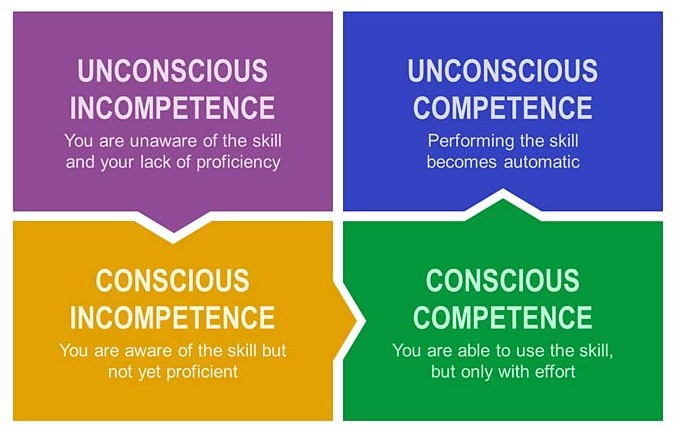
Competence model of skill development. Source: https://medium.com/@zainabz/the-four-stages-of-competence-ee5c6046b205

People who are experienced in reflective learning don’t necessarily go through these layers in sequence, but I do suggest that my students try to do so in the beginning. When learning how to drive a car, a new learner will go through each step sequentially and consciously, until familiarity is gained and sequential thinking is no longer required, and the driver is unconsciously competent at driving. The same applies roughly to reflective learning. It’s not automatically intuitive (especially after years of indoctrination by schooling), so in the beginning it’s better to do it step by step, layer by layer, with the conscious intention of reflecting in each of the six ways separately.

No doubt some of you reading this will be aware that mine is hardly the first model or framework of reflection that anyone has come up with. Indeed, after ideating these six levels, I googled to see if perhaps I was unconsciously coming up with something that I’d already seen before. The closest I found was Gibbs’ Reflective Cycle, which was remarkably (and embarrassingly) similar to my own six levels, with minor differences. On the one hand, I wondered whether I’d known about Gibbs before and had just suppressed it, but I didn’t think so. So I just assumed that Gibbs and I had independently come up with similar frameworks because, uh, great minds and all that. That made me feel slightly better.

All I can say is to reflect (!) on this however you like, and if it helps you be a more critical thinker, then that’s great. In any case, it’s an evolving framework (I’m already thinking of a 7th level) and I would certainly love to hear your thoughts and, ummm… reflections.