
(This is the first part of three successive entries about Pittsburgh, Cleveland, and Detroit – the first three cities I’ve visited on this trip. All three faced similar problems with post-industrial decay, and all three have responded differently and achieved different results.)
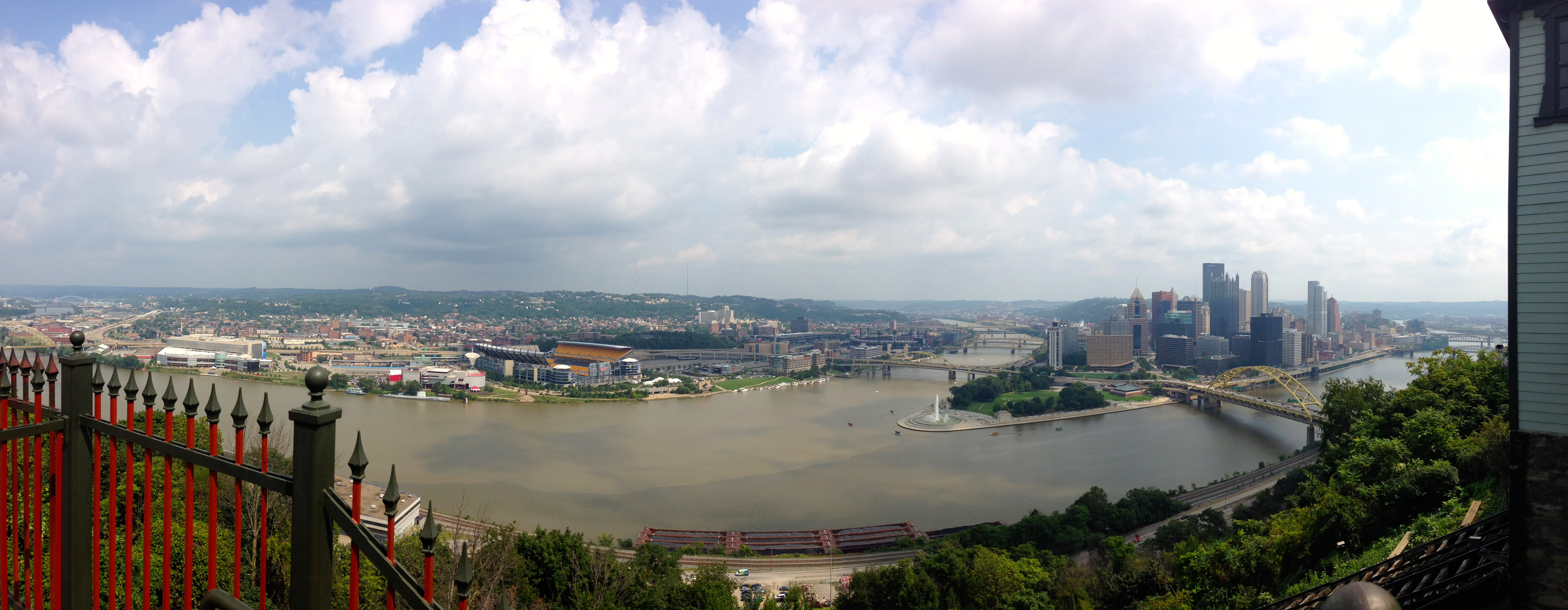
Despite knowing that Pittsburgh is an Appalachian city, it never occurred to me that it was a city of hills. Or more accurately, it’s a city of hills and rivers and bridges. Approaching from the southeast along the Monongahela River, the city revealed itself dramatically; the approaching driver (myself ) crosses a series of tunnels bored through the Pennsylvania mountains. The tunnels give way to steel bridges and suddenly Pittsburgh appears from behind a hill and you see the skyline, but also the confluence of three rivers that give Pittsburgh its unique geographical qualities. Here, the Allegheny and Monongahela Rivers converge and become the Ohio River, which later merges with the Mississippi, many, many miles downstream. The convergence is geographically critical to Pittsburgh’s history and identity, first as an ideal place for an industrial city to grow, and later as a focal point for the city’s post-industrial transformation.
Despite being ignorant of Pittsburgh’s topography, I had known about Pittsburgh’s recent awakening from post-industrial slumber. I knew that Pittsburgh successfully pulled itself away from its decaying industrial past and shifted its economy toward tourism and technology, while also dedicating itself to improving the infrastructure of its waterfront. I knew that during the recent recession, Pittsburgh was one of the only cities to have its economy grow. And after visiting it, I think I better understand why Pittsburgh’s renaissance has been so successful where other post-industrial cities are still floundering. There were essentially three moves or qualities that I felt contributed to this.
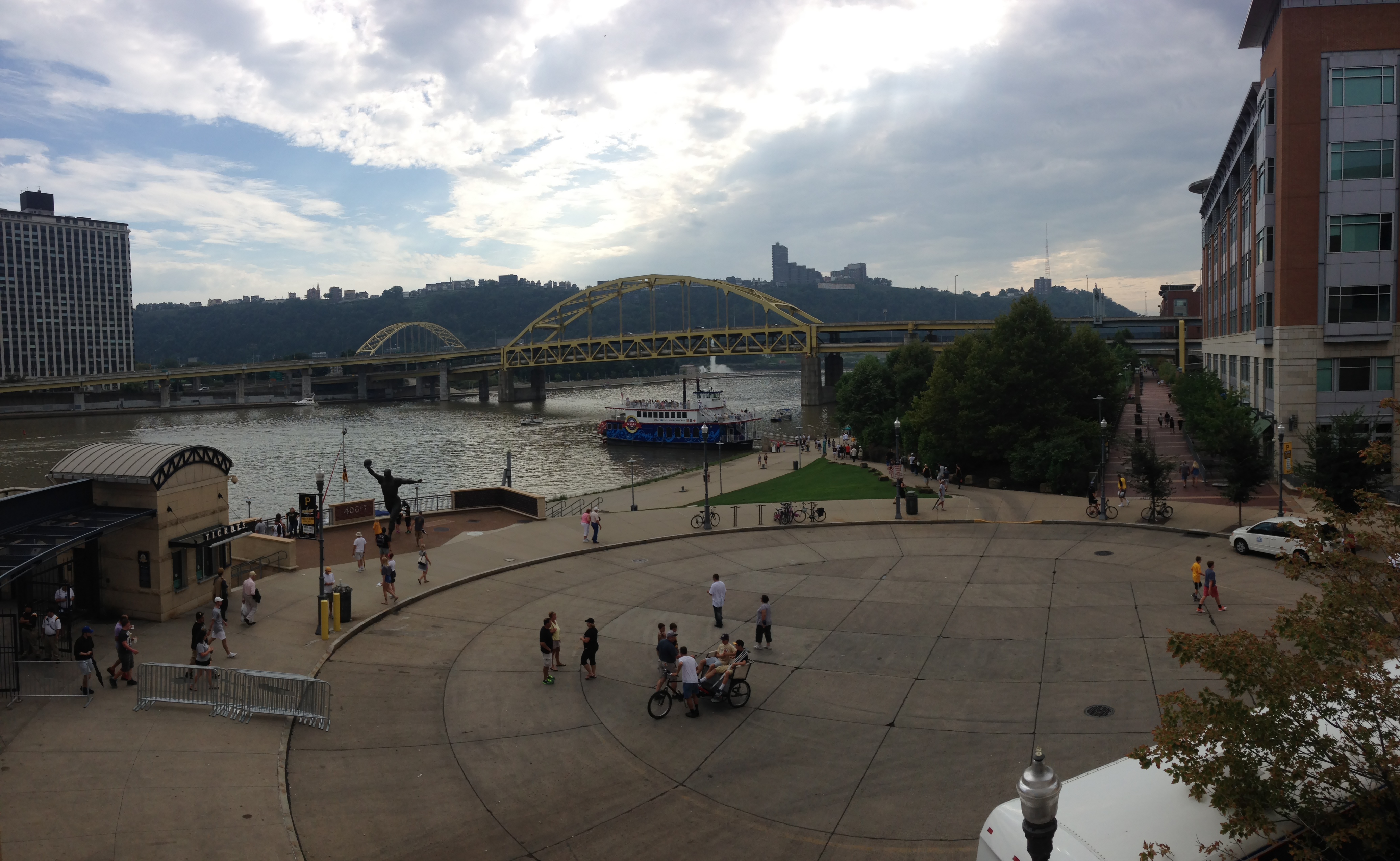
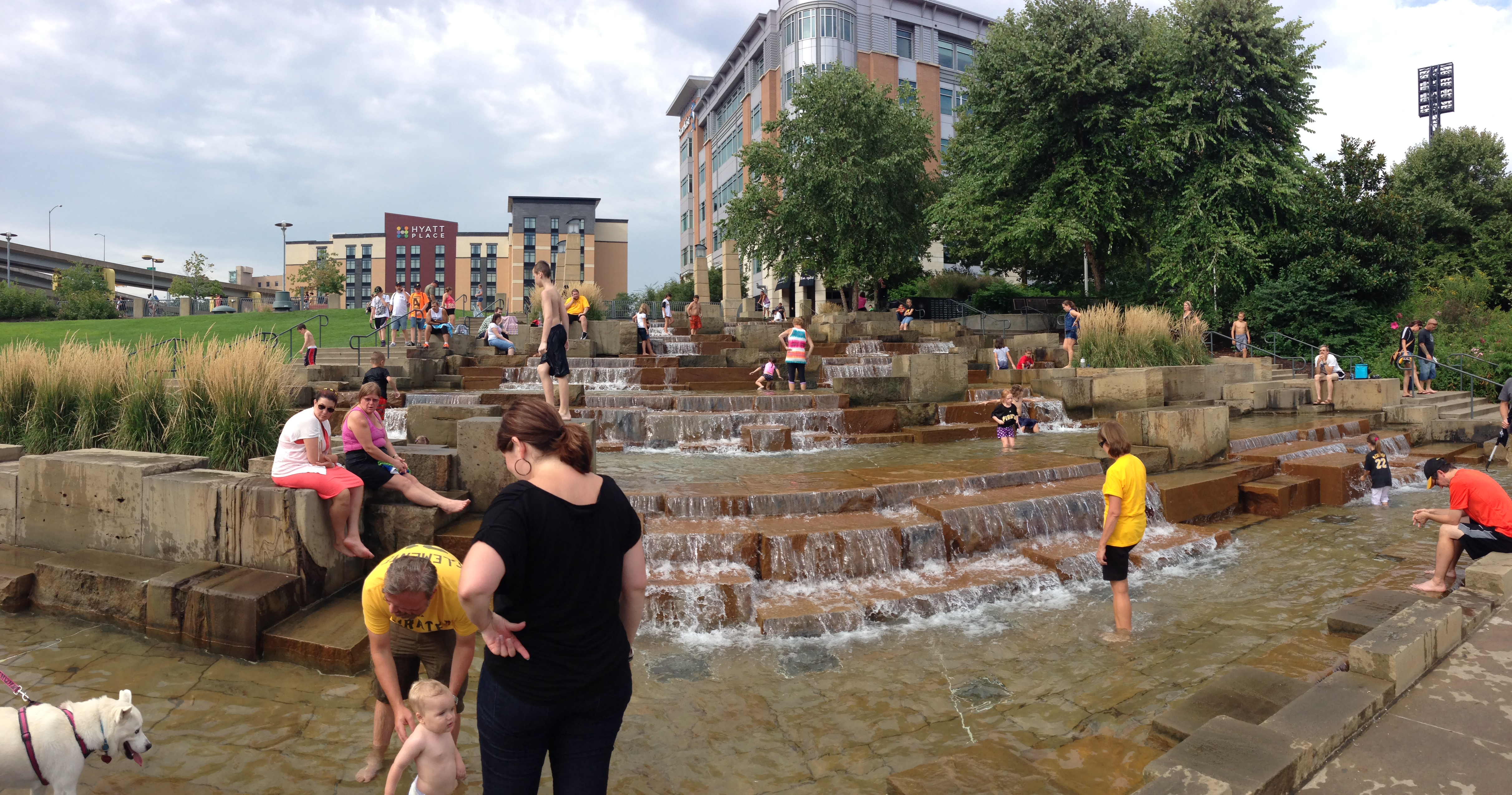
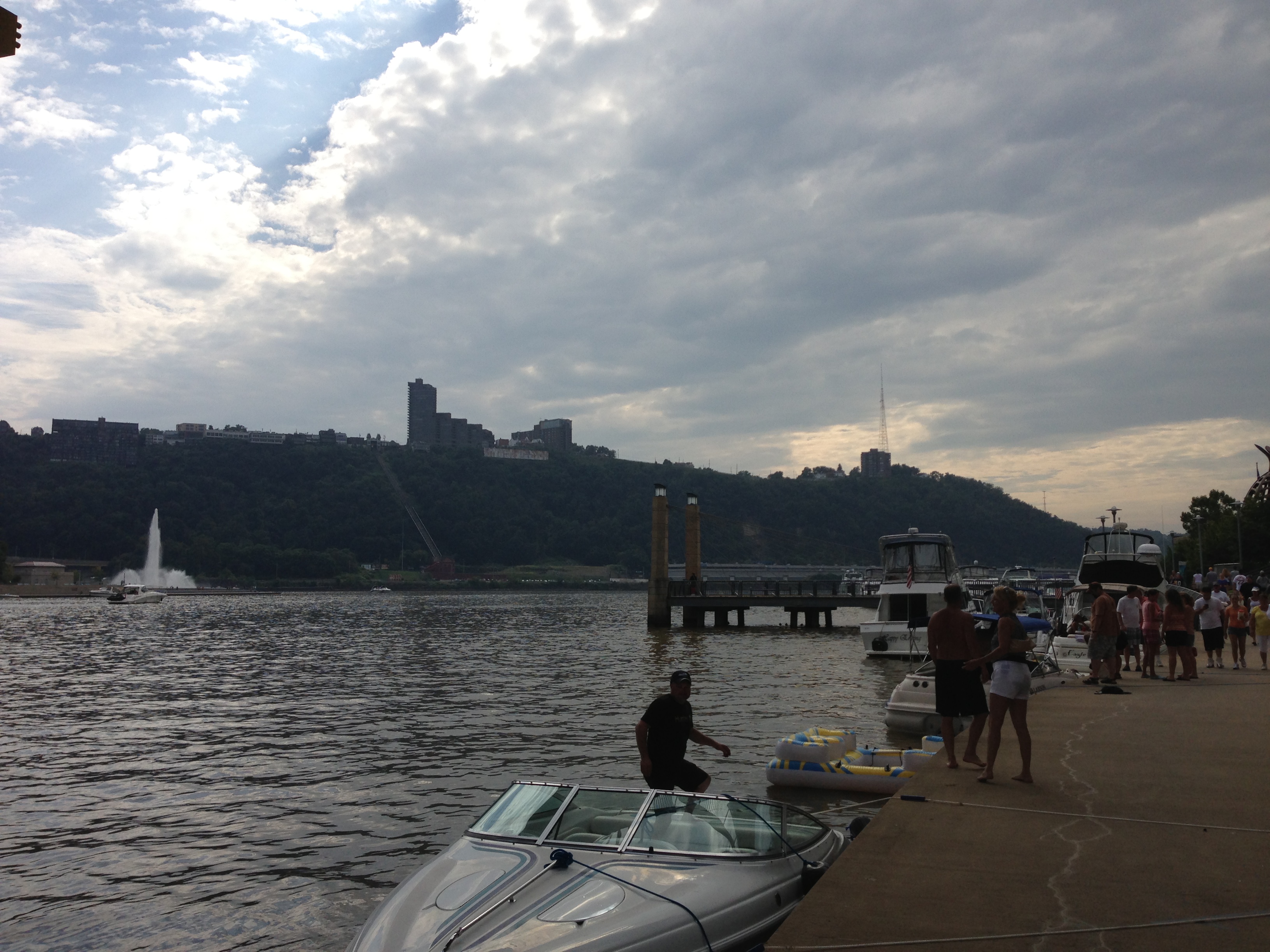
First, Pittsburgh wisely chose to focus on its waterfront as a physical manifestation of rebirth. New stadiums were built on the North Shore, taking advantage of striking views. My very first activity in the city was to watch a baseball game at PNC Park, which uses the downtown skyline as an outfield backdrop to great effect. The ballpark itself is similar to other new ballparks built in the Camden Yards era, with open concourses, intimate views, and richly textured details. The key to PNC Park is its location, both with respect to views from the seats themselves as well as its proximity to the downtown district and the new riverfront walkway. It was exciting to see that, after the Sunday afternoon game, many fans spilled out of the stadium and onto the walkway, strolling up and down like tourists. The walkway itself is extensive, open, and has active uses attached to it. Play fountains, boat hookups, food festivals – I saw all of these and more when I walked up and down the walkway. It’s a vibrant space, and has great connections to both sides of the river, its buildings, and its cultural institutions (museums, sports venues, entertainment, etc.)

On the promontory known locally as “The Point,” a new park has been designed, with a massive water fountain marking the triangle where the two rivers converge and become the Ohio. The fact that this important geographic area and valuable real estate was set aside not for corporate use but for public space is great, even though I’m not a huge fan of using traditional fountains as markers for public gathering. In this case, however, it works. People sit all around it, and it’s visible from the entire waterfront.
The main downtown waterfront isn’t the only one that’s received redevelopment attention. The South Side Flats district, despite becoming somewhat gentrified, is also an area of cultural significance. Not quite as touristy as the downtown riverfront, the South Side is a nice active area of restaurants, bars, and new housing that has attracted many of the younger people who’ve chosen to move to Pittsburgh.
The second quality that Pittsburgh has chosen to exploit is its educational resources. I stayed in the university district, and it was clear that it is a thriving and active neighborhood. Pittsburgh has smartly made sure that its universities are encouraged to grow, attracting professional and academic development and research when other post-industrial cities have suffered a brain drain in recent decades.
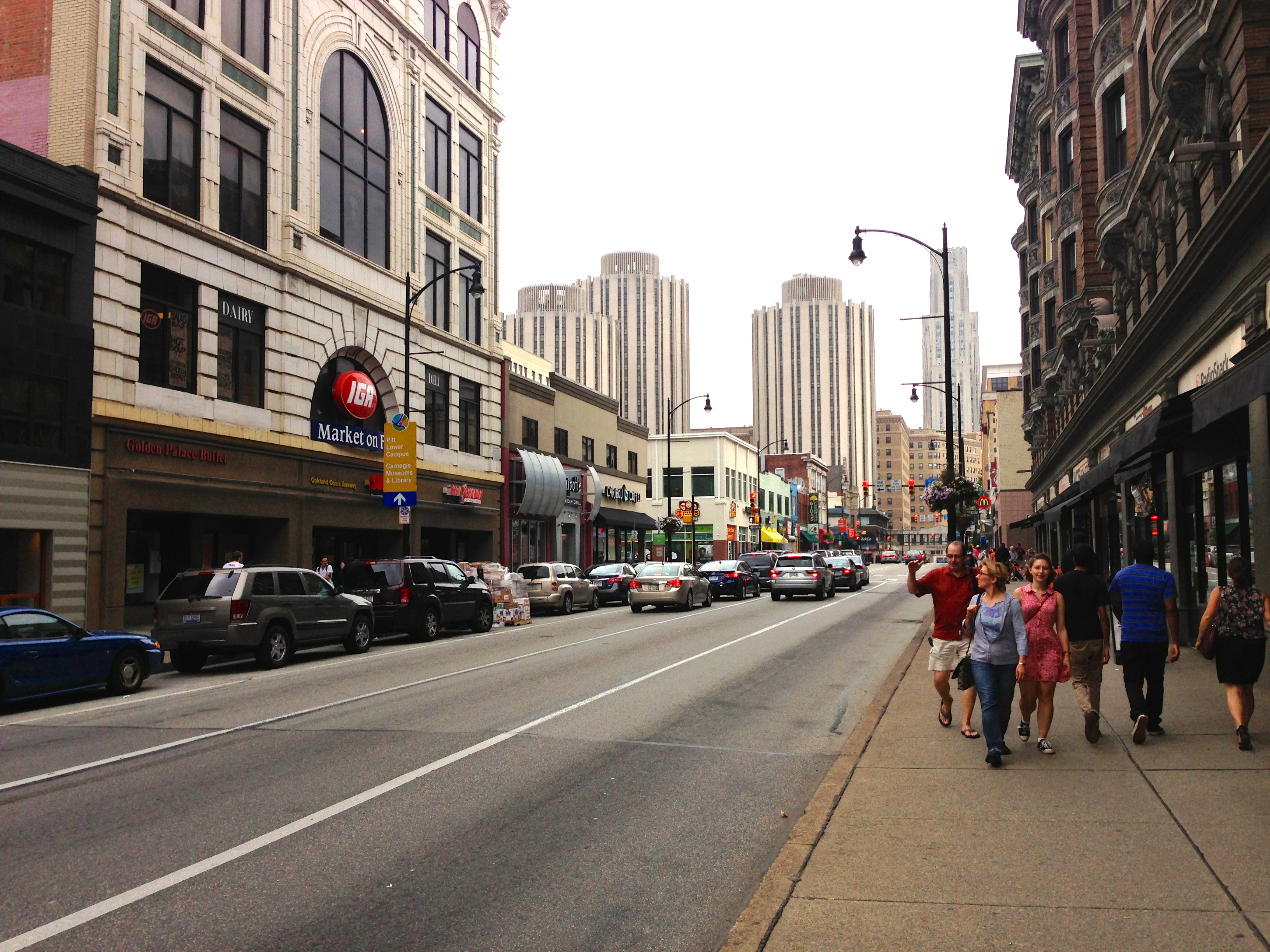
The third observed quality is Pittsburgh’s manageable size. It takes no more than 20 minutes to drive from one end of the city to the other. Its major districts are well connected despite being separated by three rivers. The city has over 400 bridges, none of which charge any sort of toll or fee, so there’s no obstacle to move quickly and easily between neighborhoods by car. And all the diverse and varied neighborhoods of Pittsburgh are not too spread out or very large. Presumably this is aided by the city’s topography… there is literally no means to achieve horizontal sprawl with so many hills.
Speaking of Pittsburgh’s neighborhoods, I found a similarity here to Baltimore, where I lived for five years in the early 1990s. Like Baltimore, Pittsburgh has a wealth of small, diverse neighborhoods that are close together and have fuzzy borders. It was often hard to tell which neighborhood I was in at the time, or where the borders between districts actually began or ended. Sometimes, I’d be driving through a visibly sketchy neighborhood only to find myself out of it in a manner of minutes. So, if there are areas that are less gentrified, less developed, and more poorly maintained, these areas are small. It’s reasonable to assume that their close proximity to other thriving neighborhoods will have a contagious effect inevitably. I could be wrong.
I think these three factors have contributed strongly towards Pittsburgh’s unusual success. Capitalizing on the city’s geographical aesthetics, its educational and social resources, and its finely grained neighborhood-level diversity and compactness have made it a city well worth learning from, and it’s no wonder that Pittsburgh has become the poster child for post-industrial urban recovery and renewal.
 PALIMPSEST