the new abnormal?

MID-PANDEMIC REFLECTIONS ON ONLINE TEACHING

My friend Sudip, a fellow architect and teacher, recently asked me to share my thoughts and experiences about teaching online over the last few pandemically bizarre months of our collective lives. I told him that I’ve been planning to write a blog post about it which is true enough, but the fact is that I’ve been hesitating for two main reasons.

First, I’ve felt that it’s a little premature to reflect on the ‘new normal’ when nobody really knows what that means. Even as I write this, both of my ‘home’ countries are facing spiking infections and deaths from Covid-19 with no sign of relenting. Today, on 10 August, 2020, India and the United States together account for 37% of global cases and 29% of global deaths from the coronavirus. Both of these countries account for 22% of the world population. (source: worldometers.info) Educational institutions everywhere are weighing the risks of opening up their schools and campuses against continuing some form of online learning. Unfortunately, many such decisions are being taken for reasons beyond the medical or financial; there are lines being drawn on political and ideological fronts as well. So, I thought, does it make sense to reflect on the current situation when no one truly knows how long it’s going to last, and how it’s going to evolve?

Second, I wondered whether my voice was even needed right now. The Covid-19 pandemic is probably the most talked about and written about event in human history. The challenges being faced by teachers across the globe are common and universal, more so than they have ever been. What’s the point of adding to the cacophony of opinions?

But I like Sudip and I respect his opinions. He asked me for my thoughts and it spurred me to finally put down some words. Ok, a lot of words. (The fact that I have a lot of papers to grade which I’ve been procrastinating about has nothing to do with it, no sir, not at all.)

“What do you think about online teaching?”

The quick answer to this frequently asked question is almost universally “It depends”. There are a few who absolutely hate it, and a few (only somewhat surprisingly) who love it. The rest of us are somewhere in the vast, grey middle. We’re doing it because we have to. There are advantages and disadvantages. Sometimes it’s good, sometimes it’s bad. All of these are common answers, and mine are no exception.

As a teacher of architecture, there are certainly things that I miss about physical in-person teaching. Design and architecture are such an intimate form of education; there is a long-treasured romantic attachment to the physical design studio – the place where magic happens in the casual interactions between teacher and student. This is no exaggeration or flowery sarcasm; it’s genuinely the single biggest thing that distinguishes our teaching from that of other disciplines, and as of now, there’s no readily available technology that perfectly replaces it. Sitting next to a student on a large table, marking up their sheets with a 2B pencil, gesticulating your critique in a frenetic fervour – I haven’t seen anything that replaces the natural ease of those actions so far, although it’s fair to say we’re getting close. The tablet, the stylus, and near instantaneous internet connectivity are starting to clumsily approximate the studio tools, but not the studio environment. The chance interactions, the random student or teacher stopping by the table to observe and offer their own comment. The unforeseen long digressions about movies or artists. If these things are happening online, it’s in spite of the medium, not supported by it.
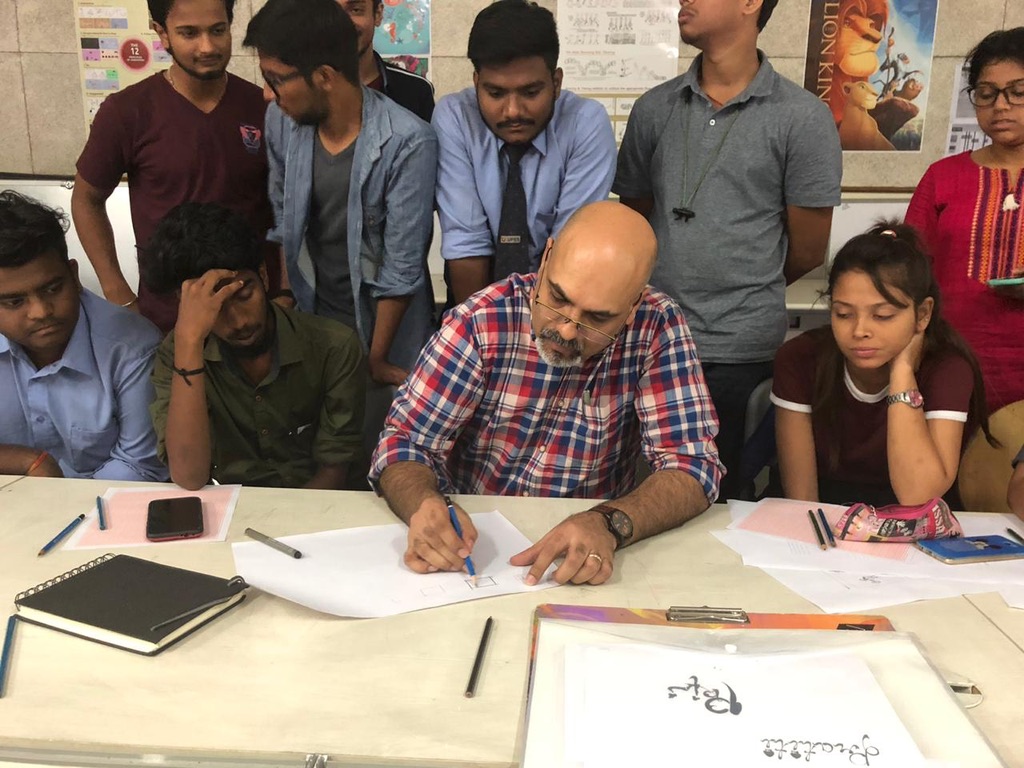
Teaching by example. Physical proximity is key.

And since my career has involved not just teaching, but administration, I’m not only thinking about the conducting of online classes, but the strategy and tactics of it. How are teachers delivering the intended curricular content? How are students receiving it? What logistical factors come into play? Is it promoting or suppressing flexibility in learning? What can we learn from it? Is it exposing flaws and weaknesses in how we teach, that we may have been ignoring all this time? These questions have been nagging me over the last few months, as I try to cope with my own classes and students.

My online teaching scenario

Before I share my reflections on online teaching, let me explain my current teaching situation. I teach architecture at a local nonprofit university in Agra, Uttar Pradesh, India. I started teaching here somewhat formally in February 2020 and I was asked to teach both Design and Research classes to 4th year undergraduate students. I teach at a traditional campus with the usual pros and cons – we have our own architecture building which we love, but we’re always short on space and facilities. Students are a mix of local commuters and out-of-town hostellers. Their socio-economic backgrounds are also diverse, ranging from children of affluent families to first-generation college-goers from families of humble means. Because the architecture course requires it, all students have their own high-end laptops with specialised software, and because it’s 2020 India, they all have smartphones. Very few have tablets or other special devices.

Less than a month after I started teaching, and a week or so before the official nationwide lockdown came into effect in late March, our university saw what was coming and sent all students home for their own safety. Classes were quickly and chaotically shifted to fully-online, leaving many of us scrambling to figure out what platforms to use. The university had a native online EMS (education management system) for things like grades and admissions, but otherwise we weren’t doing any teaching through Blackboard, Moodle, or other online teaching platform. So we quickly set up free Google Classroom pages and Zoom accounts and shifted our schedules and materials online. Classes were held whenever it was convenient or necessary, sometimes in the evenings. We tried different video conferencing apps and coordinated between those and email, WhatsApp, and even the lowly telephone, We managed to get through to the end of the semester, holding our juries and exams online, and when we were given the indication that classes would remain fully online through all of 2020, we started to do things in a more planned and formal way. In this new semester, our classes are following the proper timetable, all subjects have a Google Classroom page, and faculty have settled into either Zoom or Google Meet for their live sessions, as per their personal preferences. Things are more organised than last semester and both students and faculty have settled into a routine and pattern of online education, although we still have our challenges.

But let’s rewind a bit.

Not my first time around the online block

My previous institution – where I started as a regular permanent faculty and eventually became a Dean before leaving in 2019 – is a private and non-regulated design college. It doesn’t come under the ambit of government regulators, but is nevertheless one of the premier design schools in the country.

It’s owned by a foreign education conglomerate that, as early as 2014, had started to push the idea of online learning. The truth is that this was done mostly because they foresaw what the future of education would be, but also partly because it held a lot of opportunity to teach a much broader range of students without the usual investments in capital infrastructure. For the next few years, the leadership and academic teams had long, and sometimes fierce, debates about how (and if) we could teach design online. I won’t narrate that complex story here, but it’s enough to say that we began a program to phase in hybrid online learning over time. We introduced Blackboard and started training both faculty and students not just in the technical details but also the ideological aspects of teaching and learning in the digital environment. There was some resistance, as expected, but eventually every teacher became a sort of expert at online teaching so that when the coronavirus lockdown hit in March 2020 (a few months after I left), the institute was able to pivot to online more quickly than most.

Having been one of those that were trained and (I admit, reluctantly) pushed into shifting some of my teaching online (and getting my staff to do so as well), I was probably prepared better than some of my new colleagues in Agra, who had not really done it before. (In a further rewind) it probably helped that I’ve had experience in distance education as far back as 1994, when I worked a part-time job in the Distance Learning department of my undergraduate university to help pay my tuition fees. Among other tasks, I used to help professors convert their lecture notes into Powerpoint slides. I also did my own distance learning course in 2006. While living in New Jersey, USA, I got a Diploma in Theology from the same institute in Agra where I’m teaching now. They’d just started delivering distance education a short while earlier, but in a somewhat more text- and lecture-based format than what we do in design education. They offer vocational and other courses to over 80 study centres all over India using centralised physical course materials that are delivered by courier, and with local coordinators that facilitate students to participate in recorded and live video lectures. You could consider them more like small satellite campuses rather than the home-based flexible online learning that the whole world is experiencing now.

All of this is to say that I’ve had experience with distance and online education before, but not so comprehensively as I’m doing now. I guess I could’ve just said that to begin with and saved you a lot of reading, but I do feel some specific background is required to contextualise what I’m going to say next.

Back to the future (?)

“It depends.”

Yes, that’s still my answer to Sudip’s request. I wish I could be more passionate or polarised about it, but I’m not. This isn’t Marvel vs. DC here, or Star Trek vs. Star Wars! [Just kidding, I love all of those things equally.] I’m trying to take as pragmatic a view as possible about this because it’s no longer postulating about what the future holds. The future is here. The uncertainty that I always rant about is here, much sooner than I expected. We have to be pragmatic about it because it’s now our hot, blazing reality and we need to get it under control as much as possible.

Despite my earlier experiences with distance learning and HBO learning (no, not The Sopranos… “Hybrid Blended Online”), I’ve still learned a lot over the last few months. I admit that in earlier debates and discussions as an administrator I held the strategic viewpoint. It’s been about five years since I actually taught a full load of classes, and now I’m once again balancing a teaching load, preparing for classes, grading, and counselling. Now all of it is one hundred percent online, with no physical interaction with my students and co-teachers at all. And that’s not likely to change anytime soon; it may very well be this way for the remainder of the academic year, until May 2021. Maybe even longer. Teaching online in some capacity is something we need to get used to, quickly and intelligently. There are definitely disadvantages, but there are some things to take forward as well.

What online can’t do

Why Millenials Need Less Studio Time in Architecture School ...
The studio environment at architecture school (source: architizer.com)

I already mentioned the lack of the studio environment that we normally have in design and architecture education. Admittedly, it’s now rare to find that 24-hour open studio that was commonplace a couple of decades ago. You only see it in more well-established and well-funded design schools. Real estate costs have gone into the stratosphere and colleges all over the world are re-thinking the idea of providing dedicated, often empty, studio classrooms for a cohort of students to use as they wish. Studios are now often assigned by rotation, and more urban colleges are creating flexible, open spaces to be used commonly, rather than assigning them to specific students or cohorts. There are also calls to reduce the dominance of the design studio in architecture education. Even so, such spaces – whether dedicated or common – still allow for the intimate chance interactions that design schools are known to provoke. When you go to campus, you know other students will be there, and faculty as well. Design is driven by dialogue, and impromptu discussion and critique takes projects further and makes them better.

Can this be done online? Well, yes… after a fashion. A student can send a teacher a text message asking for advice, or they can post their progress work in a WhatsApp group for peer critique. But this doesn’t always happen. One difficulty I’ve encountered is the students’ reticence to use the full corpus of social media to discuss their work with their peers, especially in textual modes. My students have numerous WhatsApp groups but they rarely use them except for posting announcements about the class (when the group includes teachers) or gossip (when the group doesn’t include teachers). I don’t see any productive conversation, dialogue, critique – no posting of work in progress, no posting of interesting links or helpful tutorials. Maybe this is happening outside of my view, but probably not as much as I’d like to see, and this can be attributed to a number of factors, including the student’s lack of confidence to articulate their thoughts in written words (as opposed to verbally). Although they’re supposedly digital natives, they haven’t really figured out how to engage in productive online written discourse, something that I literally grew up on during the early years of internet message boards and chat rooms.

And even in the virtual video classroom, the immediacy, spontaneity, and – most importantly – the smooth, evolving articulation of verbal conversation is lost in the choppy digital back-and-forth. Facial expressions and gestures that teachers and students rely upon are not as well conveyed on screens full of lo-res rectangles.
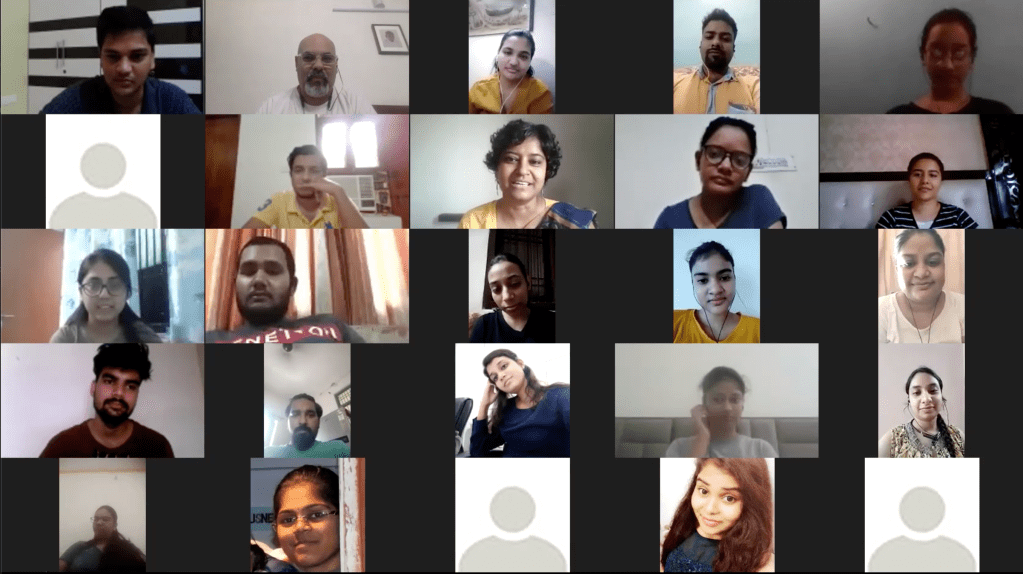
I’ve predominantly settled on Zoom as my video conferencing platform of choice, and I’ve invested in the annual Pro plan to get features which have helped me with my online teaching. I’ve tried other apps but Zoom is the most stable and has the most Host features. I frequently use the Breakout Rooms feature to split up my larger classes into smaller groups for discussion. But Zoom is still designed for business, not for education, so it lacks many things that teachers need. The digital whiteboard and annotation tools are not intuitive without a stylus and tablet. I can’t keep track of 30-40 students and see if they’re paying attention, getting bored, or even if they’re in their room if their video is off. And it’s frustrating to constantly ask them to turn their video on, so often I just forget about it and move on.

In design education (and increasingly in other disciplines) the use of physical resources are critical. A great deal of time in design studies is spent in the physical act of making, even in the digital age. Every design school in the world has labs and workshops where students can tinker, fabricate, and assemble. Using physical tools and working with the hands is still (and will foreseeably) be a crucial part of design and architecture education. Suddenly having no access to these resources has been a major handicap because they are integral to learning design. Even losing access to the library has been a problem, despite all efforts to build collections of e-books and e-journals.

School of Design Courses -Pearl Academy
Design labs and workshops (source: pearlacademy.com)

There’s also a very pernicious problem with online video classes – because our college is a nonprofit with low fees, many of our students enjoy a quality education that they otherwise may not be able to afford. Asking such students to now upgrade their internet data plans so that they be on bandwidth intensive video calls all day means an expense they may not have foreseen. Some of them don’t live in areas with good network connections. Some of them have only one laptop in the family, and if it crashes, their online learning grinds to a halt.

This isn’t even touching on the psychological price that many of them pay for an online-only education that they never bargained for. What many professionals are facing with WFH are also being faced by students – lack of space, lack of privacy, lack of noise isolation. Fatigue from sitting all day, staring at screens all day, wearing earphones all day. Even I’m exhausted from a day of online teaching, more so than physical teaching. It requires a focus of concentration, volume of speaking, and energy of managing multiple screen windows at once that you don’t have in the physical environment, or at least, not in such a prolonged way.

And there are hidden costs. Students who used to find solace and respite in college because their home lives were troubled, chaotic, or even abusive – they no longer have that luxury, and were given no time to prepare for the sudden change. The number of students that face such issues is woefully underestimated and largely unknown. No attempt at focusing on the cost savings of not commuting, or not having to ‘dress up’ for college, and other such silver linings can erase the difficulty that comes from such circumstances.

There are also many factors I haven’t had to experience because I teach in higher education. I sympathise with the struggles that school teachers are going through around the world, and I won’t even enumerate the problems that online teaching has for them, and for parents of school children as well. The dilemma of keeping children occupied and interested is universal. We love to think that children of the 21st century are ‘digital natives’ but we can’t overestimate this. A child may love to play games or watch cartoons on an iPad all day, but do they want to learn in a classroom that way? Maybe years from now when this is commonplace, their attention spans will be accustomed to it, but if we’re in a transition phase right now, it’s not looking good at all. And what about social interaction? School-age children need to be in collaborative and collective environments to develop personalities and social skills, and that is now lost completely.

Image may contain: 5 people, people standing, text that says 'Schools starts today. As teachers you are safe. We've taken every precaution'
Teachers as redshirts in the Covid era (source: unknown meme)

Some of these challenges can perhaps be overcome or managed over time, and with better planning and resources. My former colleagues who are using Blackboard invite me for online sessions, and in some ways the interface of Blackboard Collaborate is better than Zoom, because it’s designed for education. For example, my online class on Zoom is linked to my Zoom account, using my Personal ID (so that I don’t have to send my students links for every class). It’s attached to the teacher, which can sometimes be a problem if someone else has to take my class, or if the students want to meet without me. In Blackboard the session is attached to a given class, not to any specific teacher. All the resources for that class are likewise attached to that virtual classroom, which anyone with the proper credentials can log into and access. The class materials, the assignments, the grades, and the venue for video classes itself… all exist in the virtual class space. It’s a much better holistic solution that we don’t have yet. Zoom is where we hold our classes, and Google Classroom is where the resources are kept.

But different apps and platforms won’t change the other things I mentioned – the loss of the studios and workshops, the lack of intimate critique, the psychological challenges. I see no solutions for those things yet.

What online can do

It’s becoming clear to me that online classes have their place in education; we just have to be smart about where that is, and how can it best be leveraged. There are things I’m learning and practices I’m starting that will very likely continue once (and if) we go back to a physical campus. For one thing, the timetable – always a complex puzzle for every educational department – was much easier to manage this semester without having to tussle with room availability. If some portion of classes can be shifted online, even in part, then the burden on resources can be relieved.

Amongst the community of design educators that I know, there seems to be a consensus that theoretical and lecture classes are easier to manage online, although I don’t think it’s a completely resolved issue. On the one hand, attending an online class is much easier, so my online attendance has been nothing short of remarkable, averaging above 90% in the 5 weeks of the semester so far. And although it sometimes may not seem like it, my students do seem to be paying attention in class.

I like to think of myself as a good teacher, and my students seem interested in what I generally have to say. They behave well in my classes, for the most part. I think that online teaching has perhaps polarised the good teachers from the not-so-good ones. If you’re an engaging teacher, you will perhaps be more engaging online because your ability to keep students’ attention can still be effective even when their hidden laptop screens may be teeming with unknown distractions. But not-so-good teachers will suffer; if your lectures are boring, they will be even more boring with the disconnect from physical interaction.

Design education tends to have less lectures anyway, and even theory classes are more like seminars than anything, containing more discussion and dialogue. These classes may not be perfect online, but if anything can be shifted online to save resources, theoretical classes can be. The losses are not so noticeable, and the adjustments are achievable with a bit of training and planning. If a portion of subjects can be shifted to asynchronous online learning somewhat painlessly, then it’s also easier for students to engage with the class on their own terms, at their own pace of learning. This aligns with current trends that indicate today’s students are more amenable to flexible learning models. They can also do a portion of their work in their own comfortable and convenient environment (home, cafe, beach… anywhere, as long as they get the work done), as long as they come to campus for the practical learning.

The world of education was anyway moving towards what’s called a ‘flipped classroom’ model, which means that rather than lecturing and then assigning readings based on the lecture, you ask students to prepare ahead of time with readings and other resources, and then attend classes only for questions and clarifications. This avoid repetition of information and waste of resources. Online learning works well for this, with a combination of synchronous and asynchronous learning. Students use the off-hours to learn and absorb on their own time and pace (asynchronous), and time with the teacher is spent only on the critical or complex aspects (synchronous).

Online classes then become a sort of ‘virtual office hours’, which is something I’ve actually incorporated into my classes already. Most practical subjects have lots of hours in the schedule, which, in a physical studio environment, means the students work for most of the time, and occasionally come to me individually for questions or critique. If I convert the same number of hours online, I needn’t interact with all students for the entire class time. They work and I’m there to answer questions and resolve problems as needed. I often use a portion of the time for students to critique each others’ work, while I observe and interject.

Assessment and feedback is also easier online. Assignments like essays, quizzes, and other strictly written or visual material can be assigned online, submitted online, and graded online, reducing paperwork and tracking of documents. I can assign a task and know immediately when students have submitted them early or late. Questions can be posted online which can be answered at my own convenience. Feedback is made easier through the use of rubrics, which is nicely facilitated by apps like Google Classroom. I can create rubrics easily, reuse them, modify them. And students instantly get the results. We used rubrics before but because of how easy it is to use them online, I almost exclusively give feedback in rubric-form, saving me a lot of repetitive work. They don’t give all the feedback I necessarily want to give, but whatever isn’t covered in rubrics, I can type separately, or discuss with students when I meet them in class. But this quantity is much less.

Apps and platforms like Google Classroom and Blackboard – although they have their interface shortcomings – also make record-keeping much easier. Everything is stored in the cloud, no worry about data loss or laptops crashing, and I can access everything from any device.

As I mentioned, online teaching can tend to separate the good teachers from the bad, so teachers need to be trained to use online platforms to their best advantage. A sudden shift to online teaching as it happened this year doesn’t allow for this, but if this truly is to be the future, then we’d best start training ourselves now.

But one of the single best things about online teaching is the near universal availability to recruit talented professionals and academics from around the world to supplement my teaching. Before the ubiquity of live online sessions, it was often a struggle to get people to conduct guest lectures, talks, and workshops with my students because it involved the high cost of physical travel and accommodation. Since I’m doing all my classes online now, it’s really no big deal to ask a friend or acquaintance in the industry to conduct a session with my students on Zoom. We used to think it was inferior to physically conducting workshops in person, and it is. But if I can get some level of guest interaction at a fraction of the cost and hassle, then I’ll do it. And I have, with good results.

The hazy future

Sudip, if you’re reading this (and have gotten this far!) I hope you’re satisfied with my 5000-word response to your query. More likely it’s more than you bargained for, but that’s the kind of teacher I am, for better or worse.

As I said, I do hope to continue some online practices when we get back to campus. The parts of online teaching that work for me – virtual office hours, virtual guest lectures, flipped classrooms, online ‘anytime’ discussions, feedback and assessment, record keeping – these I will probably keep doing, and hopefully refine them along the way with more practice and better technology.

I also believe that the forced evolution of the pandemic will accelerate the technology to make virtual teaching less and less distinguishable from physical teaching. AR/VR, holograms, haptic and gesture-based tools, and integrated devices can all help to ease the transition.

I’m still eager to see how this all plays out. As I said, everything is too uncertain to make definitive statements just yet. Despite what they say, no one has any idea what’s going to happen next. Certainly the next year or so is going to be a difficult and challenging time for academics, in all aspects of administration and teaching. My personal view is that this is a sort of reckoning. Covid-19 has done one thing very effectively – it has exposed the flaws, gaps, and weaknesses in our social systems that were heretofore ignored or under-appreciated. In the short run, things are going to be tough, and unfortunately it’s possible that some academic careers as well as whole institutions may not be able to survive. But in the long run (how long?) things will eventually evolve and get better; of this I have no doubt. It truly has become adapt-or-die, and I for one am going to do my best to adapt. I can’t do anything else, and I still absolutely love teaching.

As it is for many, I see this another learning experience – perhaps a forced one, and very aggressive at that – but all the same it’s getting us all to take stock of who we are, what we do, and how we do it. The good thing, in a way, is that it’s happening to all of us at once, so there’s a great solidarity to be found in this crisis. All these months I’ve been doing my best just to absorb and listen to what everyone is saying about the future of education (another reason why I hesitated to write this article), and knowing that we’re all in this together is a huge boon.

I sincerely hope we know how to take advantage of it.
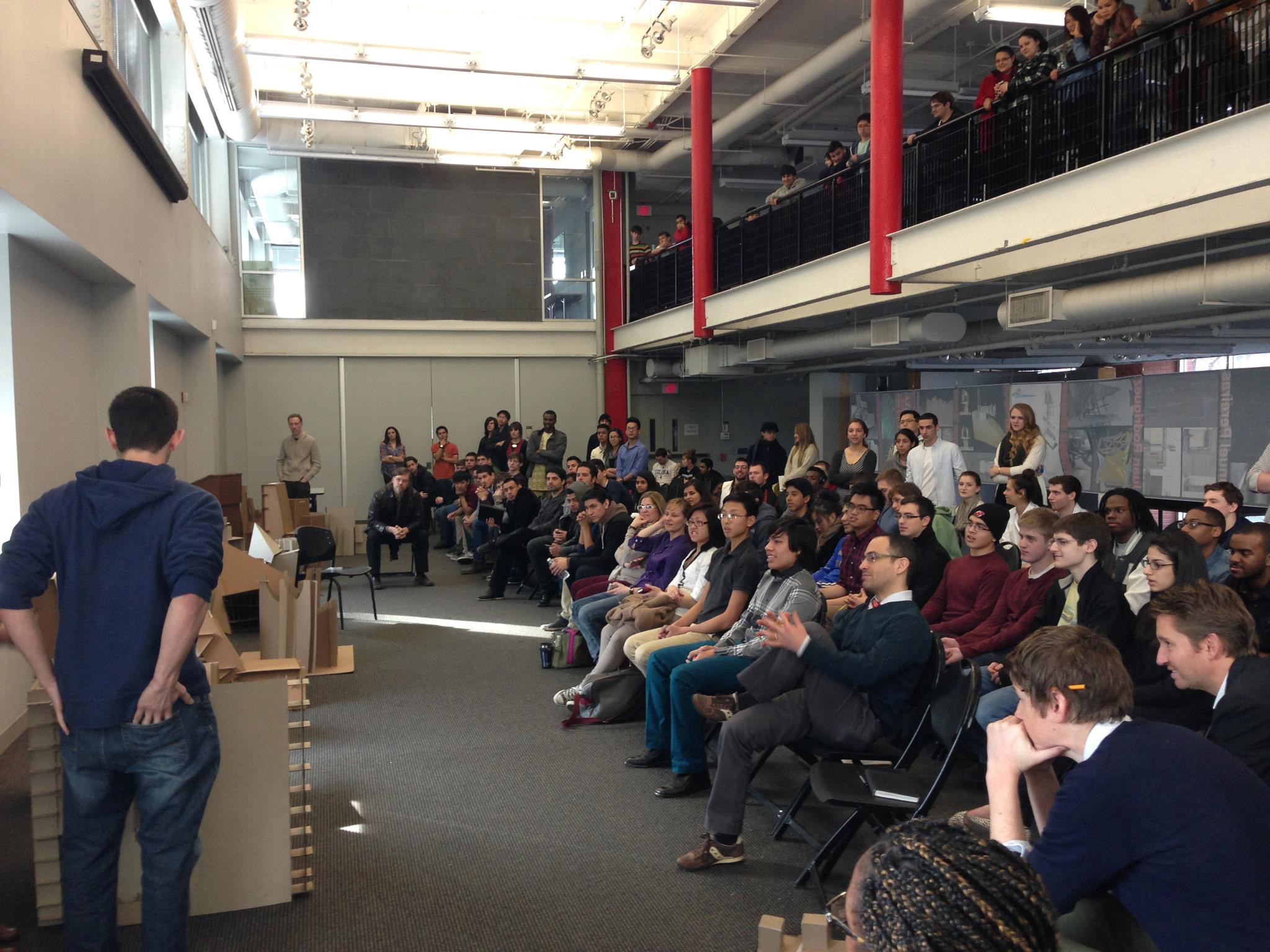
summertime for design students

TIPS FOR DESIGN STUDENTS TO STAY MENTALLY ENGAGED, ACTIVE, AND CREATIVE DURING SUMMER VACATION

[Note: This is an essay I wrote and have been sending to my students every year. Obviously this year, things are a bit different. The pandemic and subsequent lockdowns are going to limit some of the activities Iโ€™ve listed here. But on the other hand, they will give you ample time to do some of the other activities. So adjust accordingly.]

A lot of my students complain about being bored during the summer holidays. On the one hand, itโ€™s surprising how quickly you start being bored. On the other hand, I can understand how a full year of design school gets your neurons firing with intense frequency, and sitting at home or hanging out at the coffee shop is just not doing it for you anymore. Youโ€™ve gotten used to thinking at a high level and being creative. So Iโ€™ve put together a few suggestions to relax during the holidays and still exercise that brain muscle of yours. Like all muscles, if you donโ€™t exercise it, it will be that much harder to get back in shape.

I donโ€™t expect all of you to follow all of these suggestions, but give them a try. Without a doubt, have funโ€ฆ have loads of fun. Anyway, here are some ideas that help fight off boredom and will also make you a better designer.

  • Read! You can read books about design or architecture, but just read something! Fiction, non-fiction, comic books, newspapers, magazines, online articles, whatever. Try audio books if you have a hard time reading. At the end of this essay, Iโ€™ve listed some books that might be interesting for architecture and design student
  • Practice drawing. Go outside and observe the macro world โ€” go to malls, train stations, airports, and other public spaces and draw what you see. If youโ€™re at home, draw what you see at home or outside your window. Practice rendering techniques and drawing with unfamiliar media. Learn to get better at free-hand skills. Develop your ability to draw what you imagine โ€” visualise things in your mind and draw them.
  • Go to public places and simply observe human behaviour. Watch how people interact with spaces and the objects within them. Ask them questions and inquire why theyโ€™re doing what theyโ€™re doing and whether theyโ€™re even conscious of it. Take pictures! One of my favourite idle activities is to sit at an airport or station and invent background stories for people that I observe.
  • Learn a new software (or simply get better at what you already know) like Autocad, Sketchup, Revit, Rhino, Grasshopper, Maya, Vray, 3DS Max, Photoshop, Illustrator, InDesign, Final Cut Pro, AfterEffects, etc. YouTube has become a great resource for this. Learn to code, design a website, or Flash, HTML, CSS, and Javascript. Learn how to do better presentations beyond simple Powerpoint.
  • Learn a new form of creative expression, like filmmaking or cartooning. Explore different media, e.g. watercolour, clay sculpture, mosaic, photography, etc. Learn a musical instrument or explore a musical genre that youโ€™ve never listened to before. Act in a play, or write one.
  • Design a new game. It could be a board game, card game, mobile app, or even a new sport.
  • Practice writing and composition. Start a blog or write reflective essays. Write poems.
  • Design (or refine) your portfolio. Document your work and think of a way to present it, both as a hard-copy and digital. Figure out how to let it expand as your body of work grows. Make sure itโ€™s a good representation of โ€œyouโ€. But try to keep it simple and resist the temptation to include everything. Sometimes itโ€™s worth asking someone to help you edit.
  • Browse random Wikipedia articles or use websites like StumbleUpon or HowThingsWork to discover new things. There are many YouTube channels which explain how things work and how things are made.
  • Explore design workshops or seminars (or webinars) that are happening in your town (or nearby). Go to museums and galleries and be aware of new exhibitions.
  • Learn a language, or learn about a new culture, craft or art form. Travel to somewhere youโ€™ve never been, even itโ€™s a neighbourhood in your own city. Meet an artist, craftsman, artisan, performer, or designer and observe how they work.
  • Engage in some social work or volunteer activity. Join an NGO and find out ways that you can perhaps help them with their design objectives (e.g. designing posters, brochures, or newsletters for them).
  • Try to get a job at a design firm as an intern. Offer to help them in any way you can (but insist on getting paid in some way, even if only to cover your expenses).
  • Watch movies, preferably about art, design or architecture, but watch stuff thatโ€™s intellectually stimulating. Sure, thereโ€™s nothing wrong with the occasional mindless summer action blockbuster, but balance it out with some โ€˜otherโ€™ stuff. Again, Iโ€™m including a list of movies that have some relevance to design and architecture.
  • Watch TV and OTT shows. Life is not all about bad American sitcoms. Watch quality TV shows and limited series. Subscribe to a streaming service if you donโ€™t have it already and dig deep into their library for shows that you may have never heard of. Look for good documentaries.
  • Listent to Podcasts. There are hundreds if not thousands of podcasts on incredibly interesting topics โ€” some specific, some general. If you have difficulty reading, then podcasts is another way you can learn.
  • Above all, donโ€™t let boredom be an excuse for wasting time. Fill your time with interesting stuff. Catch up on sleep (because you know you wonโ€™t be getting much when school starts again) and break up your day into fragments of activities so you donโ€™t get bored of doing the same thing.

SUGGESTED READINGS

Books and articles that feature architecture and design

  • Architecture: Form, Space and Order by Francis DK Ching
  • A Tractate on Japanese Aesthetics by Donald Richie
  • The Death and Life of Great American Cities by Jane Jacobs
  • The Wright Space: Pattern and Meaning in Frank Lloyd Wrightโ€™s Houses by Grant Hildebrand
  • Invisible Cities by Italo Calvino
  • Ways of Seeing by John Berger
  • The Soul of a Tree by George Nakashima
  • Drawing on the Right Side of the Brain by Betty Edwards
  • Great Streets by Allan Jacobs
  • The Poetics of Space by Gaston Bachelard
  • Principles of Art History by Heinrich Wรถlfflin
  • Flatland: A Romance of Many Dimensions by Edwin A Abbott
  • Why Buildings Stand Up by Mario Salvadori
  • Why Buildings Fall Down by Mario Salvadori
  • Zen and the Art of Motorcycle Maintenance by Robert Pirsig
  • The Tibetan Book of the Dead by Sambhav Sambhav
  • Learning from Las Vegas by Robert Venturi and Denise Scott Brown
  • Brave New World by Aldous Huxley
  • 1984 by George Orwell
  • Red Mars by Kim Stanley Robinson
  • Freakonomics: The Hidden Side of Everything by Steven Levitt & Stephen Dubner
  • Mother Pious Lady: Making Sense of Everyday India by Santosh Desai
  • The Enlightened Cyclist by The Bike Snob
  • Rendezvous with Rama by Arthur C. Clarke
  • How to Read Towns and Cities: A Crash Course in Urban Architecture by Jonathan Glancey
  • The World Without Us by Alan Weisman
  • How to Live in a Flat by W. Heath Robinson and KR Browne

SUGGESTED MOVIES

Films that feature architecture and design

  • Metropolis (1927, dir. Fritz Lang)
  • Gattaca (1997, dir. Andrew Niccol)
  • North by Northwest (1959, dir. Alfred Hitchcock)
  • Rear Window (1954, dir. Alfred Hitchcock)
  • 12 Monkeys (1995, dir. Terry Gilliam)
  • Ran (1985, dir. Akira Kurosawa)
  • Rashomon (1950, dir. Akira Kurosawa)
  • Seven Samurai (1954, dir. Akira Kurosawa)
  • Moon (2009, dir. Duncan Jones)
  • The Fifth Element (1997, dir. Luc Besson)
  • Dark City (1998, dir. Alex Proyas)
  • My Architect (2003, dir. Nathaniel Kahn)
  • Parasite (2019)
  • Blade Runner (1982, dir. Ridley Scott)
  • Blade Runner 2049 (2017, dir. Denis Villeneuve)
  • The Grand Budapest Hotel (2014, dir. Wes Anderson)
  • 2001: A Space Odyssey (1968, dir. Stanley Kubrick)
  • Brazil (1985, dir. Terry Gilliam)
  • The Hudsucker Proxy (1994, dir. Joel/Ethan Coen)
  • Koyaanisqaatsi (1982, dir. Godfrey Reggio)
  • Powaqqatsi (1988, dir. Godfrey Reggio)
  • Life as a House (2001, dir. Irwin Winkler)
  • Helvetica (2007, dir. Gary Hustwit)
  • The Five Obstructions (2003, Jorgen Leth & Lars von Trier)
  • Art and Copy (2009, dir. Doug Pray)
  • Handmade Nation (2009, dir. Faythe Levine)
  • Rivers and Tides: Andy Goldsworthy Working with Time (2001, dir. Thomas Riedelsheimer)
  • Wal-Mart: The High Cost of Low Price (2005, dir. Robert Greenwald)
  • Wall-E (2008, dir. Andrew Stanton)
  • 9 (2009, dir. Shane Acker)
  • Loganโ€™s Run (1976, dir. Michael Anderson)
  • City of Ember (2008, dir. Gil Kenan)
  • The Matrix (1999, dir. The Wachowskis)
  • Total Recall (1990, dir. Paul Verhoeven)

dear design students: here are ten tips for your upcoming jury

Youโ€™re welcome. Sincerely, Your Design Faculty

Image for post

For design students, juries are often a source of anxiety and stress, but ideally they shouldnโ€™t be. Juries are primarily about design critique and they work best when theyโ€™re open, honest, impersonal, and transparent. However, this openness can also mean that jury feedback can be subjective, contradictory, and confusing. Add this to the anxiety of presenting your work to โ€˜expertsโ€™ and โ€˜professionalsโ€™ after many months of hard work and naturally students find juries a cause for distress. And I admit that we as design teachers often give mixed messages about how seriously you should approach juries:

Message A: โ€œJuries are important; take them seriously. Donโ€™t embarrass us in front of industry professionals!โ€

Message B: โ€œJuries are not that important; donโ€™t worry, relax. Donโ€™t take it personally.โ€

These messages arenโ€™t necessarily contradictory, they simply need to be balanced. So take the jury seriously if you want to get feedback, but donโ€™t take it so seriously that you get nervous and canโ€™t represent your work in a good light. But do remember: Itโ€™s only a jury, after allโ€ฆ. itโ€™s not a trial, or a judgement, or a punishment. Itโ€™s simply a critique on your work by professionals and academics who are not intimately familiar with your project, or with you. I think many students have the wrong impression about juries and put a lot of pressure on themselves which itself causes the distress that one is fearing and in turn causes the jury to go โ€˜badโ€™.

Yes, you should take juries seriously. Yes, you should speak maturely, dress appropriately, and be well groomed and bathed. You should make a good impression not just for yourself but your institution. To help with this, Iโ€™d like to share ten general tips for a healthy, productive, and stress-free jury.

1. BE PREPARED

Double check your sheets, slides, videos, renders, animations, prototypes, models. Make sure you have everything. This doesnโ€™t mean that youโ€™ll present everything, but be prepared to show any work that jurors may want to see. Keep in handy, and ready to find in an instant, either physically or digitally. Give yourself enough time to check. Enlist your family to help you. Be ready when itโ€™s your turn, and donโ€™t make the jury wait for you. Arrive on time and set up on time. If youโ€™re presenting digitally, check all A/V connections and make sure all your tech gadgets work properly. If youโ€™re posting physical sheets on a wall panel, bring plenty of pins! Rehearse your presentation beforehand. Keep notes if you need them, and present your work in the form of a story or narrative. Many of you go through your project like this: โ€œFirst you enter from here, then you go here, then thereโ€™s a desk, then thereโ€™s a tableโ€ฆโ€. Instead, talk about your design process. Start with your design problem, your case studies, and your analysis. Describe what you learned from them, and what you chose to bring into your design brief and concept. Then explain how that concept manifested in your design development and detailing. Use the right design vocabulary which was taught to you. Avoid the words โ€œbasicallyโ€ and โ€œjustโ€ and โ€œlikeโ€ and โ€œkind ofโ€ and โ€œsort ofโ€ and โ€œummmโ€.

2. BE RESTED

Donโ€™t make the mistake of staying up all night before your jury. Get a good nightโ€™s sleep. Eat a healthy breakfast. Be clean and fresh and alert. Dress appropriately; be cognisant of your appearance โ€” whether itโ€™s about clothes, makeup, headgear, or accessories. Be aware about appearing too formal or too casual or too revealing. You have the freedom to wear what you like, but if the focus is on your look rather than your work, then it will distract the jurors.

3. BE THICK-SKINNED

Yes, the jurors may say some things that sound humiliating or condescending. Design faculty usually try to find jurors who are not aggressive or mean-spirited, and to be honest even the ones who may say nasty things about your work (or lack thereof) or who may laugh at certain elements of your design are not doing it to be intentionally mean. They have certain standards for where you as a student should be, skill-wise or knowledge-wise, and theyโ€™re expressing their frustration at your inability to meet your potential. And jurors are human, too; theyโ€™re not perfect. Sometimes they are harsh, but more often than not theyโ€™re making a valid point. In the professional arena you will get burned much worse, believe me. So itโ€™s good to develop a thick skin; if a juror is being harsher than you think you deserve, then keep cool and move on. Which leads to the next pointโ€ฆ

4. BE COOL

Stay calm always and donโ€™t lose your cool. Donโ€™t be defensive. Donโ€™t argue with the juror. Try not to get angry or sad or sarcastic. Not everything they say is going to be valid; thatโ€™s why we usually have more than one juror. But this is not the time to defend yourself; youโ€™re there to receive feedback. You can ignore it or use it, thatโ€™s your decision. But it doesnโ€™t help to be combative because then the juror will most likely get combative right back at you and you donโ€™t want that. Students often ask me whether they should defend their work when the juror doesnโ€™t โ€œget itโ€. It depends; often I find that it doesnโ€™t really help because thereโ€™s limited time to really change peopleโ€™s minds. You stand to lose more than you gain by trying to defend yourself. Unless you think youโ€™re really being treated unfairly, or the juror is completely off-base, then I would avoid getting entangled in an argument. But take a call.

5. BE AN OWNER

Take ownership of your work and your design decisions. Too often I have seen a response to a juror feedback as โ€œMaโ€™am/Sir/Professor said to do that.โ€ Sorryโ€ฆ as a design student, once you choose to accept your tutorโ€™s critique and incorporate it into your design, it is now yours. Donโ€™t blame your tutor for design decisions that may not have worked out. Sometimes it could be because you misinterpreted your tutorโ€™s critique. Sometimes the critique may have been given with too little background. Sometimes the tutor may simply be wrong, but thatโ€™s part of the subjectivity of design education. Youโ€™re being trained to absorb critique, reflect on it, and decide how to incorporate it, if at all. Once itโ€™s part of your design, itโ€™s yours.

6. BE HONEST

Donโ€™t try to bullshit your way through a jury. If you donโ€™t know the answer to a question, say โ€œI donโ€™t know.โ€ A juror can tell when youโ€™re making stuff up. Itโ€™s better to be honest and say that you donโ€™t know, or didnโ€™t get a chance to resolve it, or ran out of time, or simply that you were unable to solve the problem. Capitalise on such a moment as an opportunity for learning, and ask the juror if they can assist you with the answer. Which leads toโ€ฆ

7. BE INQUISITIVE

Very few designs are fully resolved at the time of the jury. This is expected. There is always room for change, improvement, or further development. Use the jury as an opportunity to gain insight into how you could have done better, or to find out how to get past an obstacle that you just couldnโ€™t manage by yourself. The jury is there to help you, not judge you (despite the name). And if thereโ€™s something you just couldnโ€™t figure out, itโ€™s ok to ask the jury to suggest a solution or direction. Learning does not end with a jury. At the end of a project, there should be a reflection on what you could do to make a better design resolution (or even a better presentation). Which leads toโ€ฆ

8. BE CONSCIENTIOUS

What does this mean? It means you should be an active presenter, not a passive one. Donโ€™t just stand there and present your project. Take notes on the critique, record the comments, document the feedback, so that you can reflect on it and apply the learning. When youโ€™re nervous anyway, you may not be n a position to remember all the feedback. So recording helps, and your friends and classmates can help you with this. Also, when youโ€™re not presenting, be considerate of other presenters. Give them the respect and attention you would want if it was your turn. Donโ€™t whisper, chat, giggle, laugh, or carry on while others are doing their best to concentrate on the presentation. If you need to talk, go outside. And silence your phone!

9. BE PRESENT

Donโ€™t just be there for your own jury. Be there for the entire proceedings. You will learn far more from listening to the presentations and critiques of 10, 20, or more of your classmates than you will ever learn in the scant 15 minutes of your own feedback. Many students waste the jury day by wandering around or chatting/texting/surfing, or trying to desperately finish their projects, or simply not even being on campus. Why? You are missing out a super intense learning experience. Not to mention, why wouldnโ€™t you want to support your friends for their presentations? It means so much to someone who is nervous to have a group of friends in the audience lending moral support, a group of reassuring and familiar faces to cheer them on. Itโ€™s about compassion and camaraderie.

10. BE BRAVE

This is the most important. Many jurors comment that student often have difficulty applying the learning from one year to the next. I think this is because of the Ostrich Syndrome. Like ostriches, when you sense danger, you bury your head in the sand and believe that if you canโ€™t see the problem, it will go away. Which is why so many of you skip your classes and mentor sessions, and even worse, your own juries. In the design world, missing your jury is an unforgivable sin. You have robbed yourself of the chance to get what you claim you crave most โ€” feedback. And why? Because youโ€™re embarrassed about not having enough work to show, or the work is perhaps poor quality? So what? How do you think youโ€™re going to get better next time? You learn from your mistakes and rebound! This means that, yes, you do have to listen to the jury tell you that you didnโ€™t do a great job, and thatโ€™s never fun. But then you should admit your lack of progress, then turn it around and explain what the problem was and why you got stuck, and ask for advice on how to get unstuck. The most noble thing in academics and professional life is to fail and then get back on your feet and succeed. When you fail, you must acknowledge it and try to find out why, and then move on. This is life, not just design. It will define your whole existence for years to come. But if you retreat and avoid in the face of failure, youโ€™ll almost certainly fail again. When college is long over and finished, youโ€™ll still regret that retreat.


One last request. Please donโ€™t ignore this advice. Design students have so much potential and so much talent; just managing to get through design school is itself a big achievement which many people canโ€™t do. Donโ€™t let your inner fears restrict you and get in the way of your success. Creativity requires action, boldness, honesty, and dignity. The worst punishment that design students get is from themselves, not from jurors or tutors. Weโ€™re not here to beat you down or boost our egos. Weโ€™re here to discuss new ideas and learn new things (yesโ€ฆ in teaching, we are learning just as much as you, if not more). Weโ€™re here to help you and we do the tough and tiring job of teaching and sitting in juries because weโ€™re hungry to talk about design with you. If youโ€™re not as hungry as we are, then youโ€™ll see us become sad and frustrated, because no one wants to spend an exhausting day talking if the other person is not listening. So please continue to work hard, be imaginative and brave and confident, and we look forward to sharing ideas with you very soon.

Best of luck to all of you, in your juries and beyond!

teaching for uncertainty

Adapting to new academic realities during a global pandemic and how it changes not just HOW we teach but WHAT we teach

Over the last few years, in many conversations with students, parents, designers, and educators, Iโ€™ve been using the word uncertainty quite a lot. Colleagues of mine have used the acronym VUCA over and over, which stands for โ€œvolatility, uncertainty, complexity, and ambiguityโ€. For many of us, this has been a guiding parameter for framing the way we teach. Seen in a larger perspective, it frames how we prepare young people for a future professional life.

The biggest problem Iโ€™ve experienced with many existing academic curricula is that they work from a fixed set of knowledge and skills that the professional world presumably expects from a young graduate. That knowledge base and skill set are often addressing concerns of the now, and sometimes even worse, of the past.

Iโ€™ve always maintained that this is a mistake. Whatโ€™s the point of preparing students for the future by using skills and knowledge designed for the past? Or the present? And even if one is forward-thinking, itโ€™s still a mistake to assume that the future is something that can be predicted with any degree of certainty. Even five years from now. Even two years from now.

Heck, even a few months from now. Look at our current situation in March 2020, in which we face a crisis of global proportions that no one predicted a few short months ago (well, predicted by a few, but not in this time, in this way, or in this form). The ongoing Coronavirus pandemic has shoved aside all other crises in in conversations around the world. Everyone has been talking about a good number of different crises lately โ€” climate change, extreme politics, misinformation, inequality, gender rights, safety of women, air pollution, and so on. All of these things have been overwhelmed and even subsumed by a crisis that no one expected, that has impacted everyone on the planet, every single country, every demographic group, every industry, every sector. It has disrupted healthcare, education, the workplace, and all kinds of social interaction. And if what they say is right, itโ€™s going to have an even deeper impact economically, and very likely not for the better.

In the education sector alone, the disruption caused by this pandemic is forcing us to change the way weโ€™re teaching. I remember several years ago when my institution gave us a mandate to shift 30% of our teaching to hybrid-blended online mode. Back then we had lots of conversations about how we would do this, and why we should do this. There were intense arguments and debates, and some of us were resistant to the idea, not necessarily in theory, but in application. โ€œSure, you can teach accounting online, but not design! You canโ€™t remove physical contact! What about the design studio?!โ€

Much of the skepticism was from thinking that this was just something that our business-side colleagues were proposing to reduce costs and increase profits. Even I was skeptical about some of it, who already had significant experience in Distance Learning:

  • In the mid-1990s, I had a part-time job working in the Distance Education office, making Powerpoint slides for tech-unsavvy professors.
  • In 2006, I completed a one-year PG Diploma in Theology entirely in distance mode (offered by an Indian university, while I studying in New Jersey).
  • In 2012โ€“13, when I was pursuing my Masters and simultaneously teaching, I was using Moodle both as a teacher AND as a student.
  • In 2010 my wife was working in the Distance Learning office for her university, helping facilitate learning for 75+ learning centers all over India, and she teaches at three of those centers even today.

So, even someone like me, a clear Distance Learning advocate, was wary of trying to make design education overly โ€˜remoteโ€™.

Yet here I am, sitting at home, grading assignments and giving feedback to students on Google Classroom. Why? Because of uncertainty. Because at some point in my life, I realised that it would benefit me to be more flexible in my thinking and more adaptive in my approach to teaching. Because I had no idea whatโ€™s coming next. I had no idea whether teaching GenZ would be similar to teaching Millennials. I had no idea whether the skills for which I was preparing my students were going to be relevant by the time they graduated. Whether there would even be a job market for them.

Since I couldnโ€™t predict the future, I changed my approach from teaching or โ€œcoveringโ€ a defined set of knowledge and skills, and focused instead on trying to make my students more adaptive, more confident to face uncertainty, and more eager to try new things. As a Dean, my teachers would often come to me and say โ€œBut what about X? We didnโ€™t get a chance to cover X this semester!โ€. I would tell them โ€œSo what? Donโ€™t focus on X, or Y, or Z.โ€ I told them to teach them enough so that they can learn it later, on their own. Make them interested enough so that they extrapolated their own learning. I told them, โ€œYou canโ€™t teach them everything; they canโ€™t learn everything; and even if they did, it may not be relevant by the time they get to it.โ€

This is the best thing we can do for our younger generation. Move away from the fixed knowledge base, and teach them instead to appreciate learning and exploring on their own. Prepare them for the unknown, the uncertain, the uncomfortable, and the unforeseeable. Focus on teaching them how to navigate the world, to be independent, to express their opinions, to be unpopular, to rebel, to demand satisfaction. To deal with unforeseen consequences. To plan ahead but also allow for the unplanned. To maintain order but allow for chaos. To be rational but allow for the irrational. To follow and learn but also to lead and teach.

Uncertainty isnโ€™t the future anymore. Itโ€™s now.

(This story was originally published on Medium on 20 March 2020.)

the importance of ethos in design

DESIGN AS A VEHICLE FOR SOCIAL JUSTICE

[A version of this article was recently published in โ€œWhatโ€™s Next: The Creative Sparkโ€, a book of essays chronicling an event of the same name held in Mumbai in February 2019 organised by Pearl Academy. Click here for more info on Pearlโ€™s well-received โ€œWhatโ€™s Nextโ€ series of confluences .]

The Lack of Ethos

In the 1996 Hollywood film Jerry Maguire, directed by Cameron Crowe, the titular character played by Tom Cruise infamously writes a mission statement for his sports agency firm, the result of a late-night epiphany about the direction in which he felt that his company should be heading. The statement (the full text of which was released by Crowe some two decades later) entreated the companyโ€™s workforce to take a more compassionate and less profit-oriented approach to the high-profile business of sports management. What did Jerry Maguire get for his efforts? He got sacked.

Granted, the rest of the film is a sort of redemption story for him but the fact that his company not only outright ignored his vision but they instantly fired him, and that only one colleague felt strongly enough to join him as he left, is a grim acknowledgement of how the corporate world views compassion and justice. The cynical takeaway is that a well-meaning ethos is all well and good, but itโ€™s not welcome in larger society where we have more important things to worry about like business targets, jobs, and salaries.

Fast forward to 2020. We look at the current political and socio-economic situation around the world and we can see where giving lip service to ethos has brought us. Corporate greed during the Great Recession of 2008, massive dependence on fossil fuel economies despite dire warnings of climate change, rising xenophobia and โ€˜otherismโ€™ around the world as nations tighten their bordersโ€ฆ Weโ€™re now living in a time where social groups โ€” nations, cities, communities, organisations โ€” are unable to clearly agree amongst themselves on what defines them and what values should drive their actions and policies towards the uncertain future. They either lack a clearly defined ethos, or they had it and rejected it altogether.

Developing a Workable Ethos

Social justice โ€” in any form โ€” requires a community or organisation to define, codify, and then strictly live by an ethos that represents its inherent values clearly and unambiguously. When it began as a lowly startup, Google defined its ethos with the words โ€œDonโ€™t be evilโ€ which was not only spelled out in the companyโ€™s Code of Conduct, but was emblazoned on the walls of its brand new offices. Google has since removed those words and minimised their importance in their Code of Conduct after experiencing how difficult it actually is to be one of the worldโ€™s biggest companies and still live by a vague imperative to avoid something as complicated and commonly misinterpreted as โ€˜evilโ€™. Googleโ€™s problem is not the lack of vision to impact peopleโ€™s lives; rather, the mistake was being too glib about it. They believed that a superficially simple motto of โ€œDonโ€™t be evilโ€ is enough to guide the actions of the massive diversity of its employee base, and to consistently do so through decades of business practice. When Google itself became a quasi-political power, they realised they could no longer live by the very ethos that guided their humble beginning.

What organisations can do, however, is to be more definitive about their stated values and then take steps to ensure that all members of the organisation from top to bottom understand and adhere to those values, no matter what. This applies not just to corporates, but any organisation or group of people with shared goals. You can call it what you like โ€” a mission statement, or vision statement, or motto, or code of conduct โ€” but it should be clear and unambiguous, and should not conflict with the organisationโ€™s objectives. If a companyโ€™s ethos is to be mindful of the environment, they canโ€™t be a polluter of air and water. If a non-profitโ€™s ethos is to provide underprivileged people with economic upliftment, then 75% of its endowments shouldnโ€™t go to upper management salaries. If an educational institutionโ€™s ethos is to ensure a delightful and meaningful learning experience to its students, then it shouldnโ€™t force its students to go through endless bureaucratic hurdles just to get a simple permission note for a justified late assignment.

Social justice, in these respects, is not just about activism and communal responsibility. Itโ€™s certainly not only about just saying what you believe in. Itโ€™s about putting your money where your mouth is, and adhering to the high ideals and values that make up oneโ€™s ethos. This is hard enough to do at the individual level; having to worry about oneโ€™s own integrity and the lines they will not cross is ultimately a personal decision, and a weighty one. Where an ethos is most impactful is when groups of people work concertedly towards shared goals and abide by the values theyโ€™ve chosen to inculcate in themselves. Unfortunately, this doesnโ€™t happen as often as it should, because organisations and groups are diverse in nature, and agreeing on a common ethos to define the groupโ€™s behaviour isnโ€™t as easy as it sounds. But this doesnโ€™t mean that they shouldnโ€™t try.

Ethos in Design

The importance of ethos should figure prominently in the design community. The outcome of designersโ€™ work is very often subjective in quality, intent, and functionality. There is a lot of ambiguity in design, and practicing design with a clear ethos is often a matter of interpretation. In addition, maintaining a strong ethos while producing design is an added layer of complexity, particularly because the nature of the design industry is mostly the small scale of personal entrepreneurial ventures. Being a โ€˜struggling young designerโ€™ is almost as much a clichรฉ as โ€˜struggling young artistโ€™, and rightfully so. Design is rarely appreciated at face value, and getting the public to understand the value of a designerโ€™s ability takes a great deal of time and effort, where jobs are won or lost almost entirely on the basis of reputation and word of mouth. For a designer to stick to an ethos and live by it often requires giving up paid work that the designer sorely needs.

In addition, for a young designer to get into socially responsible work is extremely difficult. First of all, it doesnโ€™t pay. Second, because the work is often voluntary, it requires more time than a young designer has. So there are few incentives for a young designer to spend the time working on projects that have a strong social benefit. Therefore, it becomes even more important for an ethos to be embedded in ALL of a designerโ€™s work, where it is infused with social sensitivity and ethical responsibility.

For example, there is currently a strong emphasis on Sustainable Design, which is a term that I have some problems with. It implies that sustainability is something that is added to design, like an overlay; itโ€™s not necessary but it makes design better. In my opinion all design must be sustainable. If itโ€™s not sustainable then itโ€™s not design. The term sustainability should be part of the definition of design, in the same way as the terms usabilityprocessempathy. Is there a separate discipline of architecture called Comfortable Architecture? Of course not, because all architecture is assumed to provide comfort by definition. So why Sustainable Architecture?

This is because the design community has yet to embed social justice and social responsibility as an ethos in the definition of what design is all about. The medical field has โ€œFirst, do no harmโ€ in its Hippocratic Oath. Can design have a similar ethical manifesto? Can designers be made to swear by a Designerโ€™s Oath to be socially responsible towards all populations, to do no harm to the planetary ecosystem? To use design as a vehicle to aid and assist humanity, decrease oppression, and promote good will? Perhaps these are as vague and difficult to follow as Googleโ€™s โ€œDonโ€™t be evilโ€ but it can be a start. Designers can certainly band together and make it a priority to have an ethos for all design work. Traditionally, professional guilds would ensure this would happen; if a practitioner was a member of a guild, it was a way to ensure that certain ethical standards would be practiced. Indeed, this is still the case with many professions; in particular, architecture guilds around the world have a code of conduct or ethics that is required for all members. But too often, only the most egregious or criminal acts are the ones that make a case for debarment. Professional associations for design can go farther, and be more persistent about establishing opportunities and requirements for social justice for all designers.

Whatever the nature of the ethos, it is important to have one. Whether itโ€™s an oath taken by all designers, or a code of conduct for each design practitioner, it is high time for designers to reflect on their respective practices and work towards building an ethos for practicing design. And more importantly, staying true to it.