industry expectations

FIXING THE INDUSTRY-ACADEMIA MISMATCH
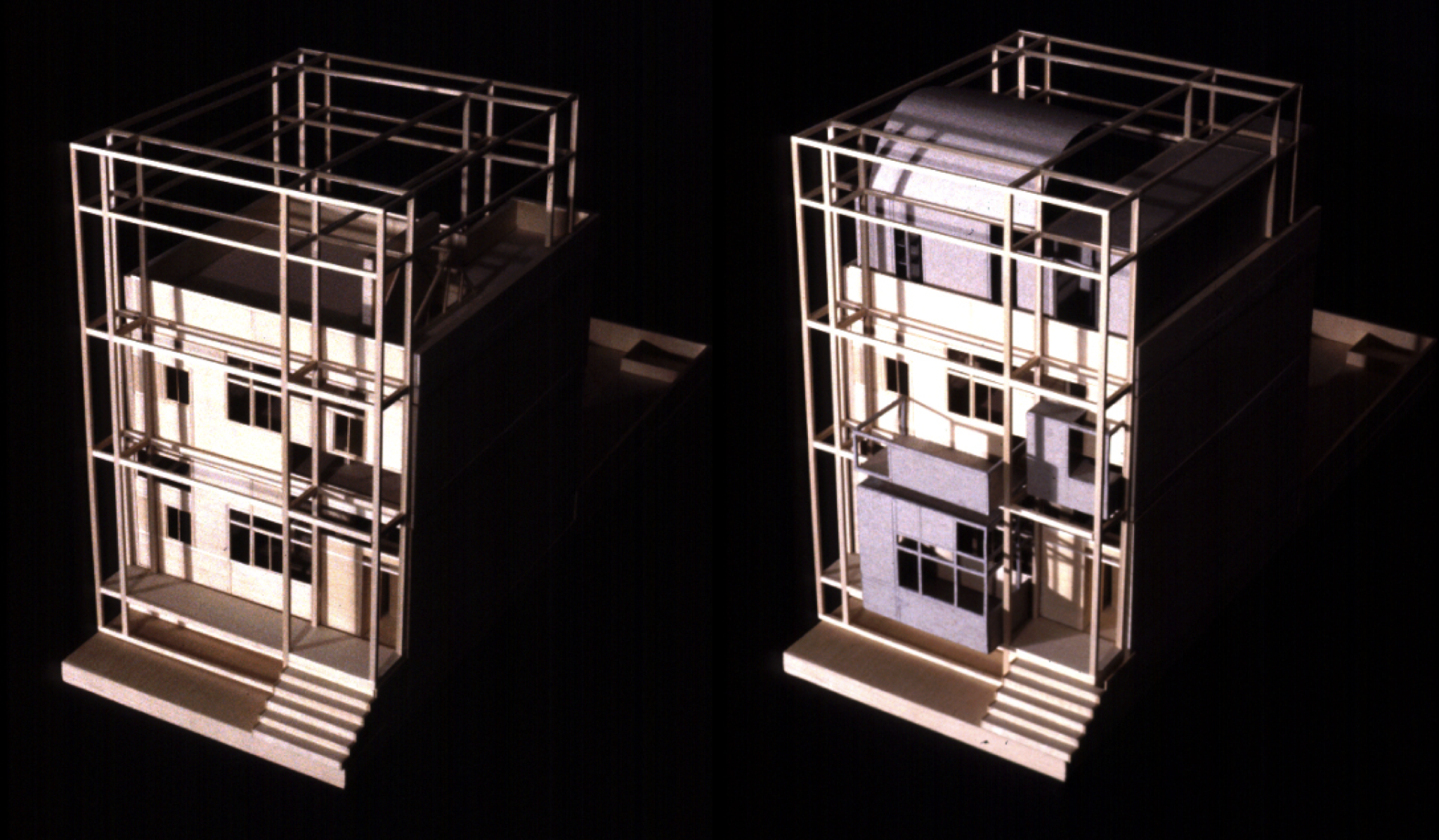
A competition entry I worked on as a student working with konykarchitecture for a new prototype for Atlantic City Housing (New York City, 1995). Working with “industry” in my second year of architecture school.

A few years ago, at a design event in Delhi, I met a talented and well-known architect who had hired a few of my interior design graduates in the past. In fact, a former student was working with him at the time, so I naturally asked him how she was getting on. He acknowledged that she didn’t come in with a huge bank of knowledge (especially being an interior designer working for an architect), but he was fine with that; he liked that she was thoughtful, hardworking, eager to learn, and never turned down an opportunity to work on tasks that were beyond her initial skillset. It was her attitude that impressed him, more so than her skills or knowledge.

I was really happy to hear this. It was a validation of everything I try to do as an educator. I know full well that there’s a lot of pressure on academics to prepare students to meet industry expectations even though no one can really agree on what that actually means. Instead, I try to focus on making my students adaptable, confident, courageous, and willing to learn. That will help them far more than grooming them for any particular industry. I left that meeting thinking that it’s better to groom my students for such employers rather than what some vague and nameless industry is actually looking for. 

Above everything, it’s not even really fair to use the word industry when we’re talking about design and architecture. My friend and long-time colleague Tapan Chakravarty prefers to use the word profession instead and I agree with him. Designers are professionals after all, and while there’s nothing wrong with industrial labour, we’re not grooming designers to be factory workers. On the other hand, most of what I want to write today is not just about the design profession, but all the related disciplines associated with it – builders, contractors, labourers, vendors, artisans, engineers, brokers, and so on – all of whom collaborate with designers in some way. The only easy way to classify them all is the word industry so with apologies to Tapan, I’ll keep using that word for now.

Academia and Industry – An Unbalanced Relationship

As a full-time academic, when I have conversations about the relationship between industry and higher education, I admit I tend to get somewhat defensive. That’s because it always seems to boil down to a one-way relationship, focusing on what industry expects of us and how we’re meant to churn out employable graduates to be gobbled up by the work force. It always seems to be about what we can do to serve industry, and not enough conversation about what industry can likewise do for academia, except to act as jury members and examiners, and occasionally as advisory board members. Even these functions tend to place academics in a bit of subordinate role to industry, as if we’re desperate for their acceptance and approval. This shouldn’t be the case. The relationship between academia and industry should be more balanced and equitable, and it should be mutually beneficial with neither as subordinate to the other.

I sometimes get the impression that industry’s expectation of graduate readiness assumes that colleges are simply vendors who provide a necessary product or service for the industry to use or consume. I jokingly worry that if my graduates don’t meet a certain standard, employers will ask me for a refund. Of course, no one ever does, but I have read many articles and listened to many employers complain about colleges not providing them with graduates who have the necessary skills and competencies to do the work expected of them. I find this dynamic interesting because in academia, there’s an ongoing debate about having to treat students as “customers” to whom we’re beholden to provide a certain standard of service. Are we similarly beholden to industry? Is industry just another customer who is always right?

And why is there such a strong focus on industry readiness? Colleges themselves fall into this mindset, literally promoting their educational brand as making students industry ready. But what is industry readiness? Is that even possible? There’s no monolithic and singular industry which has a standard set of requirements. The design industry itself is famously varied in terms of employment scenarios. A design graduate is as likely to work for a two-person boutique firm as a giant multinational corporation. How can higher education make students ready for industry that has such a wide and diverse playing field? Not to mention that many design and architecture graduates end up working in different disciplines altogether, and there’s nothing wrong with that. So preparing students to meet a wide variety of industry expectations with just one standard curriculum is exceedingly difficult.

Another problem we face is funding related. Universities used to be hotbeds for innovation (and still are, in some few cases). Most of the ground-breaking research and innovation in a given field used to happen on a university campus because it was the place where one was free to experiment without ordinary constraints of time and profitability. Industry (and other stakeholders like government) used to fund innovation on university campuses extensively. Nowadays, with a strong focus on start-ups and in-house innovation cells, most of the real innovation is happening in the corporate or VC sector. And in any case, such financial support rarely ever reached design schools in any real way. Universities and design schools have become employment factories instead, because this is what both students and industry seem to want. A four-year design programme has become a venue for learning a set of basic technical and software skills, along with grooming for corporate recruitment and training. 

On the one hand, academics are urged to be funding-agnostic, because education shouldn’t be transactional, even though it often appears that way. We have pressures to be egalitarian and provide equal opportunities to underprivileged students via scholarships and fee waivers. But with no other sources of revenue in the traditional private education model, how can we simultaneously reduce fees and also spend money to cultivate cutting-edge innovation? I remember my time as a Dean, having to balance a budget between paying high salaries to attract good teachers and providing adequate workshop infrastructure (adequate, mind you, not even cutting edge) while simultaneously ensuring that all students were treated fairly and given equal opportunities to learn by keeping fees reasonably low.  Industry doesn’t have such a burden to be egalitarian; they hire whomever they want and pay whatever the market can bear. Of course, industry does have to face the ups and downs of economic cycles, but then again so do private colleges. There are lean years in educational enrolments as well, yet we’re still required to provide the same quality education regardless. So where’s the room for innovation in this tight financial model, without other sources of funding? Where’s the angel investor for academia, especially in a country like India that has no culture of alumni fundraising?

Finally, there’s a proprietary problem. Even if colleges manage to secure investment or participation from a certain industry player, we’re bound to align with only that company because of competition clauses. If we collaborate with Pepsi, there will surely be a no-competition clause that prevents us from taking up a similar project with Coca-Cola, should the opportunity arise. If we get HP to set up a computer lab and promote it, we wouldn’t be allowed to do a similar promotion with Dell or Apple. This kind of exclusivity could potentially become more constraining than having no support at all.

What Industry Should Do

In general, I think industry could do more. I think industry needs to look at academic collaboration as an investment. If they can integrate more into academics across the board, they can reap a richer benefit than simple industry readiness which is actually a meaningless term. In particular, design has historically been an apprenticeship discipline. But now, employers expect graduates to be readymade designers or architects from the get-go. Design education will always be incomplete in that regard, and employers need to stop holding graduates up to an impossible standard. I once had an architect recruiter complain that my student didn’t know how to select proper door hardware, and I couldn’t help but wonder what kind of employee was this person actually looking to hire? When I graduated, I barely knew anything about doors, let alone door hardware. That’s what job experience is for. If, as a teacher, I have to spend my precious class time focusing on information that’s anyway likely to be obsolete by the time my students graduate, then when will I teach them what I actually think they should learn – conceptual thinking, observation, research skills, ability to reflect, eagerness to learn?

I think lately too many employers in design and architecture have absolved themselves of the responsibility to supplement a graduate’s academic knowledge with professional knowledge. They are expecting readymade, industry-ready graduates when such a thing is actually impossible to create, because there’s no single industry profile for which they can be made ready. Employers instead should fill in those gaps, and they should accept that graduates should be taught more for eagerness to learn than for knowing all the skills necessary to sit at a desk in a design studio and start working on projects from day one.

The industry should also be more open to collaborations with academia, more than what they currently do. They should initiate projects (like competitions) that have more flexible timelines and criteria so that students can plug into them within the constraints of their academic calendar. Certain company staff can be given dedicated roles as academic liaisons (not just as recruiters and trainers), so that such collaborations can be more meaningful and integrated. Companies should also be more willing to go beyond collaborating with only the ‘top’ design schools, which actually make up only about a very tiny percentage of the aggregate pool of design graduates. 

What Academia Should Do

But the burden isn’t only on industry. Academia can also do more. The first step is to relinquish the subservient mindset and put themselves on equal footing with industry. Professional guests and collaborators should be treated as equal partners, not VIPs or royalty. The second step is to break the ‘blame chain’ and avoid turning about and complaining that schools are the problem. Too often, I’ve heard my academic colleagues complain that schooling has done a poor job of preparing students for college. This may in fact be true, but it doesn’t help to sit on the sidelines and complain. If we expect industry to collaborate better with higher education, then higher education needs to likewise offer to collaborate with K-12 schools, and not just as feeders for admissions. I remember getting excited a few years ago when one of my colleagues initiated a program to train school teachers to teach design thinking. Unfortunately, that project didn’t fully take off.

Another step is to allocate dedicated faculty to act as liaisons with industry, mirroring the same staff members on the industry side. These academic liaisons should be faculty themselves, not corporate staff, so that there can be smoother integration with the curriculum, which only the faculty know well. Of course, these faculty should be given the bandwidth (and authority) to do this work, not on top of their existing teaching loads. Every teacher doesn’t have the ability or even the ambition to become a Department Head or Dean. So such alternative roles can provide additional pathways to professional growth. I have yet to see a design school in India (to my knowledge) with someone in the position of ‘Associate Dean for Industry Outreach’; this should be a role in every design school from inception.

Academies also need to restructure their curricula to allow industry to fill in the gaps where they potentially have more expertise and opportunity, in subject areas like technology, leadership, management, or entrepreneurship. Colleges too often try to offer everything in one package but this isn’t possible, especially for smaller design schools that don’t have diverse faculty resources. Curricula should be designed to be flexible in these subject areas and allow students to learn the competencies in ways other than the traditional classroom setting, and no, the typical internship or training period is not the only answer. Live projects, consultancies, and other opportunities should be given a higher priority than they currently have in a design curriculum.

Finally, incubation needs to be given proper resources and attention. It can’t be just a co-working space in the corner of a college campus. Colleges with good incubation cells have fully integrated them not just into their campus space, but into the curricula as well. I once visited some former students who had set up their own practice a year or so after graduation. They were set up in office space not 5 minutes’ drive from their former campus. I asked why they didn’t take advantage of the newly set-up incubation space on campus itself. Their answer was that they were anyway using space in the factory owned by one of their parents, so they were able to use the space rent-free. Plenty of other start-ups similarly begin in private homes, in basements, attics, and garages. My students didn’t see a value in the college incubation cell because they only saw it as discounted office space, which they didn’t need. But incubation has to be seen as much more than that. My students ideally should’ve been aware that, in being part of the incubation cell, they would have access to shared infrastructure, resources, and faculty mentorship, as well as a pool of in-house student talent to help them with their projects. As alumni, they could have been industry mentors for their junior classmates while providing valuable opportunities for live projects built into the students’ curriculum, all of it outside the traditional internship model. In my opinion, this was a lost opportunity.

What Students Should Do

Of course, students themselves need to see the value of meaningful industry collaboration. Many students, especially in India, are so dead set on getting a lucrative job after graduation that they tend to miss the most of what college is teaching them. Students seem to want to learn the skills to land that first job, exclusive of almost anything else. Their mindset also needs to look beyond the ‘job’ as the only way to fulfil career aspirations. A job is all well and good, but there are so many other career experiences one can follow to achieve professional growth. Design students should be made to see the career value in research, writing, business, entrepreneurship, and other aspects of life that are tangential but related to their chosen design discipline. Getting hung up on learning X or Y software suite can be a waste of energy and attention in college. The deeper learning is about independence, decision-making, communication, articulation, reflection, observation, time management, task management, and myriad other parameters that are what the design industry is actually looking for, beyond simply X or Y software proficiency. Design education (like the profession) is more than just an aggregate of skills, and if industry needs to accept this, then likewise so do students and faculty.


This article may come across as being overly defensive, but I’ve also tried to offer solutions to the problem of industry-academic mismatch. Both sides of this problem need to see each other less as vendors or customers and more as partners and collaborators. Indeed, this is what many academicians and professionals say they want to do, but there are things they can initiate that can make this easier. Mindset change is the beginning of it, followed by real (not superficial) integration and cooperation. Either side can’t just add collaborate to business-as-usual; the fundamental model must significantly change. 

12 tips for new design graduates

MY PERSONAL ADVICE TO NEW GRADUATES STARTING THEIR CAREERS IN ARCHITECTURE AND DESIGN

My undergraduate architecture students have finished up their thesis and are getting ready to graduate. I’m proud of all of their successes, and eventually they will all have rosy futures, but right now they face a somewhat grim outlook… the industry is suffering from the effects of the global COVID-19 pandemic and jobs may be hard to come by. I wrote this piece partly to relieve some of their anxieties. It’s not going to get them jobs but once they do, it can help them transition into it a little easier.

In truth, I could’ve written this article several years ago. I have often given my advice to graduating students as they start their careers, and yes, mostly the advice is unsolicited. But I suddenly felt like writing it now and I hope my students (and any students who might read this in the future) will excuse my presumptuousness.

Aside from architecture, I teach and advise students from other design disciplines, so I want to disclaim that this article is mostly focused on architecture and interior design graduates, primarily because the advice I’m offering is based upon a certain kind of job profile in small to medium companies which form the bulk of architecture and interiors practices. In contrast, my students from product design or communication design generally go on to work in large corporate offices and although there may be some common carryover, these tips are more suited to smaller workplaces. So, if you’re not an architect or interior designer, take from it whatever you can. I hope it helps.

Here’s my dozen personal tips to all of you who are about to enter the professional world of architecture and design.


#1 DON’T RUSH INTO WORKING

Sometimes I wonder why students want to start work almost immediately after they graduate. I wonder why they don’t want to take some time off to recover from a rigorous and stressful design education. Once you start your career, you fall under the constraints of a traditional working life and will never get as many days off as you deserve. Take the time now to rest your brain, think about your future, work on your portfolio, travel, volunteer, or do things that a full-time job won’t allow you to do once you start working. Now I do understand that many of you need to start earning, either to support your family or to pay back your education loans. I get that, and if that’s the reason for jumping into a job right away, so be it. But if you have the time and financial standing, take some time off and travel. You may not get a chance like this again.

For the record, when I graduated, I took six months off to travel through Europe and India, with friends and later, by myself. It did cost a lot of money, most of which I put on a credit card, for which I paid dearly over the next couple of years. I don’t normally recommend students to be so financially frivolous but I’m honestly glad that I did it. I’ve never been able to have that much time and freedom since then, after 10 years of studying (!), and that small amount of credit card anxiety wasn’t that much compared to what I earned in subsequent years. And nothing compared to the experience of traveling to see places and buildings that I had only read about in textbooks. A lot of that experience has now borne fruit in my teaching career.

#2 CHOOSE A LEARNING WORKPLACE

If you can, try to work in an office that promotes a learning environment rather than a place where you’re just another CAD Monkey (as my friends and I jokingly called ourselves). Architecture has been an apprenticeship-based discipline for millennia, and employers who expect freshers to already know everything the day after graduation are not employers you want to work for. Of course, beggars can’t be choosers, so try to avoid being a beggar in the first place. Do the kind of work in college that elevates you as a candidate for better companies. Spend the time to create a portfolio that shows as much of your process work and learning as the final designed product. Do some research on how firms treat their fresh graduates. During interviews, ask questions about how the office works as a learning environment. Employers will rarely say that they’re hiring you purely to educate you, but good ones will understand that they’re making an investment in training you and will be clear about how and what they expect you to learn.

It’s often the case that small and medium firms offer better opportunities for learning than large corporate offices. There are exceptions, of course, but generally in a small office there are more diverse responsibilities and work is often shared. In larger firms, you tend to get pigeon-holed into one task that either you’re really good at or a task that is necessary but no else wants to do.

#3 MAKE A LONG-TERM COMMITMENT

One of the things that bother me as a teacher is finding out how soon my students leave jobs that they find unsatisfactory or unfulfilling. No one wants to work in a job that they don’t like, but when you just start out in your career, you also don’t really have a good idea of what you like and what you don’t. I don’t mean to sound condescending about this, but I find students nowadays to lack the patience to stick through a difficult job; many leave before a year is up, sometimes not even lasting six months. There are two problems with this. One is that architecture projects typically aren’t short projects, most last six months or more. It’s a good learning experience to work a full project cycle from start to end. Just because parts of a project aren’t fun or interesting doesn’t mean that all of it will be that way. You’re learning how to solve problems, not how to escape them. You can learn just as much from negative experiences as positive ones (if not more). 

The other reason is that an employer has invested in your training. It often takes six months just to get used to how an office works – their design process, team dynamics, hierarchy, logistics, digital systems. Typically, your first six months isn’t economically productive for your employer; they tend to spend more time and manpower in training you than they get from your actual work. As a manager, I’ve often thought it would simply be faster and easier for me to do the work myself than to check, re-check, and approve the work of a less experienced fresher. It’s harsh to say but a firm is still a business; if an employer invests in you and doesn’t get a return on that investment, it can be both emotionally and financially disappointing for everyone.

#4 PRIORITIZE LEARNING OVER COMPENSATION

This is a big one because more and more graduates have become vocal about low wages in architecture, especially for fresh graduates and interns. In another blog article, I’ve discussed in detail about why this tends to happen so I won’t get into that here. I believe that young designers deserve to be paid fairly for their time and effort, but I’ll also say that this shouldn’t become an obstacle to learning. When students come to me for advice about whether to take a low-paying offer at a good office or a higher-paying offer at a more mediocre office, I usually tell them to take what they think is fair while prioritizing a good learning experience. I wouldn’t advise anyone to work for free or for extremely low wages, but I think students should also be more realistic about their worth. The work that young graduates do in their first year of working is often not much more than drafting, and an office will usually pay accordingly. 

It’s a tough balance to strike, but I use my own experiences as an example. In almost every job I’ve taken, I’ve initially earned less than I think I deserve, but I also understand that I’m untested. An employer doesn’t know my potential yet and low margins of profitability make it difficult for an architect to gamble on paying someone more than they might be worth. So I ask for a performance review six months after I start. (Many firms already have a policy like this, which is good.) If I can prove my worth and value after six months, and if I work hard and diligently, then I’m in a better position to demand higher compensation.  This technique has worked for me for my entire career. It’s more satisfying to know I earned more because of my proven worth, not because of what’s written on my resumé. 

#5 ASK QUESTIONS BUT RESPECT THEIR TIME

Once you start working, you will undoubtedly have many, many questions. In my first job after graduating architecture school, I was very fortunate to have managers who were willing to answer my questions whenever I asked them. I only realized later how much of a disturbance and distraction that must have been for them, and I wasn’t nearly the only one – I had several friends working with me who had similar levels of experience, and who knows how many times our manager had to stop working to entertain our frequent questions. He rarely complained or told us to come back later. But once we realized that we might be distracting him, we started to do it differently… we kept a list of questions at our desks and as long as the question wasn’t urgent, we would simply add it to the list and keep working. Then at some convenient point in the day, we’d ask our manager if he could give us some time and we would ask all our questions together.

The advantage of this is that, in delaying the question sometimes it would answer itself in due course. That’s an important learning when you start your career – to balance the things you can figure out on your own with the things you genuinely need help with. It’s also a well-known advice that when you go to a colleague with a problem, try to go with at least one potential solution as well. Even if your solution is rejected, your employer will appreciate your genuine attempt to think independently. Employers tolerate questions (and often encourage them), but they also want to eventually trust you to figure it out yourself.

#6 HAVE AN ENTREPRENEURIAL MINDSET

I like to teach entrepreneurial practices to my students even though most will spend the first few years working for someone else. But many will likely start their own practices in due time, so it’s important to know how to be a good entrepreneur – not just about the business and finance side, but also the managerial aspect. However, the big myth is that these learnings are only valuable once you start your own practice. That is not true. A good employee who has an entrepreneurial mindset regardless of their hierarchical rank is usually recognized and rewarded eventually.

An ‘entrepreneurial mindset’ is an attitude of ownership over the work, the projects, and the general workings of any organization. It’s the idea that your work, however minor, has some reflection on the business as a whole, and that you have a share in that reputation. Maybe you don’t actually have a financial share and you’ll get paid a salary regardless, but that’s misleading because architecture firms don’t tend to have big profit margins and often have high turnover. Your salary may not reflect profit-sharing, but when profits go down for whatever reason, the employees who don’t have an attitude of ownership will likely be the first to go, the younger ones in particular. Keep a sense of pride in your work and maintain an attitude that what you do reflects on the entire organization. Believe me, in all but the most unbalanced and unfair working environments, this attitude is rewarded with better projects, more responsibilities, more compensation, and more advancement. Not only will this mindset earn you respect in your job, it will also be valuable for when you’re ultimately running your own firm.

#7 AVOID OFFICE DRAMA

Too often I hear about my students getting caught up in office politics, drama, gossip, and the many machinations and manipulations that even the smallest of offices can fall victim to. Interns and freshers often become unwitting pawns in these games, which almost always result in an unhealthy office environment, and it takes an disproportionate toll on less experienced employees. My simple advice – stay away from it. Lie low, focus on your work, and avoid getting caught in the middle of interpersonal conflicts that have little to do with you. Sometimes this isn’t easy – a young designer working on a team needs a clear channel of hierarchy, and office politics can cloud that channel. Who do you report to? Who makes decisions on a project? Whose instructions to follow? It’s best to keep a clear head and clarify any doubts in the beginning. Make sure you find out before you join on any project team who are the team leaders and what role everyone plays. If there’s any doubt, ask openly. Avoid corridor conversations and taking sides, and when you’re given instructions make sure you note them down in a personal project journal. And of course, don’t fall prey to gossip involving you or anyone else.

If you find that an office is too enmeshed in this toxic culture and it’s more than you can handle, then seek counseling from other professionals that you trust and perhaps start planning an exit strategy. But in the meantime, observe. Sometimes being observant of bad behaviour gives you a good idea of what not to do in your own practice. Many of my lessons as a professional have come from observing the behaviour of others and deciding that that is definitely what I don’t want to do. 

#8 MAINTAIN A HEALTHY WORK-LIFE BALANCE

Adding to the potential stress of office drama is an unhealthy working schedule. Many architects and designers still cling to the romantic vision of a creative practice with long, grueling working hours, late night charrettes, and last-minute deadline encroachments. There’s abundant research that shows that none of this is actually productive, and in fact becomes unnecessarily taxing on workers. In a discipline where most of your work requires your brain to be creative and innovative, it isn’t good to always be tired. Of course, I’m not saying that everyone should ideally be 9-to-5 workers, and if the pandemic has predicted anything, it’s likely that all the norms of the standard workday and workweek may be up for reconsideration soon (if not already). But don’t become a victim of ‘architecture overtime’ simply because that’s ‘how it’s done’. 

I think that sometimes many of my students leave their jobs so quickly because they get burnt out. It’s often expected for a junior designer to put in lots of work-time to impress the boss, but this has consequences in the enjoyment of the work and your motivation to do it. I don’t believe that the first year of a designer’s professional life should be spent in 16-hour working days with no social life. There are many other avenues in which you can grow in these early years. Don’t waste it all on poor time management.

#9 SUPPLEMENT YOUR OFFICE WORK WITH OTHER LEARNING

Your faculty in college always told you that a great deal of your learning will happen outside the classroom. The same is true in your professional life. You will no doubt learn a lot on the job – in fact, more intensely than in college. But you won’t learn everything there. Most offices have a very narrow way of working – they use a specific software package, they have an established process of design, they perhaps even use similar materials, details, and techniques in their architecture. It can be easy to fall into a rut of learning, but the answer isn’t necessarily to leave the job for another one. You’ll just be moving from one routine to another. So it’s important to supplement your office experience with additional learning while you still have free time and energy in your life. Take a class in something entirely different than your office work. Learn software platforms that your office doesn’t use. Go to events, conferences, and exhibitions, and travel on the weekends to visit architecture in different cities and towns. And read, read, read… stay up to date on what’s going on in the profession – both in theory and practice.

You might even decide to study something different from architecture. I strongly believe that future economies will be disruptive and volatile, so it may not be a good idea to focus all your abilities into one discipline. There’s a lot of scope for diversification within architecture, but there’s also a lot of scope outside of it. In case the industry growth declines, it’s good to learn other design disciplines, or even other business practices. The best thing about a 5-year architecture education is that it prepares you for many other related careers. Many more architects branch into other disciplines than vice versa. My personal feeling is that architects should branch into interaction design, digital experiences, environment visualization (gaming, CGI), and data visualization and analysis. A lot of the skills you need for these fields are already baked into an architecture degree, so it’s good to diversify while you can and be prepared for uncertainty.

#10 DON’T SHRINK YOUR SOCIAL CIRCLE – WIDEN IT

The great thing that university life does – especially architecture school – is that it opens up your life to new ideas, new experiences, and new people. College tends to be a time of social expansion; your social circle gets wider and encompasses more and more people, cultures, and ideas every year. 

But I’ve noticed that when students graduate, their circles tend to contract. You stay in touch with only those college friends you were really close to, and the majority of new people you meet are through work. This is understandable because after years of expansion, one tends to want to settle down and contract… especially if you’re an introvert like me. But the problem is that this is the time in which you need to actually expand your horizons. You are in an even more intense period of growth, and you need to meet more people, you need to make more connections. As we’ve said before, you may quickly find that your job doesn’t suit you and you need to find something else. At that time, it’s good to know people so that you can find better opportunities. 

You may soon become ready to start your own practice, so having a network of collaborators is seriously important; it can make or break your new career. You’ll need to know vendors, suppliers, contractors, designers, and of course, clients. So while networking is often seen as a bad word (I used to think so, and sometimes still do), I’ve found that having a solid professional network of people you like and trust can make your next role much easier to transition into. You will need the help and support of others, so build up that network and stay in an expansive social mode while you still can.

#11 SPEND YOUR FREE TIME IN WORTHWHILE CAUSES

I mentioned earlier that you should supplement your working life with learning new skills. Another thing to consider is to devote some time to charitable causes. When working to build up your career, it can be easy to get caught up in your own self, especially once you start earning your own money. There’s a ladder of consumption that’s all too easy to climb – get a new place, buy new clothes, get a new car, then get a bigger place, more clothes, a better car, and so on. I don’t want to preach and tell you how to spend your hard-earned money, but I think it’s also important to reflect on what your architecture education has given you – the power to help people and change their lives for the better. If that’s not necessarily happening in your job, then it’s good to exert that power in some other way – by volunteering your time and energy.

As an architect you have a lot of creative potential. Use that to help people. Improve homeless shelters, assist with pro bono building projects, create newsletters or flyers for non-profit NGOs. My rule of thumb is to spend at least half a day each week in some kind of voluntary, charitable project. Of course, no one is forcing you to do this, but look around you… the world is not in great shape right now. It needs creative people like you to help fix its problems, even in very small ways.

#12 BE ETHICAL IN YOUR SIDE WORK

Almost every principal architect knows that the majority of his or her employees do some work on the side. It could be charitable work as I mentioned above, or it could be the humble beginnings of your own practice. Most employers know this and look the other way. Some will explicitly tell you that it’s ok to do it as long as it’s not on ‘company time’, using company resources. It’s important to respect this, no matter how easy it is to get away with. It’s simply not fair to your employer to use their time and resources for your own projects without their explicit approval. You don’t want to start off your professional career with unethical behaviour.

You know what I’m talking about. Working on your own projects during your workday, on the office workstations and software. Printing drawings on the office plotter after hours. Just don’t do it. An employer has built up his or her practice over years, and it’s unfair to repay their investment in you in this way. Use your own resources – your own laptop and software license, and get your plots printed somewhere else. It’s not that hard to do.

Of course, the best thing is to simply be open about it and ask your boss if you can do it. Most employers will not be ok with you doing work that directly competes with them, but many employers are ok with you doing small projects that they wouldn’t take on, as long as you don’t use their resources. Some may ask for a share of the fee, or some may simply just let you do it as long as you’re open about it, and you don’t do it during office hours. I once was working on a long-term pro bono charitable project and I simply asked my boss if I could print my 4-5 sheets on the office plotter, after hours. I did it openly, and he was fine with it because it was a charitable project, and it was only a few sheets. He even sat down and hand-rendered my elevations for me (he liked to remind me how much better at drawing he was than me). 

Situations vary, and you have to carefully reflect on your specific relationship with your employer and think about how he or she would respond and whether it’s worth the risk to burn bridges like that. In the end, I feel that it’s always better to either be open about it, or simply do it all on your own time.


That’s my 12 tips (for now). You’re welcome to add more, comment, agree, disagree… anything. But regardless, I wish all my graduating students the very best for the future.

the physical and metaphysical in architectural representation

THOUGHTS ON THE MANUAL/DIGITAL DIVIDE IN ARCHITECTURE EDUCATION

A model of a house

Description automatically generated with low confidence

Yesterday I read a post on LinkedIn from an architecture student (or perhaps a recent graduate) who called out architecture schools for being hypocritical about sustainability. The example she used was the common requirement for printing out multiple large sheets of paper for project presentations, both during the project and at the end of it. Most of these sheets are submitted and then discarded after some time, and whether they get recycled or repurposed is questionable. The same was said about the materials used for model-making and workshop assignments: wood, paper, plaster, foam, clay, and sometimes concrete, brick, paint, plastic, etc.

She has a point. One of the clearest visual images of any architectural school is the view of large quantities of materials swept up at the end of each working day and piled into overflowing garbage bins. On the one hand, there’s a romantic association with these images – they imply productivity, creativity, activity, and represent experiential and practical learning. For a teacher like me, it’s actually a joy to walk into a studio and see such a mess every day. But it does have its cost in wastefulness.

A picture containing indoor, kitchen, ceiling, cluttered

Description automatically generated

The deeper point she was making was that with the rapid advance of digital tools, why do architecture schools still require physical sheets and models to be produced in such vast quantities, all while chirping about waste reduction and conservation of resources in the building industry. Many commenters agreed, and sharply pointed how backward some institutes can be with respect to digital presentation tools. They pointed out how the COVID pandemic proved that we could get along fine with digital-only tools. Online learning forced us all to admit that we can indeed present and review digital design work without a loss in learning.

But is that really true? And is a shift to digital tools and presentations actually more sustainable than physical drawings and models? I question the premise of this, and I’d like to address this supposed claim of hypocrisy on two fronts – physical and metaphysical.

THE PHYSICAL FOOTPRINT OF ARCHITECTURAL PRESENTATIONS

I’ve done no direct environmental studies of the impact of paper sheets and physical models used in architecture schools. Let me disclaim that right away. (But then again, neither did the student who made the claim in the first place). So, I won’t go deeply into carbon footprint calculations or estimates of greenhouse gas emissions. But many people have done the work and the consensus is that, while paper does generate a lot of waste in landfills, it also contributes only 1% towards total global greenhouse gas emissions. I’m not saying it’s so small that we should ignore the problem, but there are way bigger issues to deal with first – transport and vehicle fuel is the biggest culprit, along with electricity generation, construction, and a host of other sectors.

By comparison, the contribution of the ICT sector (digital communications, etc.) to greenhouse gases is 6%. Looking at life cycle costs of paper vs. digital rather than just the landfill component, the claim that digital presentations are more sustainable than paper sheets becomes more dubious. And while we now realise that recycling isn’t the solution we all hoped it would be, we do know that one of the easiest materials to recycle is the paper and cardboard we use for drawing, printing, and model-making. 

For a roughly calculated example of this, let’s look a typical jury presentation day in an architectural college conducted in two different ways… an entirely digital presentation and an entirely physical presentation. Assuming 6-8 hours of presentations by 15-20 students, we can look at the following carbon footprint impacts (measured in carbon dioxide emissions, CO2e):

A digital presentation requires a large 42-60 inch LED screen or projector, and at least one laptop or desktop computer to run the presentations. Based on current calculations of energy usage and assuming coal-generated power, the electricity alone generates about 1kg of CO2 emissions (more for a projector because of the bulb) for the day. But if you also consider the cost of the internet, servers, cooling of rooms that contain the servers, and everything else in the background that makes the presentation possible on that day, that number can go as high as 25kg CO2e. 

And what if the presentation was done entirely online via videoconferencing, like we’ve been doing during COVID? There’s no LED screen or projector needed anymore, but we have to multiply the number of devices by 20-plus and multiply the data transfer accordingly. The carbon footprint goes even higher. (Estimates of the carbon footprint range from 0.1 to 1kg per hour depending on how long the camera is on.) So we’re potentially at 30-40kg CO2e for a full day of online presentations.

That number can obviously be reduced a lot if we consume energy generated from non-fossil fuels like solar panels or wind, and in fact this is where our emphasis should be. If we’re teaching entirely on campuses in person, then campus buildings should be converted to solar power, like they are at the college where I currently teach. If we’re teaching remotely, then individual homes should go solar, like my wife and I did in our own home. Or the entire grid should be made renewable, if we do it at the infrastructural level.

By comparison, the amount of paper and cardboard that might be generated for one day’s jury presentation by 15-20 students can be roughly estimated at 2-5 kg (assuming students print out sheets as well as documents of their research and detail drawings). If big site models are made with lots of cardboard contours, then slightly more. Estimates for the carbon footprint of paper (including production and transport costs) give us a carbon footprint for this day’s presentations of about 5kg CO2e, about one-fifth the footprint a purely digital presentation on campus, and up to one-eighth of a strictly online jury. Plus, most of that paper and cardboard can be recycled and/or reused. One factor that would increase this footprint, however, is accounting for the energy consumption of plotters used to print such drawings (as well as the transport cost of going to the print shop to get them printed in the first place). But the overall footprint is still much less than digital.

Since many presentations (before and hopefully after COVID) will likely be a blend of physical and digital presentations, we may actually be having the worst of both worlds. A constantly running LED screen showing digital renders with simultaneous printed sheets of orthographic drawings pinned up on a board is a likely scenario. So it may not be an either/or question. It may have to be a compromise.

One of the things I’ve personally done to reduce the consumption of paper is to eliminate the need to print every single stage of the project journey. I usually require all my students to produce a Project Portfolio, a 100+ page document which contains all of their research, progress work, sketches, diagrams, references, and technical drawings. These usually don’t need to be displayed in an exhibition or jury situation; they’re primarily kept as a reference. These are usually heavy printouts, and if we restrict the printed material to large sheets alone (for better visibility of orthographic drawings) then the carbon footprint of that single day’s presentation can be reduced tenfold. 

We can also ask students to make physical models out of recycled or recyclable materials like wood, paper, and cardboard rather than plastic, foam, or metal. And if non-fossil fuel power supply becomes more the norm, then even the digital footprint can be reduced simultaneously.

But the main reason why I still like to see orthographic drawings printed large scale and pinned up on a board is that architectural plans, sections, and elevations can be complex and layered drawings. I have yet to see a floor plan shown on a digital screen where I didn’t have to constantly zoom in to see the details. Seeing a plan or section on a sheet that I can see in its entirety as well as in detail is critical for giving feedback on things like layout, proximities, adjacencies, etc. And seeing plans together with sections, elevations, and 3D views is also critical so that I can orient myself in the space the student has designed.

Am I being nitpicky and old fashioned? Perhaps. But seeing an architectural presentation on a sequential series of disconnected digital slides is nowhere near as clear as seeing all the drawings and images together in one place, at a large scale. I’m constantly asking students to “go back to that slide, now go back to the other slide”. The overall image and impression of the project is fragmented and disconnected. It takes me far longer to understand and ‘grok’ the project this way, and I don’t think it solely has to do with my age or generation. A huge 1m x 2m panel where one can see all the project images at once allows anyone to see and appreciate the project holistically, which is (presumably) the way it was designed.

Diagram, engineering drawing

Description automatically generated

THE METAPHYSICAL NATURE OF DESIGN EDUCATION

By far, the larger debate of using manual vs. digital is ideological rather than practical. Very few people bring up the sustainability issue; people seemed more concerned with the philosophical viewpoint. And it’s a fierce debate, with many accusations and stereotypes thrown around in a chaotic fury. The debate often falls along generational lines, but not necessarily so. And I think it’s no longer strictly a binary argument between manual vs. digital. The reality of technology and the internet has forced the discipline to shift strongly towards the digital side so that the debate now occupies the spectrum between hybrid vs. all-digital, with most people arguing just how hybrid it should be.

I’m not going to rehash that debate here; there are plenty of articles for and against. What I’m only going to advocate is that purely digital is to be avoided, not just for the sustainability reasons I outlined above, but also on metaphysical grounds.

When I refer to metaphysics of design education, I’m speaking about the intangible ways in which we perceive the existence and quality of objects, spaces, and materials. In design education, we teach about the materiality of things, the physical presence and mass of things, the fullness or emptiness of things. For architects, this is supremely important because even though the output of our labour is a set of abstract drawn instructions for someone else to build, the final outcome is still a physical building that is affected by gravity, light, shadow, and other forces. These forces are weak or absent in all but the most advanced digital modelling tools. 

Diagram

Description automatically generated

I want to emphasize that despite my age and experience, I don’t consider myself a dinosaur or old-fashioned (even though some may consider me so). I welcome new technologies in architectural representation. I graduated from an architecture school that was at the forefront of these technologies, and I’ve used digital tools throughout my career. They have a much-needed value and importance in the work we do. But they’re not the entire picture. I consider myself a hybrid practitioner (as do many architects) and I tell my students that they need to master both manual and digital tools so that they can know when to use each in their own time and place.

One of the arguments in favour of all-digital representation I often see is when people point out that the vast majority of architecture offices no longer have drafting tables or modeling workshops. And it’s true that in most firms, the output is primarily and overwhelmingly digital. There are many architects of course that sketch and draw by hand, or make study models by hand, but the output that is paid for by the client in terms of deliverables is 99.99% digital.

A picture containing indoor, wall, ceiling, white

Description automatically generated

My counter to this point is that even if professional architects are using primarily digital tools, most of them have used manual tools at some point in their education, and that’s precisely where it’s needed – during training – to develop the metaphysical understanding of architecture. Even if an architect abandons the hand drawings over time, their digital skills will still carry over that manual sensitivity. A good digital drawing will have the same life, weight, and character of a manual drawing. A good digital model will be created with the understanding of the weight and assembly of components, and the proper texture of materials. A student who has felt, weighed, handled, smelled, and heard the difference between a slab of granite and a slab of wood will know how to apply each judiciously in a digital model, rather than haphazardly. A student who knows how the components of a wall are assembled, and how the elements of the wall are represented by hand on paper through line weight, pattern, and shading will know how the wall would actually be built on site.

I’ve seen the work of students who rely too heavily on digital tools in their presentations. Materials are applied randomly or thoughtlessly. Components are assembled in no real sequence. Cantilevers are projected impossibly. Columns are too slender and unbraced. Furniture is out of scale and proportion. These are all failings that occur when the jump to digital tools is made too early. An experienced architect can draw wonderful digital drawings and make beautiful digital renders, but they will only become beautiful buildings if they’ve understood the physical – and metaphysical – nature of what they’re designing.

In the end, I do agree that architecture schools need to ‘walk the walk’ in terms of sustainability, so I’m glad that the LinkedIn user provoked a conversation about this issue. But I feel it has to go far beyond whether we’re printing and throwing away too many paper sheets. There are some compromises we can make to reduce wastefulness while still retaining the tangible and sensorial aspects of what we do. We should definitely embrace the advantages that digital tools give us, and we can also sometimes wax nostalgic about the way things used to be done. But we should do so without romantic attachments. As long as we’re still in the business of making physical buildings, there will be a need to be in touch with our physical understanding of architecture in its wholeness.

the architecture of detachment: reflections on nomadland

Nomadland (2020), directed by Chloé Zhao, starring Frances McDormand, David Strathairn, Linda May, Charlene Swankie, Bob Wells. (Movie poster courtesy of Searchlight Pictures)

Yesterday, I finished up some long-pending academic work and as a reward for not procrastinating, I took a break and watched the movie Nomadland. What follows is not so much a review as a long-ish reflection on the film – a reflection on myself as an audience member as well as an architect, because it really made me think a lot about architecture, housing, and the built vs. natural landscape. There are significant spoilers in this article, but since Nomadland is a non-narrative movie, I’m not sure if knowing about spoilers will detract from enjoying this film. But if you haven’t seen it and don’t like spoilers, stop reading now.

——–

As a long-time Frances McDormand fan, I’d been eager to see Nomadland well before it was nominated for any awards, but it only became available for streaming here in India a week ago. It has now, of course, won a caravan full of awards, including the Oscars for Best Picture, Best Director, and Best Actress (all three were history-making awards). 

I really loved this film; I kind of knew I would, based on everything I’d read about it. But it was affirming to see that it was such a good film after all, even though several friends had expressed their not-so-subtle dislike of it. Most of their criticism is centered on its ‘slogginess’; that it’s a slow, drawn out, meandering character study that doesn’t follow a traditional narrative structure. I’m not even sure that it has a narrative structure at all, let alone a traditional one, and I can see how that might disappoint people for whom story and development are necessary for a film. While I’m a big proponent of narrative in all things creative, I can also appreciate when narrative is purposefully set aside in favour of impressionism, which this movie does very well. In this respect, it’s a credit to Chloé Zhao that the film was also nominated for Best Editing. That’s really where this movie shines in its impressionistic qualities, lingering on a shot when it needs to linger, and moving us through quick shots when it needs to do that. But yes, there’s a lot of lingering, with a slow pace, a minimal soundtrack, and many moments without dialogue. Any good film in which the landscape is essentially a supporting character is bound to have long, slow scenes where characters just gaze into the distance (see the poster above).

THE INTUITIVE NEED FOR DETACHMENT

But why do they gaze? Because this film is ultimately about detachment – from society, from people, from permanence, from the built environment. It depicts the often solitary life of American ‘nomads’, people who voluntarily choose to live a ‘houseless’ life, wandering from place to place, job to job, across the natural and incredibly beautiful landscapes of the American continent. The reasons why they do so vary, and for Fern (the main character played by McDormand) it’s mostly triggered by the dual events of her husband’s death from cancer and the complete shutdown of her livelihood – a gypsum company in Nevada that closes not just the mine and plant, but the entire town as well. The company owned all the houses, so she buys a van, customizes it herself, puts her few possessions into storage, and casts herself adrift into the deserts, mountains, plains, and coasts of the vast unpopulated lands of the American West.

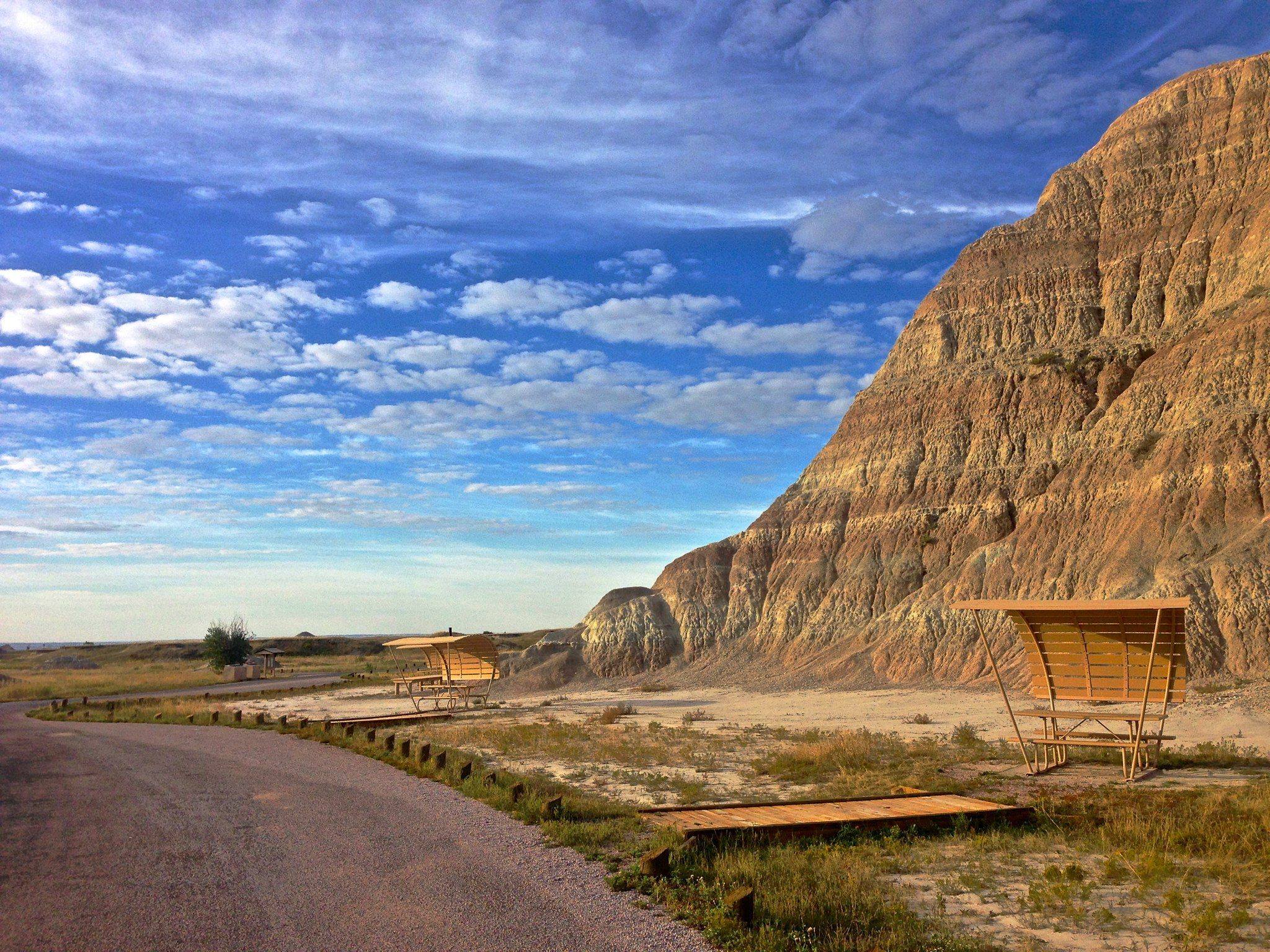
Badlands National Park, South Dakota, 2013 road trip (photo by author)

Many of these landscapes are deeply familiar to me. In 2013, after finishing my masters degree, I took a solo 6-week road trip across the United States and drove through many of the places depicted in the film – the Badlands of South Dakota, the deserts of Nevada, the California coastal highways along the Pacific Ocean. I felt drawn to the same sense of detachment one feels in the presence of such awesome natural panoramas. I felt a hint of the same fragmented kinship one feels with the random humans one encounters while driving through the emptiness. I’ve spent most of my life living in cities and most of my career designing buildings in dense urban areas, places for intense and lively social interactions. I’ve designed housing for upwardly mobile, career-oriented professionals; housing that is almost never occupied by the same person for more than a few years and is often considered more of an investment than an actual permanent home.

The road trip – and now this film as well – made me reflect on the role of architecture in this environment, and how much of what is built is designed around attachment to possessions, and also to other people. The former is often criticized, but the latter is generally found to be a universal good. Making spaces for people to interact and know each other is considered aspirational for all.

But it discounts the often conflicting urge towards detachment. I almost titled this article The Architecture of Loneliness before I realized that it’s not about being lonely (although that may be a component). Loneliness implies negativity, sadness – a desire to connect but an inability to do so. Rather, I think it’s about detachment, which doesn’t necessarily carry those negative connotations. Detachment is purposeful and intentioned. I’ve come to realise that all human beings, even the most extroverted, do have an instinctive need for detachment, however miniscule. The nomads depicted in this film have simply accepted and acknowledged this part of themselves, and indeed it’s often triggered by some life event, or some loss or desperation.

I think the movie expresses this beautifully. Fern has family (a sister is depicted) but chooses to detach from them. She does have friends, and is generally a friendly and easy-going person, but she only sees them in short stretches, when their meandering paths happen to cross or overlap. She has an attachment to some things, even – the dishes bought by her father over years of garage sales, her husband’s Carhartt jacket which she constantly wears, and of course her van itself. But she resists the markers of more permanent attachments. She doesn’t stay long in any one job and doesn’t have a career to speak of. She resists the trappings of traditional permanent family life. This is made explicitly clear in a scene in which she visits a friend in California – Dave, a former nomad who chose to re-attach himself to his son’s life after the birth of his grandson. They live in a beautiful and comfortable farmhouse and even though it’s not your typical dense suburban community (there are no visible neighbours anywhere), Fern still finds herself reflecting on how much of a permanent HOME it represents. Dave invites her to stay there with him indefinitely, but she resists, and leaves early in the morning without warning, lest she become tempted by the lifestyle of domestic permanence. She resists forming those attachments again because she knows what it means to lose them. She again casts herself adrift.

Somewhere in the Nevada desert, 2013 road trip (photo by author)

THE ARCHITECTURE OF NOMADIC LIFE AT MICRO SCALE

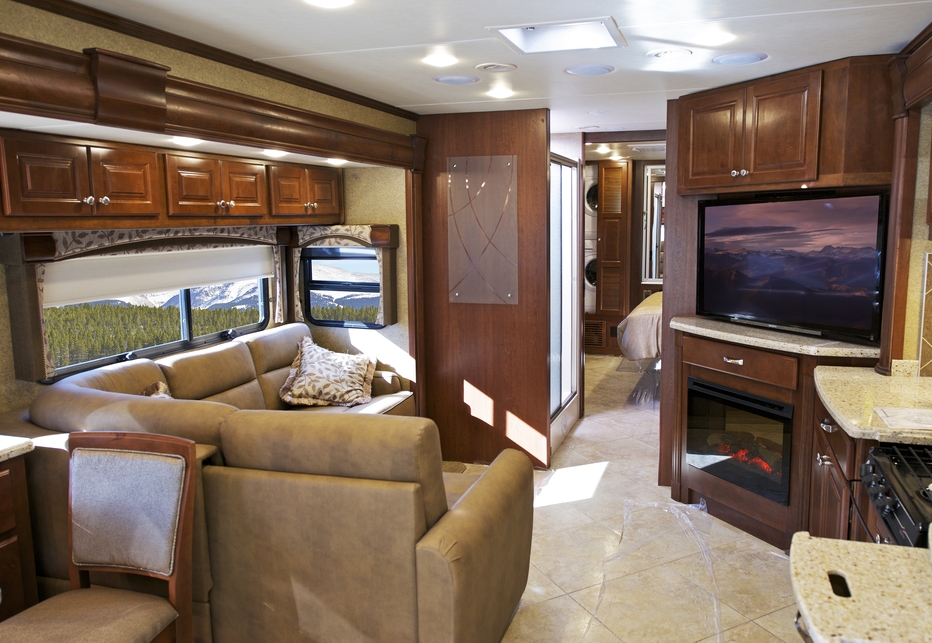
What struck me about the film was how much it made me think about architecture at different scales. In particular, I was deeply interested in seeing the interiors of the various vehicles that nomads use as their roving homes. The small details of how the interiors are designed for minimal space. Fern is proud of how she’s built her van to suit her minimal needs – sleeping, cooking, and even using the toilet in the tiny space. One of my favourite scenes is when Fern and her two nomad friends check out a display of giant luxury RVs that are stocked with washer/dryer, bathrooms, TV – the works. Many of us have seen such things, especially since there seems to be a sudden boom in #vanlife hashtags in the last few years. A few American travel vloggers that I follow on YouTube have adapted to the global pandemic by shifting to RV travel within the US only. As a designer, I’m as interested in how they build and use the interiors of their vans to suit their needs. I’m interested to see how they design and customise their space with clever details and gadgets, and how they prioritise certain luxuries over others.

Clearly, the scene with the luxury RVs is meant to contrast with the simple lifestyles of the movie’s nomad characters. None of them would ever actually buy a luxury RV, mostly because they couldn’t afford it but also because it represents the lifestyle that they purposely stopped pursuing. Much of what draws them to the nomad life is the raw connection with the landscape around them, which the luxury RVs tend to obscure. Ostensibly, such vehicles are meant to roam the countryside, but the similarity of a massive RV to the conveniences and comfort of one’s actual permanent home can get in the way of fully experiencing the ruggedness of the natural environment. (“Glamping” is a thing, in case you’ve never heard of it.)

RV Resources | RV Blog | RV Wholesale Superstore
Typical luxury RV interior (welcomia.com)

Nevertheless, it’s interesting to see how much of a role that caravan architecture – both the simple and luxurious varieties – plays in this setting, at the personal scale of the single inhabitant. Drawers, panels, and other such details are referred to thoroughly in the film, highlighting the kind of architecture you have to work with when you detach yourself from a permanent, spacious, primary dwelling. Rather than take up a product readymade in a factory, most of the vehicles used by the nomads are personal and informal conversions, made from scraps and waste materials. Toilets are simply buckets of different sizes, and privacy is signaled through the use of coded signage.

Inspiring 25+ Best Cargo Van Camper Conversion Ideas For Cozy Summer  https://goodsgn.com/rv-camper/25-best-car… | Camper van conversion diy,  Astro van, Van interior
Amateur van conversion, not that different from Fern’s van in Nomadland. (goodsgn.com)

Privacy is a key element in the nomad life. When the physical barriers between you and the world around you are broken down, how do you maintain a level of solitude when there are others like you a few meters away? In a scene from the film, when only Fern and her friend Swankie are left in a makeshift RV park after a gathering, Fern knocks on Swankie’s van door for help with a flat tire. But Swankie has signaled her desire for privacy by putting up a Jolly Roger flag and is initially upset that Fern has disturbed her solitude. But naturally, she helps Fern anyway. There’s an underlying Nomadic Code at work here. The nomads are not hermits. They seek companionship and enjoy the company of each other and even that of strangers. They tend to have customer service jobs in tourist areas, and the film doesn’t show them as being antisocial in that way. But like all detached beings, they need their time alone. They are truly introverts who like company and relationships, but in controlled measures, at a distance from each other. They are social but territorial, and the scope of territoriality mirrors that of traditional housing communities but at a much smaller scale. Fern doesn’t like others meddling in her van space and is very upset when Dave tries to help with things but ends up breaking her beloved dishes. 

In many ways, the privacy at this scale is condensed and intensified. The nomad’s space is just enough for themselves and a few possessions. Everything is stored in its place and there is a culture of continually giving things away. They are in a lifelong process of shedding parts of themselves which were accumulated in their prior settled existence. At the end of the film, Fern disposes everything that’s left in her storage locker, making a final and definite commitment to detach herself from the legacy of her husband and her previously settled life. The storage locker was essentially another ‘room’ in Fern’s metaphysical ‘house’ and by removing it, the architectural scale of her ‘home’ becomes even smaller and more personal. There’s no room in her van – or her heart – for such things anymore.

THE ARCHITECTURE OF NOMADIC LIFE AT MACRO SCALE

There’s another architectural scale at work in the film. This scale zooms out beyond the scale of house, building, and even town; it is the scale of the geography itself. In one scene, Fern is telling someone about her life in her old Nevada home. She first says that it was ‘nothing special’, but she reconsiders and says that it was indeed special. It was a house on the edge of the company-owned town, whose backyard looked out into the open desert and the mountains beyond. Later in the film, we get to see that view when Fern revisits her now-abandoned town for one seemingly last time. She stands at her back doorstep and sees the receding layered landscape of backyard, desert, and mountains far away.

Indeed, the vista of desert and mountains is another ‘room’ of her house. You get the sense that the predilection for being a nomad was always there in Fern’s heart because even in a settled life, she had an affinity for the landscape as part of her everyday vista. In architecture, we are always trying to take advantage of this extended territory of the home. It starts with windows, then balconies, then patios and backyards, and continues with cottages in the woods, cabins on the lake. Seaside resorts and mountain villas. We are always trying to expand our domestic space to try an encompass the natural landscape as part of our home, blurring the edges and boundaries of fences and walls. Even in urban settings, apartments are valued if they have views of the entire city, or if their walls are perforations that connect them sensorily to the surrounding neighborhoods. When I grew up in our apartment in New York the common areas of our housing complex were shared ‘rooms’, extensions of our own apartments, where we otherwise didn’t have room to play or socialise.

For nomads, this is taken to the extreme. The vehicle is meant for the necessities of sleep and privacy, and to store limited possessions, but the real ‘home’ is the entire landscape in which the vehicle is parked. The territorial boundaries are complete blown away, so that when nomads detach themselves from the built environment, they are actually re-attaching themselves to the natural environment. Swankie tells Fern that while she may have given up a lot by becoming a nomad, she has also seen things that she never would have seen if she’d remained attached to a permanent home. Moose, bison, and birds all figure prominently as co-inhabitants of the macro home that nomads now occupy, as do trees and waves and even random people. By minimizing the micro home to its barest essentials, the nomads are able to appreciate the greater architectural scale of the landscape-as-backyard.

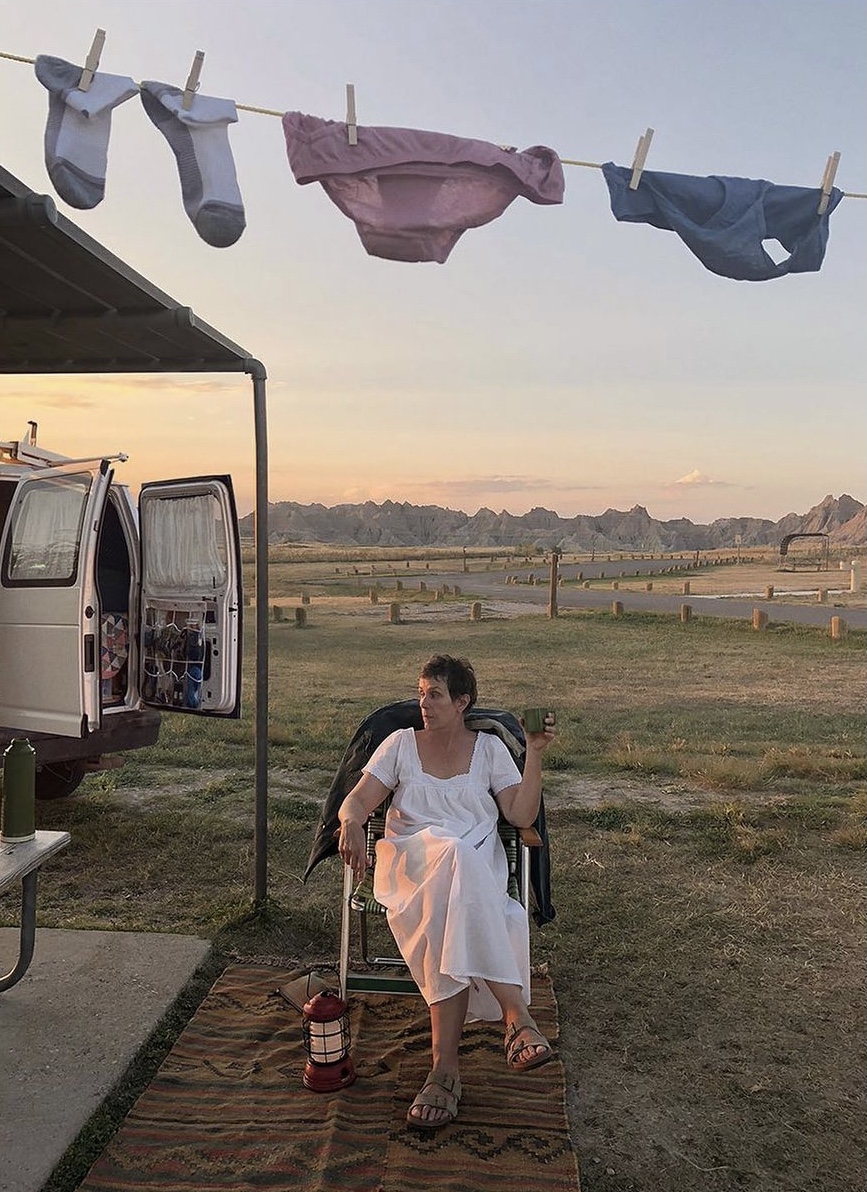
Nomadland via Instagram (fair use)

I found it interesting and amusing that in Fern’s old house, there was actually a short chainlink fence that separated her actual backyard from her virtual one. It was simply a weak marker of a territorial boundary that didn’t actually exist in any metaphysical way. What is the fence for? It’s not high enough or secure enough for security, so it functions only as a symbolic definition of the legal boundary of Fern’s home. Inside the fence is her physical house, but her metaphysical house ignores the fence completely. She didn’t even own the house outright (the gypsum company owned it), but she owns the world encompassed in that view. And now she actually lives in that macro world rather than her actual house; she never had to buy it, rent it, or take out a mortgage on it.

THE ECONOMIC DIMENSION

There’s scene in the film where Fern gets into a minor argument at a barbecue with her brother-in-law’s colleagues who are all in the real estate business. It’s a quick scene with just a few lines. A lesser movie would’ve made this into a full-blown dramatic conflict, but it blows over quickly and the argument is resolved diplomatically by Fern’s sister. In the scene, Fern complains to the realtors about the economy of home ownership that is driven, according to her, by forcing regular people to go into debt for the rest of their lives for the false security and ‘investment’ opportunity of owning a home. The implication (in context) is that chasing the American Dream is a scam that negatively impacts common working people more severely than others.

While the scene is very short, the theme is actually central to the entire movie. The fact that this is the only time in the film where it comes to the surface is a testament to how skillfully and subtly they make this point elsewhere in the story. The film is set in 2011 when the aftereffects of the Great Recession are still being keenly felt. The recession was fueled by a housing crisis that happened precisely because of the factors that Fern describes. So it’s natural to think that a significant number of people at that time would be turned off by the idea of owning a home and being forced into a kind of indentured servitude of debt for decades, driven by the elusive promise of upward social mobility.

The impact of the Great Recession was such that for the first time in recent US history, parts of the American Dream was called into question. For the first time, there was no guarantee that you’d be able to sell a house for more than what it was bought for. The concept of owning a home had so strongly been a part of the core American mindset that people who who were still renting would be ridiculed if they could otherwise afford to buy a house. They would be told that they were ‘throwing their money away’. But people stopped saying that in 2008.

The film gently proposes that when one attaches oneself too firmly to a THING (house) or a PLACE (town) or a PERSON (family), then one loses a sense of their freedom and their connection to the world at large. One loses a sense of their place in the larger world.

This point is felt keenly through the architecture of the film. The impossibly beautiful landscapes with their impossibly beautiful sunsets, viewed by simple people sitting in cheap lawn chairs, sitting next to their simple camper vans… this is held in stark contrast to the industrialized architecture of a buzzing, automated Amazon warehouse, which is itself a stark contrast to the dusty, abandoned US Gypsum factory where Fern and her husband worked. We see both the past and future of industrialised economies. Even the elegant farmhouse belonging to Dave’s family is seen as an idyllic, almost-artificial representation of a typical TV house, and Fern doesn’t buy the illusion. In fact, she’s frightened by it.

Amazon warehouse, still from Nomadland (Searchlight Pictures)

The simple camper vans used by nomads – even though they are machines themselves – represent an organic architecture that fits better in the wide open landscapes of South Dakota and Nevada. The vehicles are almost all white in colour and not ostentatious; nothing like the massive, glitzy luxury RVs we see in the earlier scene. They don’t take up much visual space in the natural panoramas of the desert, and the nomads make it a point to leave their campsites without a physical trace of their time spent there (“pack in, pack out”). Even the architecture of the National Park Service facilities in the Badlands is minimal and organic.

Nomadland_sound-12
Still from Nomadland (Searchlight Pictures)

Traditional capitalistic objectives and processes are rejected by the nomads, and the architecture reflects this. When they have to, they rely on the facilities afforded by an industrialised society. Fern earns most of her yearly income from her seasonal Christmastime Amazon job and at other seasonal tourist-driven locations. She has to park overnight in gas stations and rest areas. And when she needs money to repair her van/home, she’s forced to borrow it from her sister living in the suburbs. Adding insult to injury, she has to pick up the cash in person. But these are occasional sacrifices and acknowledgements that enable nomads to spend the rest of their time off the capitalist grid. They don’t worship at that altar; they simply bow to it in passing. They have detached themselves from the rigid architectural framework of the American economy and focus instead on the loose architectural topography of the American landscape.

In Nomadland (the culture as well as the film), architecture is pared down to its minimal state. it exists in just the vehicle and its accessory accoutrements. The balance between built and natural environments is skewed heavily to the latter. HOME is no longer the same as HOUSE or PROPERTY; it is a PHENOMENON. A front porch is not just a structure, but a vista. A backyard is not only a fenced-in perimeter, it’s the entire desert. Architecture is no longer confined to rooms, or walls, or gardens or even to anything bought or sold. It is the world itself, and it’s only through detachment that one comes to realise it.

DETACHMENT FOR ME

What implications does this film and its themes have on me, as an architect and homeowner? During the Great Recession of 2008-9, we never owned a house in the United States. We were always renters. There was a brief time immediately before the market broke that we thought about buying a house, but I was suspicious of how easy it was to get a loan with practically no down-payment. I’ve struggled a lot with credit in my younger life, so it was odd to see mortgage companies practically begging to lend me money. I was skeptical and I’m glad that I was, because in 2009 when we decided to move to India, it would have been infinitely more difficult to do so if we’d had to sell a recently purchased house at that time. We would’ve lost a lot of money. 

We had already bought our apartment in India, paying in cash before construction, so when we moved here it was much easier for us. We were lucky to have avoided the Great Recession relatively unscathed, and I will always have my skepticism of the great myth of home ownership to thank for it. I’m not a nomad, although sometimes I do think about just dropping everything and living for a year or so in a van. I get restless sometimes and the urge to travel is always there. I guess it’s good to be in a sort of in-between life where one has the security and stability of a permanent home, but one can remain detached enough from it to understand the worth of leaving it occasionally to take stock of the world outside. The global pandemic has obviously hindered this, and we are now all ‘attached’ to some sort of dwelling place in numerous frustrating ways. But hopefully it will end soon enough to wander again and to appreciate what the natural world has to offer.

If anything, Nomadland made me think about whether I could hypothetically leave everything behind and just wander the land with just a few possessions. As an introvert, I don’t mind being alone, but I don’t think I can detach myself in that way, nor do I want to. I also think that detachment doesn’t always have to be physical; it can be mental and spiritual, and in some ways being able to live in a place (or be in a situation) yet still be detached from it can give you a deeper perspective as well as a sense of freedom. At the very least, it can make you appreciate what you do have, and not take it for granted. And when I think about architecture going forward, I’ll try to think more about envisioning architecture that is not itself so detached from the world and landscape around it. Architecture that is subtle rather than grandiose, and permeable rather than opaque, and perhaps attached to the right things.

delayed gratification: the long term benefits of learning

Choosing to make a profession out of academia has innumerable challenges – the bureaucracy, the workload, the unfortunate behind-the-scenes politicking, and of course the disproportionate compensation relative to one’s perceived expertise. And then there’s the frustration of being unable to connect with students in a class or to motivate them. Indeed, many of my colleagues have left academia because of these challenges and I don’t fault them in the least. It does take a toll.

One coping mechanism that helps me deal with these challenges is to detach myself from the expectation of immediate gains and to seek satisfaction in the long-term results of my teaching, results which often bear fruit long after the student has left the classroom, well outside of my purview. No doubt, it’s a wonderful thing to see a student’s discovery unfold before your own eyes, within the duration of a class or a semester. It’s a great satisfaction to see that glint of an awakened mind, an imaginative thought, a deep reflection, or an innovative idea. But the absence of visible awareness in a student doesn’t necessarily mean that the teaching didn’t make it through, or that the student didn’t learn. The aftereffects of learning can sometimes be quite delayed.

I’m fortunate that, for most of my own education (especially my design education, which I undertook when I was older and mature enough to notice such things), I was able to appreciate what I was being taught right at the time of learning it. But much of my appreciation also came later, as a working professional. Some of it happened when I became a teacher myself. This delayed appreciation isn’t a bad thing; it’s natural and expected. So as a teacher, I assume the same happens with my own students and I’ve stopped looking for immediate results. Most students don’t become talented designers overnight, or even within the few years of design school. Many young designers really start to thrive when they’ve had the time and space to build on what they’ve learned in school and supplement it with the knowledge and resources that come from the profession or further studies. As long as I’ve inculcated in them the ability to continue learning far beyond graduation, that’s fine with me.

There’s no better example of this delayed outcome than the daily reminders of the accomplishments and achievements of former students in their current lives and careers. In my case, this is no exaggeration. Literally on a daily basis, I get some notification from somewhere (one of the few reasons I still appreciate social media) that a former student has done something good for themselves, for their clients, or for humanity at large. Sometimes this manifests as an award, sometimes as a successful project, sometimes as a new role or a job promotion. Whatever form it takes, it’s a reminder to me that I had some tiny part in that achievement, either directly as a teacher or mentor, or in my role as an administrator.

Six years ago, with great hesitation, I relinquished my role as a full-time teacher and agreed to become an administrator and academic leader. I say “with hesitation” because any teacher would know the sense of loss that comes with not being in a classroom day to day. But one of the things that propelled me was knowing that my impact, while indirect, was now broader and embraced many more students in many more disciplines. Teachers don’t often get a lot of appreciation (at least, not as much as they deserve), but the appreciation for administrators is even rarer. When students succeed, they may credit their teacher first and foremost, and rightly so. But rarely are academic administrators thanked for, say, framing a new curriculum, or requisitioning a new lab, or facilitating the hiring of good teachers. Occasionally, an administrator might be able to connect with some students directly, and that does make things better, but it’s more often that the efforts go unrecognised students. And that’s ok. I’ve made my peace with that.

The satisfaction instead comes from the quiet knowledge that you had some small part to play in a student’s success, either before or after graduation, that small part is multiplied by all the student successes that happen year to year. By my own rough estimates, I’ve directly taught about 600 students in my overall career. As an administrator, I’ve overseen the education and graduation of perhaps another 600. All told, that’s a lot of successes to have played a small part in, even if some of those graduates barely knew me, I did impact their education in some way, whether they were aware of it or not. And I’m nowhere near finished teaching; I still have many years left in my tank, and many more students to come.

What keeps me going through the sometimes frustrating parts is the awareness that although most of the students leave my teaching not fully knowing the value of what they learned, some of them will likely figure it out over time. The delayed gratification that comes from deeply embedded learning makes it fruitful for me, and in many ways the fact that the outcome is delayed somehow actually makes it even better because you realise that the learning wasn’t momentary; it stuck with them and guided them when they really needed it, even if they weren’t fully cognizant of it. I advise my colleagues sometimes when they’re really upset about a difficult batch of students, or angry at the “system”, that this is really what teaching is supposed to do, and it works better when the learning materialises over time. One just has to be open to seeing it.