dear design students: here are ten tips for your upcoming jury

You’re welcome. Sincerely, Your Design Faculty
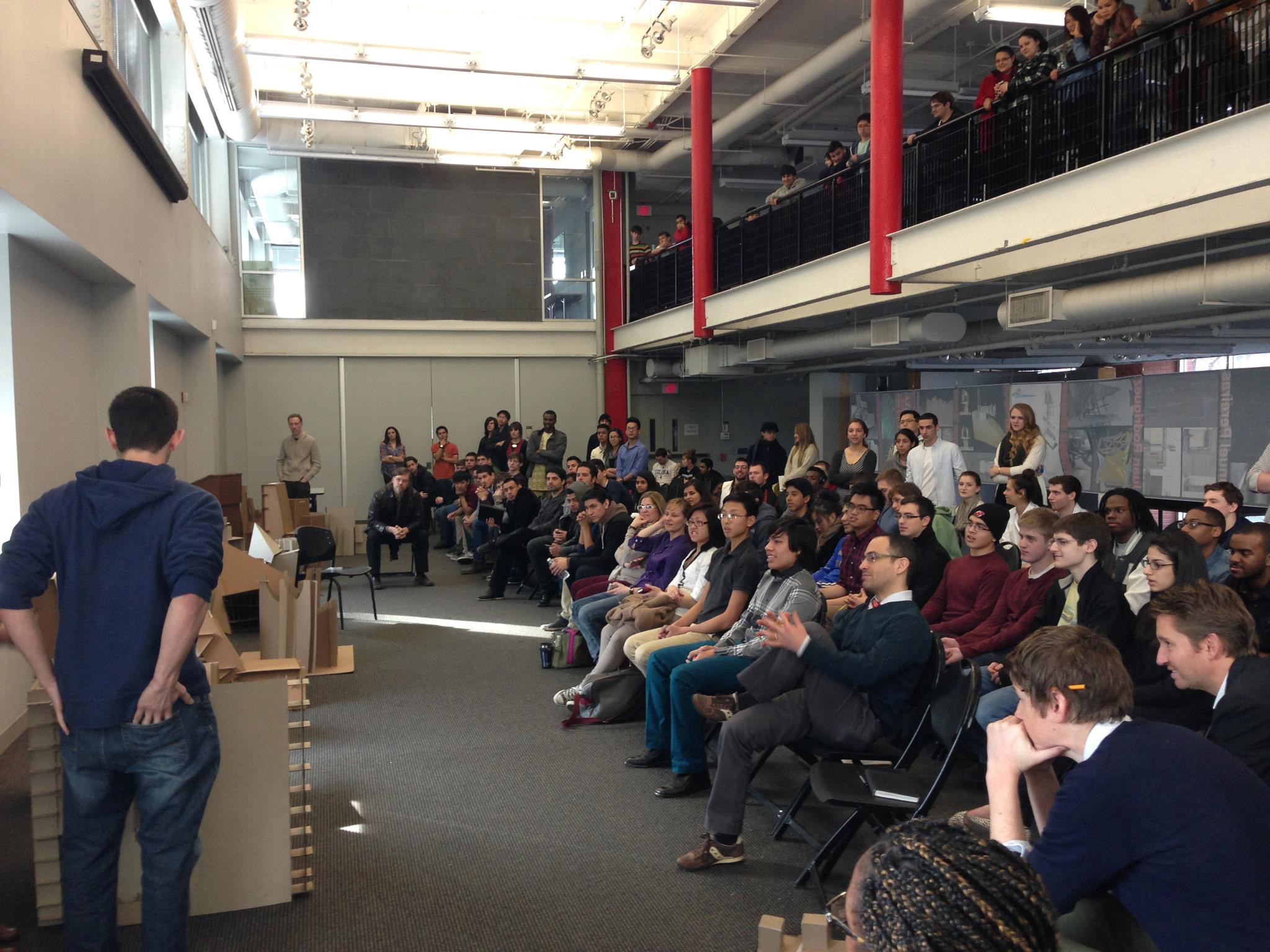
Image for post

For design students, juries are often a source of anxiety and stress, but ideally they shouldn’t be. Juries are primarily about design critique and they work best when they’re open, honest, impersonal, and transparent. However, this openness can also mean that jury feedback can be subjective, contradictory, and confusing. Add this to the anxiety of presenting your work to ‘experts’ and ‘professionals’ after many months of hard work and naturally students find juries a cause for distress. And I admit that we as design teachers often give mixed messages about how seriously you should approach juries:

Message A: “Juries are important; take them seriously. Don’t embarrass us in front of industry professionals!”

Message B: “Juries are not that important; don’t worry, relax. Don’t take it personally.”

These messages aren’t necessarily contradictory, they simply need to be balanced. So take the jury seriously if you want to get feedback, but don’t take it so seriously that you get nervous and can’t represent your work in a good light. But do remember: It’s only a jury, after all…. it’s not a trial, or a judgement, or a punishment. It’s simply a critique on your work by professionals and academics who are not intimately familiar with your project, or with you. I think many students have the wrong impression about juries and put a lot of pressure on themselves which itself causes the distress that one is fearing and in turn causes the jury to go ‘bad’.

Yes, you should take juries seriously. Yes, you should speak maturely, dress appropriately, and be well groomed and bathed. You should make a good impression not just for yourself but your institution. To help with this, I’d like to share ten general tips for a healthy, productive, and stress-free jury.

1. BE PREPARED

Double check your sheets, slides, videos, renders, animations, prototypes, models. Make sure you have everything. This doesn’t mean that you’ll present everything, but be prepared to show any work that jurors may want to see. Keep in handy, and ready to find in an instant, either physically or digitally. Give yourself enough time to check. Enlist your family to help you. Be ready when it’s your turn, and don’t make the jury wait for you. Arrive on time and set up on time. If you’re presenting digitally, check all A/V connections and make sure all your tech gadgets work properly. If you’re posting physical sheets on a wall panel, bring plenty of pins! Rehearse your presentation beforehand. Keep notes if you need them, and present your work in the form of a story or narrative. Many of you go through your project like this: “First you enter from here, then you go here, then there’s a desk, then there’s a table…”. Instead, talk about your design process. Start with your design problem, your case studies, and your analysis. Describe what you learned from them, and what you chose to bring into your design brief and concept. Then explain how that concept manifested in your design development and detailing. Use the right design vocabulary which was taught to you. Avoid the words “basically” and “just” and “like” and “kind of” and “sort of” and “ummm”.

2. BE RESTED

Don’t make the mistake of staying up all night before your jury. Get a good night’s sleep. Eat a healthy breakfast. Be clean and fresh and alert. Dress appropriately; be cognisant of your appearance — whether it’s about clothes, makeup, headgear, or accessories. Be aware about appearing too formal or too casual or too revealing. You have the freedom to wear what you like, but if the focus is on your look rather than your work, then it will distract the jurors.

3. BE THICK-SKINNED

Yes, the jurors may say some things that sound humiliating or condescending. Design faculty usually try to find jurors who are not aggressive or mean-spirited, and to be honest even the ones who may say nasty things about your work (or lack thereof) or who may laugh at certain elements of your design are not doing it to be intentionally mean. They have certain standards for where you as a student should be, skill-wise or knowledge-wise, and they’re expressing their frustration at your inability to meet your potential. And jurors are human, too; they’re not perfect. Sometimes they are harsh, but more often than not they’re making a valid point. In the professional arena you will get burned much worse, believe me. So it’s good to develop a thick skin; if a juror is being harsher than you think you deserve, then keep cool and move on. Which leads to the next point…

4. BE COOL

Stay calm always and don’t lose your cool. Don’t be defensive. Don’t argue with the juror. Try not to get angry or sad or sarcastic. Not everything they say is going to be valid; that’s why we usually have more than one juror. But this is not the time to defend yourself; you’re there to receive feedback. You can ignore it or use it, that’s your decision. But it doesn’t help to be combative because then the juror will most likely get combative right back at you and you don’t want that. Students often ask me whether they should defend their work when the juror doesn’t “get it”. It depends; often I find that it doesn’t really help because there’s limited time to really change people’s minds. You stand to lose more than you gain by trying to defend yourself. Unless you think you’re really being treated unfairly, or the juror is completely off-base, then I would avoid getting entangled in an argument. But take a call.

5. BE AN OWNER

Take ownership of your work and your design decisions. Too often I have seen a response to a juror feedback as “Ma’am/Sir/Professor said to do that.” Sorry… as a design student, once you choose to accept your tutor’s critique and incorporate it into your design, it is now yours. Don’t blame your tutor for design decisions that may not have worked out. Sometimes it could be because you misinterpreted your tutor’s critique. Sometimes the critique may have been given with too little background. Sometimes the tutor may simply be wrong, but that’s part of the subjectivity of design education. You’re being trained to absorb critique, reflect on it, and decide how to incorporate it, if at all. Once it’s part of your design, it’s yours.

6. BE HONEST

Don’t try to bullshit your way through a jury. If you don’t know the answer to a question, say “I don’t know.” A juror can tell when you’re making stuff up. It’s better to be honest and say that you don’t know, or didn’t get a chance to resolve it, or ran out of time, or simply that you were unable to solve the problem. Capitalise on such a moment as an opportunity for learning, and ask the juror if they can assist you with the answer. Which leads to…

7. BE INQUISITIVE

Very few designs are fully resolved at the time of the jury. This is expected. There is always room for change, improvement, or further development. Use the jury as an opportunity to gain insight into how you could have done better, or to find out how to get past an obstacle that you just couldn’t manage by yourself. The jury is there to help you, not judge you (despite the name). And if there’s something you just couldn’t figure out, it’s ok to ask the jury to suggest a solution or direction. Learning does not end with a jury. At the end of a project, there should be a reflection on what you could do to make a better design resolution (or even a better presentation). Which leads to…

8. BE CONSCIENTIOUS

What does this mean? It means you should be an active presenter, not a passive one. Don’t just stand there and present your project. Take notes on the critique, record the comments, document the feedback, so that you can reflect on it and apply the learning. When you’re nervous anyway, you may not be n a position to remember all the feedback. So recording helps, and your friends and classmates can help you with this. Also, when you’re not presenting, be considerate of other presenters. Give them the respect and attention you would want if it was your turn. Don’t whisper, chat, giggle, laugh, or carry on while others are doing their best to concentrate on the presentation. If you need to talk, go outside. And silence your phone!

9. BE PRESENT

Don’t just be there for your own jury. Be there for the entire proceedings. You will learn far more from listening to the presentations and critiques of 10, 20, or more of your classmates than you will ever learn in the scant 15 minutes of your own feedback. Many students waste the jury day by wandering around or chatting/texting/surfing, or trying to desperately finish their projects, or simply not even being on campus. Why? You are missing out a super intense learning experience. Not to mention, why wouldn’t you want to support your friends for their presentations? It means so much to someone who is nervous to have a group of friends in the audience lending moral support, a group of reassuring and familiar faces to cheer them on. It’s about compassion and camaraderie.

10. BE BRAVE

This is the most important. Many jurors comment that student often have difficulty applying the learning from one year to the next. I think this is because of the Ostrich Syndrome. Like ostriches, when you sense danger, you bury your head in the sand and believe that if you can’t see the problem, it will go away. Which is why so many of you skip your classes and mentor sessions, and even worse, your own juries. In the design world, missing your jury is an unforgivable sin. You have robbed yourself of the chance to get what you claim you crave most — feedback. And why? Because you’re embarrassed about not having enough work to show, or the work is perhaps poor quality? So what? How do you think you’re going to get better next time? You learn from your mistakes and rebound! This means that, yes, you do have to listen to the jury tell you that you didn’t do a great job, and that’s never fun. But then you should admit your lack of progress, then turn it around and explain what the problem was and why you got stuck, and ask for advice on how to get unstuck. The most noble thing in academics and professional life is to fail and then get back on your feet and succeed. When you fail, you must acknowledge it and try to find out why, and then move on. This is life, not just design. It will define your whole existence for years to come. But if you retreat and avoid in the face of failure, you’ll almost certainly fail again. When college is long over and finished, you’ll still regret that retreat.


One last request. Please don’t ignore this advice. Design students have so much potential and so much talent; just managing to get through design school is itself a big achievement which many people can’t do. Don’t let your inner fears restrict you and get in the way of your success. Creativity requires action, boldness, honesty, and dignity. The worst punishment that design students get is from themselves, not from jurors or tutors. We’re not here to beat you down or boost our egos. We’re here to discuss new ideas and learn new things (yes… in teaching, we are learning just as much as you, if not more). We’re here to help you and we do the tough and tiring job of teaching and sitting in juries because we’re hungry to talk about design with you. If you’re not as hungry as we are, then you’ll see us become sad and frustrated, because no one wants to spend an exhausting day talking if the other person is not listening. So please continue to work hard, be imaginative and brave and confident, and we look forward to sharing ideas with you very soon.

Best of luck to all of you, in your juries and beyond!

teaching for uncertainty

Adapting to new academic realities during a global pandemic and how it changes not just HOW we teach but WHAT we teach

Over the last few years, in many conversations with students, parents, designers, and educators, I’ve been using the word uncertainty quite a lot. Colleagues of mine have used the acronym VUCA over and over, which stands for “volatility, uncertainty, complexity, and ambiguity”. For many of us, this has been a guiding parameter for framing the way we teach. Seen in a larger perspective, it frames how we prepare young people for a future professional life.

The biggest problem I’ve experienced with many existing academic curricula is that they work from a fixed set of knowledge and skills that the professional world presumably expects from a young graduate. That knowledge base and skill set are often addressing concerns of the now, and sometimes even worse, of the past.

I’ve always maintained that this is a mistake. What’s the point of preparing students for the future by using skills and knowledge designed for the past? Or the present? And even if one is forward-thinking, it’s still a mistake to assume that the future is something that can be predicted with any degree of certainty. Even five years from now. Even two years from now.

Heck, even a few months from now. Look at our current situation in March 2020, in which we face a crisis of global proportions that no one predicted a few short months ago (well, predicted by a few, but not in this time, in this way, or in this form). The ongoing Coronavirus pandemic has shoved aside all other crises in in conversations around the world. Everyone has been talking about a good number of different crises lately — climate change, extreme politics, misinformation, inequality, gender rights, safety of women, air pollution, and so on. All of these things have been overwhelmed and even subsumed by a crisis that no one expected, that has impacted everyone on the planet, every single country, every demographic group, every industry, every sector. It has disrupted healthcare, education, the workplace, and all kinds of social interaction. And if what they say is right, it’s going to have an even deeper impact economically, and very likely not for the better.

In the education sector alone, the disruption caused by this pandemic is forcing us to change the way we’re teaching. I remember several years ago when my institution gave us a mandate to shift 30% of our teaching to hybrid-blended online mode. Back then we had lots of conversations about how we would do this, and why we should do this. There were intense arguments and debates, and some of us were resistant to the idea, not necessarily in theory, but in application. “Sure, you can teach accounting online, but not design! You can’t remove physical contact! What about the design studio?!”

Much of the skepticism was from thinking that this was just something that our business-side colleagues were proposing to reduce costs and increase profits. Even I was skeptical about some of it, who already had significant experience in Distance Learning:

  • In the mid-1990s, I had a part-time job working in the Distance Education office, making Powerpoint slides for tech-unsavvy professors.
  • In 2006, I completed a one-year PG Diploma in Theology entirely in distance mode (offered by an Indian university, while I studying in New Jersey).
  • In 2012–13, when I was pursuing my Masters and simultaneously teaching, I was using Moodle both as a teacher AND as a student.
  • In 2010 my wife was working in the Distance Learning office for her university, helping facilitate learning for 75+ learning centers all over India, and she teaches at three of those centers even today.

So, even someone like me, a clear Distance Learning advocate, was wary of trying to make design education overly ‘remote’.

Yet here I am, sitting at home, grading assignments and giving feedback to students on Google Classroom. Why? Because of uncertainty. Because at some point in my life, I realised that it would benefit me to be more flexible in my thinking and more adaptive in my approach to teaching. Because I had no idea what’s coming next. I had no idea whether teaching GenZ would be similar to teaching Millennials. I had no idea whether the skills for which I was preparing my students were going to be relevant by the time they graduated. Whether there would even be a job market for them.

Since I couldn’t predict the future, I changed my approach from teaching or “covering” a defined set of knowledge and skills, and focused instead on trying to make my students more adaptive, more confident to face uncertainty, and more eager to try new things. As a Dean, my teachers would often come to me and say “But what about X? We didn’t get a chance to cover X this semester!”. I would tell them “So what? Don’t focus on X, or Y, or Z.” I told them to teach them enough so that they can learn it later, on their own. Make them interested enough so that they extrapolated their own learning. I told them, “You can’t teach them everything; they can’t learn everything; and even if they did, it may not be relevant by the time they get to it.”

This is the best thing we can do for our younger generation. Move away from the fixed knowledge base, and teach them instead to appreciate learning and exploring on their own. Prepare them for the unknown, the uncertain, the uncomfortable, and the unforeseeable. Focus on teaching them how to navigate the world, to be independent, to express their opinions, to be unpopular, to rebel, to demand satisfaction. To deal with unforeseen consequences. To plan ahead but also allow for the unplanned. To maintain order but allow for chaos. To be rational but allow for the irrational. To follow and learn but also to lead and teach.

Uncertainty isn’t the future anymore. It’s now.

(This story was originally published on Medium on 20 March 2020.)

the importance of ethos in design

DESIGN AS A VEHICLE FOR SOCIAL JUSTICE

[A version of this article was recently published in “What’s Next: The Creative Spark”, a book of essays chronicling an event of the same name held in Mumbai in February 2019 organised by Pearl Academy. Click here for more info on Pearl’s well-received “What’s Next” series of confluences .]

The Lack of Ethos

In the 1996 Hollywood film Jerry Maguire, directed by Cameron Crowe, the titular character played by Tom Cruise infamously writes a mission statement for his sports agency firm, the result of a late-night epiphany about the direction in which he felt that his company should be heading. The statement (the full text of which was released by Crowe some two decades later) entreated the company’s workforce to take a more compassionate and less profit-oriented approach to the high-profile business of sports management. What did Jerry Maguire get for his efforts? He got sacked.

Granted, the rest of the film is a sort of redemption story for him but the fact that his company not only outright ignored his vision but they instantly fired him, and that only one colleague felt strongly enough to join him as he left, is a grim acknowledgement of how the corporate world views compassion and justice. The cynical takeaway is that a well-meaning ethos is all well and good, but it’s not welcome in larger society where we have more important things to worry about like business targets, jobs, and salaries.

Fast forward to 2020. We look at the current political and socio-economic situation around the world and we can see where giving lip service to ethos has brought us. Corporate greed during the Great Recession of 2008, massive dependence on fossil fuel economies despite dire warnings of climate change, rising xenophobia and ‘otherism’ around the world as nations tighten their borders… We’re now living in a time where social groups — nations, cities, communities, organisations — are unable to clearly agree amongst themselves on what defines them and what values should drive their actions and policies towards the uncertain future. They either lack a clearly defined ethos, or they had it and rejected it altogether.

Developing a Workable Ethos

Social justice — in any form — requires a community or organisation to define, codify, and then strictly live by an ethos that represents its inherent values clearly and unambiguously. When it began as a lowly startup, Google defined its ethos with the words “Don’t be evil” which was not only spelled out in the company’s Code of Conduct, but was emblazoned on the walls of its brand new offices. Google has since removed those words and minimised their importance in their Code of Conduct after experiencing how difficult it actually is to be one of the world’s biggest companies and still live by a vague imperative to avoid something as complicated and commonly misinterpreted as ‘evil’. Google’s problem is not the lack of vision to impact people’s lives; rather, the mistake was being too glib about it. They believed that a superficially simple motto of “Don’t be evil” is enough to guide the actions of the massive diversity of its employee base, and to consistently do so through decades of business practice. When Google itself became a quasi-political power, they realised they could no longer live by the very ethos that guided their humble beginning.

What organisations can do, however, is to be more definitive about their stated values and then take steps to ensure that all members of the organisation from top to bottom understand and adhere to those values, no matter what. This applies not just to corporates, but any organisation or group of people with shared goals. You can call it what you like — a mission statement, or vision statement, or motto, or code of conduct — but it should be clear and unambiguous, and should not conflict with the organisation’s objectives. If a company’s ethos is to be mindful of the environment, they can’t be a polluter of air and water. If a non-profit’s ethos is to provide underprivileged people with economic upliftment, then 75% of its endowments shouldn’t go to upper management salaries. If an educational institution’s ethos is to ensure a delightful and meaningful learning experience to its students, then it shouldn’t force its students to go through endless bureaucratic hurdles just to get a simple permission note for a justified late assignment.

Social justice, in these respects, is not just about activism and communal responsibility. It’s certainly not only about just saying what you believe in. It’s about putting your money where your mouth is, and adhering to the high ideals and values that make up one’s ethos. This is hard enough to do at the individual level; having to worry about one’s own integrity and the lines they will not cross is ultimately a personal decision, and a weighty one. Where an ethos is most impactful is when groups of people work concertedly towards shared goals and abide by the values they’ve chosen to inculcate in themselves. Unfortunately, this doesn’t happen as often as it should, because organisations and groups are diverse in nature, and agreeing on a common ethos to define the group’s behaviour isn’t as easy as it sounds. But this doesn’t mean that they shouldn’t try.

Ethos in Design

The importance of ethos should figure prominently in the design community. The outcome of designers’ work is very often subjective in quality, intent, and functionality. There is a lot of ambiguity in design, and practicing design with a clear ethos is often a matter of interpretation. In addition, maintaining a strong ethos while producing design is an added layer of complexity, particularly because the nature of the design industry is mostly the small scale of personal entrepreneurial ventures. Being a ‘struggling young designer’ is almost as much a cliché as ‘struggling young artist’, and rightfully so. Design is rarely appreciated at face value, and getting the public to understand the value of a designer’s ability takes a great deal of time and effort, where jobs are won or lost almost entirely on the basis of reputation and word of mouth. For a designer to stick to an ethos and live by it often requires giving up paid work that the designer sorely needs.

In addition, for a young designer to get into socially responsible work is extremely difficult. First of all, it doesn’t pay. Second, because the work is often voluntary, it requires more time than a young designer has. So there are few incentives for a young designer to spend the time working on projects that have a strong social benefit. Therefore, it becomes even more important for an ethos to be embedded in ALL of a designer’s work, where it is infused with social sensitivity and ethical responsibility.

For example, there is currently a strong emphasis on Sustainable Design, which is a term that I have some problems with. It implies that sustainability is something that is added to design, like an overlay; it’s not necessary but it makes design better. In my opinion all design must be sustainable. If it’s not sustainable then it’s not design. The term sustainability should be part of the definition of design, in the same way as the terms usabilityprocessempathy. Is there a separate discipline of architecture called Comfortable Architecture? Of course not, because all architecture is assumed to provide comfort by definition. So why Sustainable Architecture?

This is because the design community has yet to embed social justice and social responsibility as an ethos in the definition of what design is all about. The medical field has “First, do no harm” in its Hippocratic Oath. Can design have a similar ethical manifesto? Can designers be made to swear by a Designer’s Oath to be socially responsible towards all populations, to do no harm to the planetary ecosystem? To use design as a vehicle to aid and assist humanity, decrease oppression, and promote good will? Perhaps these are as vague and difficult to follow as Google’s “Don’t be evil” but it can be a start. Designers can certainly band together and make it a priority to have an ethos for all design work. Traditionally, professional guilds would ensure this would happen; if a practitioner was a member of a guild, it was a way to ensure that certain ethical standards would be practiced. Indeed, this is still the case with many professions; in particular, architecture guilds around the world have a code of conduct or ethics that is required for all members. But too often, only the most egregious or criminal acts are the ones that make a case for debarment. Professional associations for design can go farther, and be more persistent about establishing opportunities and requirements for social justice for all designers.

Whatever the nature of the ethos, it is important to have one. Whether it’s an oath taken by all designers, or a code of conduct for each design practitioner, it is high time for designers to reflect on their respective practices and work towards building an ethos for practicing design. And more importantly, staying true to it.

inclusive habitation in indian cities

THE NEED FOR RETHINKING URBANISATION IN THE POST-BOOM ECONOMY

[A version of this article was recently published in “What’s Next: The Creative Spark”, a book of essays chronicling an event of the same name held in Mumbai in February 2019 organised by Pearl Academy. Click here for more info on Pearl’s well-received “What’s Next” series of confluences .]

Raising the Alarm: India’s Housing Crisis

“Cities that adopt a strategy of inclusive prosperity now still have the power to transform their communities and neighbourhoods into more open, equitable, and profitable places to live.” – Amitabh Kant, CEO Neeti Aayog

An internet search of “indian housing crisis” will uncover a disturbing array of cautionary tales and doomsday scenarios, and amongst all the data, one can find two grim statistics revealing a paradox in understanding the nature of the exploding urban population of India.

The first statistic is that, as of February 2016, there are almost 700,000 unsold homes in India (Mukherjee, 2019). This is apparent to anyone who drives past the unfinished hulks of luxury high-rises along the fringe highways of Indian metros. The second statistic is that, as of November 2017, there is an urban housing shortage of about 10 million units (Economic Times, 2017). The paradox: India has been unable to house millions of (mostly poor) people while simultaneously overbuilding housing for the wealthy.

This reveals an uncomfortable truth about how we’ve dealt with India’s rabid (and rapid) urbanisation and the imbalanced benefit for the entire population. This is a well-reported problem, and indeed there are already several public and private schemes that are attempting to correct this unnerving disparity. But where does the design community fit into this? Can creative professionals provide any solutions?

Grass Roots Action: Academics and Designers

Indeed, this problem is largely the responsibility of policymakers. Most designers, architects, and urbanists are only able to contribute to projects for which they’re hired, and usually don’t have extensive control over policy decisions at a metropolitan scale. But there can certainly be an effort to foster a sensitivity towards such socioeconomic imbalances, perhaps starting with professional academic institutions. The graduates that enter the workforce as young professionals may not have a strong voice in the way their projects are run, but they can surely plan their careers to find opportunities to deal with urban disparities. Many colleges are themselves located in urban areas where these disparities are highly visible to everyone. So, there’s a potential to sensitise new generations to first become aware of such problems, and then to encourage them to try and solve them.

A striking reflection of my academic experience in India thus far has been that even though my students have often come from privileged backgrounds with a lack of active exposure to ‘real’ urban issues, by the time they complete their academic programme, their sensitivity towards the needs of the underprivileged becomes more pronounced. Many of the graduate thesis projects I’ve encountered have been focused on improving the lives of children, the elderly, the poor, the disabled, and other underprivileged and marginalised populations. This implies that higher education, working together with industry, can be a strong support in developing the necessary sensitivities.

But with so many issues at hand, it’s difficult to prioritise the most urgent needs of urban India. In my experience as a teacher, I’ve been happy to see many socially sensitive projects including packaging for the blind, apps to increase sexuality awareness, devices to assist with manure collection… the list goes wonderfully on and on. However, as an architect and urbanist, my most urgent concern goes back to the persistent inequity in urban housing policy, planning, financing, and design. If we don’t create more affordable, equitable, and sustainable housing for all populations, then almost all other efforts are meaningless.

Organisations like URBZ are another good example of grass roots efforts to bring creative solutions to urban housing problems. They focus on community-oriented solutions for slum improvement and have a strong user-centric approach to problem solving, engaging all stakeholders with an emphasis on the contexts of how people really inhabit cities, whether they are native-born locals or migrants seeking new opportunities. Such organisations are able to fill some of the gaps left by policymakers. Matias Echanove, co-founder of URBZ, says, “India has an endless opportunity to look within. Accommodation and mass housing are the first point of requirement for the rural exodus to the cities, aided by a well-connected transport system which facilitates this movement. Resource support and planning is required to maintain the health of urbanisation” (Echanove, 2019).

The Broader Challenge: Inclusive Habitation

However, large scale solutions still require the attention that only major policymakers can give. Besides academics and grass-roots organisations, where else can such matters be taken up by designers? The answer is uncertain, as there will always tend to be a divide between policymakers and design consultants. But there are two areas in which I believe we should focus our attention with respect to better urban housing.

The first is to radically alter the process of private property development in India’s metros. There is almost no synchronicity between commercial interests and socio-communal needs. Private development, which is the largest producer of housing units in urban metros, is almost purely driven by speculation and market trends. Thus, one tends to see rapid construction of massive housing schemes long before any real infrastructure or public amenities are in place. Scores of residential towers are built and sold first, while shopping centres, hospitals, bus-stands, metro stations, and other public amenities come later, only when there is a proven ‘demand’. This traditional demand-driven approach to urban planning has already proven to be ineffective.

Urban designers and planners know this and are trained to design cities that, from inception, provide a variety of public amenities needed for sustainable residential growth. They are also trained to make design decisions based on principles of design thinking, contextual research, user-centricity, and collaborative ideation. If policymakers (and private developers) choose to listen to what urban designers have to say, it will result in well-designed communities that consider the full spectrum of urban life, not just the living quarters and the garages.

The second area involves integrating a more diverse set of people to live in new developments. The great disparity between unsold luxury homes and housing shortage mentioned earlier happens because affluent home buyers were seen as the only viable market for large-scale residential development. Entire tower blocks of only 3-bedroom apartments serve only a narrow user profile and income group. When the whims of politics and economy cause a change in the fortunes of this narrow group, the entire real estate industry is impacted, taking years to recover. We’re undergoing that downturn now, and there’s no magic solution on the horizon to make things better. Developers and financiers are simply crossing their fingers and hoping that economic growth resumes to earlier levels and that upwardly mobile professionals start buying homes again.

Certainly, some municipalities have enacted legislation that requires developers of luxury apartments to provide a quantity of ‘affordable’ homes, usually to house the displaced slum-dwellers previously living on the property. But it’s questionable whether the needs of the displaced residents are being adequately served, let alone whether their living situations have actually improved.

But it’s not just the economically lower strata that need to be housed. There is a rapidly growing sector of young, single, college-educated urbanites from lower-tier Indian cities who have trouble finding suitable housing in large metros because: a) they usually need to find flatmates to share; and b) landlords are less keen to rent to transient populations. Many of these young professionals come to cities like Mumbai and Bengaluru for their first jobs and will only stay as long as the company keeps them. Many will find other jobs within a year or two, and often in a different city altogether. Many have to leave simply because they can’t afford the cost of living. Are any developers building housing for such people? Rarely. Some overseas cities have designed and built co-housing options for young professionals, but this isn’t the focus of Indian private developers, which is a short-sighted attitude. It’s financially unsustainable to view the entire housing market as only buyers of luxury 3-bedroom apartments. Designers and architects can help with this and provide innovative co-housing solutions for diverse groups of residents, allowing them a better opportunity to stay in their preferred city and not be priced out. This permanence leads to greater community ownership and engagement as well as the sustained usage of public amenities.

There is no greater truism proven by history than the fact that diverse and inclusive cities make better cities, for all stakeholders. The Indian urban development industry — property developers, investors, bureaucrats, community activists, designers, and planners — need to integrate better and follow a more collaborative and systems approach to decision-making, and ultimately understand that no community will succeed very long as a segregated island of residents with near-identical backgrounds. If rapid urbanisation is our new reality, then quality housing for all should be our highest priority.

References

Bellman, E. 2020. “India’s ‘Ghost Towns’ Saddle Middle Class With Debt — and Broken Dreams”. Wall Street Journal. [online] 16 January 2020.

Echanove, M., 2019. Keynote speech at “What’s Next: The Creative Spark”, February, 2019. Mumbai, India.

Economic Times, 2017. Housing shortage in urban areas down at 10 million units: Government. Economic Times [online].

Kant, A., 2019. Keynote speech at “What’s Next: The Creative Spark”, February, 2019. Mumbai, India.

Mukherjee, A., 2019. 673,000 unsold homes hold the key to India’s next shadow-banking crisis. Business Standard [online].

the digital campus

PREPARING TODAY’S STUDENT DESIGNER FOR THE TECHNOLOGY OF TOMORROW – AN EDUCATOR’S DILEMMA

When I was studying architecture in the mid-1990s, the design profession (and design education, by extension) was in the middle of a massive paradigm shift. CAD (Computer Aided Design) was becoming the norm in architecture firms everywhere, and colleges were struggling to figure out how to strike the right balance between ensuring that students learned vital manual drawing skills — passed down through centuries of architectural teaching — and preparing them for the digital skills needed by the professional marketplace upon graduation. Before joining architecture school, I had worked as a CAD draftsman in an architecture firm for a year, and in those days many offices had specific employees (sometimes students) who were responsible for preparing all computer-drafted drawings based on hand-drawn sketches and notes given to them by older architects who weren’t proficient in the software. Firms would manage the skill disparity by striking their own balance between older and younger designers, who had varying levels of competency in the software used at the time. The typical office space had just as many drafting tables in the studio as bulky computer workstations.

Fast forward two decades, and the profession is still trying to negotiate the balance between digital tools and manual skills. The actual physical tools may have changed, but if you ask any designer practicing today whether they value digital skills or manual skills, they will undoubtedly say that both are required, in different degrees. Where does that put people like me — design educators who are also trying to straddle the right line between these teaching these seemingly opposing skills? Given the limited time we have to prepare students for an increasingly competitive industry, where should we focus our energies in teaching? Students in Indian design schools today express a strong desire to learn digital skills, whereas the employment market is looking not only for people who are conversant with software, hardware, digital fabrication tools, prototyping, and so on, but who can also sketch and model by hand. That’s not to mention the ongoing important need for critical thinkers and problem solvers.

One of the common discussions I have with design students is managing their expectation of learning software. Savvy students know quite well that the industry will require them to be fluent in various software suites upon graduation, and they often demand that we teach them how to use the important software in the classroom. But this presents a two-pronged problem: (a) Are design schools simply software training institutes? And (b), what happens when the software (and other technologies) become obsolete by the time they graduate? Which is increasingly common these days, with the rapid, almost monthly, upgrades and innovations in technology.

The answer to the first problem is that, no, design teachers should not be software trainers. There is already a huge (and low-cost) market for that. Students paying high fees for quality design education would be better served learning software from technical training centres (or even learning it themselves online), while design colleges should focus on the aforementioned need to develop conceptual skills and critical thinking. Colleges should instead be concerned with teaching software approach rather than instruction. In other words, design teachers should avoid spending valuable class time teaching how to navigate menus of specific (perhaps soon-to-be outdated) software suites, and instead focus on general approaches to digital visualisation and prototyping. This should be independent of the brand or version of a particular software or technology.

The answer to the second problem is that, along with genericising the teaching of technological tools, design curricula should be flexible enough to allow for rapidly changing technologies. Embedding a specific software brand or suite by name in the curriculum is a mistake. In fact, assuming that the design process is dependent on that specific type of digital tool, which may not even be relevant in a few years, is misguided. An example is 3D printing, which is all the rage these days — not just in design, but in other walks of life; 3D printers were one of the first high-tech tools we purchased for our campus. But this technology undergoes new innovations almost every few months, and the applications for 3D printing increase rapidly across many disciplines and domains. So embedding a design class in the curriculum writeup that’s strictly about 3D printing, using only the technology we have at hand, is short-sighted.

Design curricula must not only be adaptive in its language, but a good design school should constantly be revisiting and revising the curricula to update against new innovations and trends in the profession. And they must manage resources, too, which is in many ways more difficult because the cost of quality equipment and infrastructure is very high. Realising that the expensive tech that was purchased last year is going to be outdated next year causes anxiety for many college administrators who are setting up and upgrading workshops and labs. The approach is to follow a more data- and research-driven process to understanding and forecasting trends in tech innovation rather than taking a knee-jerk reaction to buying the latest fashionable tools.

In the design school where I teach, we revised our curriculum and purposely removed any mention of software suites, brands, or specific technologies. The learning outcomes refer instead to generic and innovative ways to use the software and tech tools, with exploration taking priority over proficiency. Our assessment system rewards students who show initiative and ingenuity in finding the most suitable software for their particular needs and using it in innovative ways, often exceeding their own teachers’ expertise and expectations. We’ve also taken a more progressive approach to technology, and attempted — as best as possible — to train students for future technologies as well as existing. We have also worked with digital partners to provide software subscriptions to students at low cost to avoid the ethical (and pervasive) conundrum of digital piracy.

Managing these expectations — the students’ demand to be technologically dexterous and up-to-date against the constant flux of changing technology — against the desire to keep the focus of design education on critical thinking, theory, process, and problem-solving is the task of the 21st century design educator, and it’s not an easy one. But a way forward is to understand — and help students understand — that technology in any form is a tool, and is not the solution itself. No amount of cutting edge technology on its own is going to solve design problems… that has been, and always will be the domain of the intellect and talent of the designer’s mind and spirit. Just as a pencil is only useful in the hands of someone who knows how to use it skilfully, through long practice, with failures followed by success, so is any high end technological tool. It has to be used — and taught — wisely.

[A version of this article was previously published in the March 2018 issue of Silicon India magazine.]